
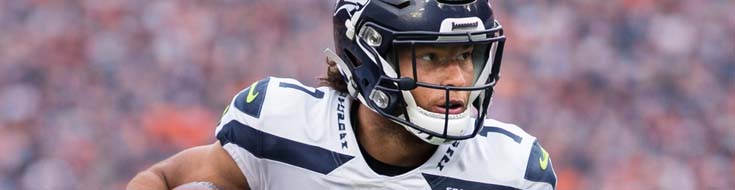
February owns the title game, but winter rarely turns up for it. The league steers its final toward warm cities and roofed stadiums, so Super Bowl weather stays tame far more often than it bites.
The exceptions play outdoors. More than half of all finals have kicked off under open sky. In a few of those, a soaked field dragged the game somewhere nobody drew up. That is why anyone weighing Super Bowl betting odds reads the forecast before a tight matchup.
How Weather Affects the Super Bowl (Domed vs. Outdoor Venues)
The league removes the elements whenever it can. A host city usually needs a game-day forecast above 50 degrees to qualify, unless its stadium has a roof. Miami, New Orleans, and Los Angeles alone account for 29 of the first 59 finals, and almost a third of the 59 were sealed under a dome.
Even so, most finals have gone off in open air, where the sky gets a vote. Wind shoves field goals wide and smothers the deep ball. Rain makes a clean handoff feel like a coin flip. Someone sizing up a total, or brushing up on how point spreads work, checks the forecast before committing.
Every winter the same query spikes: what is the temperature at the Super Bowl, since that single figure hints at how loose or tight the scoring runs. The 2026 game answered it outdoors, back at Levi’s Stadium in Santa Clara after five straight years under cover.
Local coverage of the weather for Super Bowl 2026 landed on one word: mild. A mid-60s high, a soft breeze, nothing the Bay Area does not see plenty of in early February.
Forecasters covering the Santa Clara weather for Super Bowl day flagged morning fog, a thin rain chance, and cooler air creeping in once the sun dropped. None of it looked ready to touch the field.
By kickoff the temperature at Super Bowl 2026 sat near 66 or 67 degrees. Comfortable for an outdoor night. Gusts barely cracked the single digits, so throwing and kicking stayed close to normal.
Once the broadcast opens, a chunk of the audience types: what’s the temperature at the Super Bowl right now, hunting for any late swing that could tip a second-half decision. Outdoor years put that habit into overdrive.
The Hottest and Coldest Super Bowls on Record
The last heat instance peaked in 2022. Out at SoFi Stadium near Los Angeles, the thermometer read 82 at kickoff and kept climbing into the mid-80s, and no final has averaged warmer. An older Los Angeles game, back in 1973, actually started hotter at roughly 84, then eased off through the afternoon.
Flip to the cold end: the lowest Super Bowl temperature at an outdoor kickoff still belongs to New Orleans in 1972, when Tulane Stadium sat at 39 degrees while the Cowboys wore down the Dolphins 24 to 3. The Superdome would not open for another three years, so New Orleans hosted in its old open-air bowl, and a Gulf Coast city ended up staging the coldest final on record.
Measure the raw air instead of the field and the title moves north, to Minneapolis in 2018. The reading outside U.S. Bank Stadium bottomed near 2 degrees at kickoff. Inside, the roof kept everyone at a lazy 70. Anyone digging through Super Bowl betting history sees the pattern fast: the building, not the calendar, decides if cold ever reaches the turf.
The Wettest and Windiest Super Bowls on Record
Rain has shaped the championship in a lasting way only once, and it stays the soggiest chapter in Super Bowl weather lore. That was Miami, 2007. The Colts and Bears slogged through close to an inch of it, gusts around 20 miles an hour, a field with no grip anywhere. Eight turnovers followed, five of them lost fumbles, the worst of the rain landing at halftime. Indianapolis coped best and took it 29 to 17.
Wind warps a game more than rain ever does. Tampa in 1984 and Miami in 1989 each clocked gusts near 25 miles an hour, the two windiest on the books. Santa Clara got a jolt too, a 29-mile-an-hour blast right before the 2016 kickoff, though it faded once the teams got going.
Slick footing and swirling air shift which markets look sound, and a rough forecast can move numbers fast. Readers who want the mechanics can see Super Bowl prop bets explained in fuller detail, since player totals often react first. People typing what’s the weather at the Super Bowl into a search bar are usually chasing exactly that edge.
FAQ
What is the average temperature at the Super Bowl?
Most outdoor finals have played out in cities that forecast above 50 on game day. Outdoor kickoffs usually land in the 50s to low 70s, save for the occasional dive toward freezing or a rare spike into the mid-80s. Put a roof over it, and the street number stops counting, so Super Bowl weather never reaches the turf.
What’s the coldest Super Bowl ever played?
Outdoors, the crown stays with 1972 at Tulane Stadium in New Orleans, 39 degrees, Cowboys and Dolphins. Minneapolis in 2018 sat in colder air by far, close to 2 degrees, but a roof spared the people who mattered. So for anyone asking what is the temperature at the Super Bowl at its coldest, that 1972 game is the honest outdoor answer.
Has the Super Bowl ever been delayed or disrupted by weather?
No Super Bowl has been stopped or delayed due to weather. The only in-game stoppage was the 34-minute blackout during Super Bowl XLVII in 2013, which was caused by an electrical failure, not the weather.
When was the last time the Super Bowl was played in a cold-weather outdoor stadium?
Only once, in 2014, at MetLife Stadium in New Jersey, a genuinely cold-weather market with no roof over it. The night played mild for the spot, 49 at kickoff, while Seattle ran the Broncos off the field 43 to 8. A day later, roughly eight inches of snow buried that same stadium.
Conclusion
Over the years, Super Bowl weather has run the whole spread. Near-freezing air outside a warm dome, a Miami soaking, a mid-80s glare in Los Angeles: the field has taken all of it. And while the forecast almost never decides a champion, it can still shift the margins when a game stays tight. So, weather is only one of the factors to read alongside the NFL betting markets before kickoff.

Hilbert Mayer
Sports Writer
Hilbert Mayer is a professional sports writer, betting analyst, and content strategist with over 15 years of experience in the sports industry. Before focusing on sports betting analysis and handicapping, Hilbert worked as a sports writer for various news outlets, covering everything from game recaps to in-depth matchup features. Today, he specializes in MLB, NFL, March Madness, and UFC betting, combining his journalistic background with deep statistical expertise and real-world betting insights. His proven track record, sharp reads, and ability to break down complex matchups make him a trusted voice among both casual bettors and seasoned sharps.
Published on: September 17, 2026
Last updated: September 17, 2026