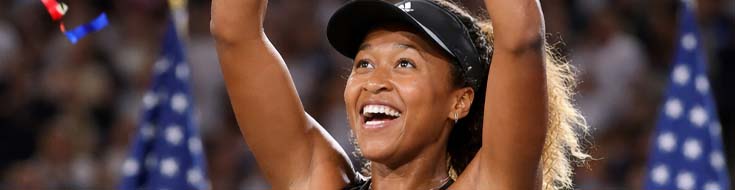
The first week of January rarely settles anything in tennis—but it always reveals pressure points. At the 2026 United Cup, those pressure points are already shaping betting markets. Naomi Osaka delivered Japan’s first-ever match win in the event. Alexander Zverev opened his season with a ruthless straight-sets performance. At the same time, injury withdrawals and fitness doubts are creeping back into the conversation, quietly reshaping futures odds across online Tennis betting sites.
This tournament being on the calendar is in a rare position. It is competitive, but it is also diagnostic. Players are removing the rust, teams are experimenting with lineups, and bookmakers are adjusting quickly. What we are seeing right now matters, not just for the United Cup outcomes, but for the Australian Open market in two weeks.
This breakdown is about what changed after Osaka’s breakthrough, why Zverev’s performance is more impactful than the scoreline indicates, how injuries are already adding to the volatility, and how early-season data can help bettors make better decisions before the odds are made more restrictive.
Osaka Breaks Through: Why This Win Matters More Than One Match
Naomi Osaka secured Japan’s spot in the United Cup tie with a straight-set victory over Katie Swan. This victory shifted the focus towards the possibilities for Osaka in the 2026 season. She demonstrated a tight first set win in a tiebreaker and domination over Katie in the second set, showcasing her impressive composure and controlled aggression.
This pattern tells a story from a betting point of view. Osaka retained a tight first set and dominated in the second, her margins in the following contests leading to her potentially outperforming the game spread. Her improvement in serve efficiency, along with her return positioning, suggests she is more suited to hard court conditions.
This performance matches the expectations for Osaka as she arrived at the United Cup a little sick and with little practice. Most bettors overestimate recent losses, and this match demonstrates the opposite. With the United Cup being a major event, her odds ultimately being affected by her recent loss were quite apparent for the bettors.
For Japan, the victory had boundary value. It meant a win in the mixed doubles, which led to the set being more contested. For Osaka, the win confirmed her place in the game. She is still a level above her tier with the same fitness level.
Zverev’s Statement Win: Efficiency That Moves Markets
Zverev usually beats lower-ranked players without breaking a sweat, so people could be forgiven for thinking the same for the Griekspoor match. However, Zverev’s 6-0 second set said more than the score line suggested. Griekspoor was simply steamrolled; perhaps the most telling indication was his breadstick.
Most players struggle to get a good serve a second time; however, Zverev has demonstrated an ability to deal with Griekspoor’s serve and pull ahead with multiple break points. From a betting perspective, players who win second sets with a score of 6-0 should definitely be considered to cover a smaller number of games and a shorter time than the line offense would suggest.
The betting line before the match is more a reflection of Griekspoor’s points ranking than Zverev’s dominance in the match. Zverev is controlling more and more of the betting line in the pre-match. Zverev is frequently more about reliability than lower odds.
Players who serve well repeatedly and play the baseline with a good rhythm become the favorites to win the match, and Zverev is the poster boy for this prediction. Upcoming tournaments, where he expects to face lower-ranked, mid-level players, will be where we see this prediction come to pass the most.
Injury Watch: The Silent Force Moving Odds
When Emma Raducanu withdrew from a tournament due to fitness issues, while not a dramatic incident, it had an impact. Walkovers cause line-up changes, changes to match previews, and changes to markets. This is how volatility creeps into tennis betting: from headlining injuries, and most importantly, from vetted uncertainty.
Tennis is a unique betting environment, and is even more so at the start of the season. Players have barely played any tennis due to the pre-season, so any small injuries are magnified. Concerns over knees, fatigue, and recovery are more pronounced.
These are all factors important to how tennis bettors assess risk versus opportunity. The greater the uncertainty, the greater the betting value on an underdog. Conversely, a match fitness, or effort to win, concern for a favorite creates a trap if the odds don’t reflect fitness.
The overriding theme is to bet with discipline. Don’t bet on a player because someone else has withdrawn. As tennis players start to play more, a lack of match practice should lead you to expect less from those players. Markets on match outcomes adjust faster than future markets.
This gap creates value.
Technical Trends Emerging at the United Cup
In addition to singular outcomes, larger trends are beginning to emerge. The United Cup hard court shows that players are rewarded for point shortening and serve-holding. Matches are unusual in that they do not feature multiple breaks. Tiebreaks and late-game breaks are common.
This matters for totals and live betting. When serve dominance is high, first-set overs gain value. When momentum flips, matches end quickly. Understanding how players respond to the Tennis court surface—especially bounce height and pace—can improve timing decisions on in-play markets.
The team aspect also contributes. There are adjustments made early on to play with national pressure and to manage energy. This results in conservative early play, followed by aggressive closing stretches once a lead is established.
This is what sportsbooks analyze, and bettors should too.
Practical Betting Applications You Can Use Now
- To begin with, focus on players exhibiting dominance in the second set. This is a good sign of fitness and tactical clarity.
- Next, consider injury news as a pricing component, not a basis for an automatic fade, and treat it as such.
- Third, early in the season, be bolder with set betting and game spreads. When the favorites are fairly priced, moneylines often lack value.
- Fourth, don’t overlook the doubles. The tie is often decided by mixed doubles, and the markets frequently lag after the lineup is set. For those speedy in acting, there is an edge.
- Lastly, keep your stakes steady. The beginning of January is about collecting information, not full exposure.
Forward Projections: What Comes Next
Osaka’s recent victory has brought her back into consideration—not as a definitive threat, but as a player with a still achievable ceiling, when not experiencing health-related setbacks. If she performs well at the next warm-up event, expect the odds offered for her at the Australian Open to shorten.
Zverev appears to be in better form than most of his fellow competitors. That usually leads to strong tournaments in January, when deep runs tend to be the norm. The futures markets will reflect this quickly.
Bettors can expect to see injury-related changes in the Australian Open board. At least one high-profile player will drift down the board before the draw is set for the Australian Open. Bettors with the most information will be set before that happens.
Expert Insights: Betting Smarter Right Now
Monitor Second-Set Performance
Athletes who increase margins during the final stages are dominating games both in the physical and psychological sense.
Watch Confirmed Withdrawals, Not Speculative Rumors
Lineup changes that are confirmed are significant. Rumors are insignificant—until they are not.
Serve Metrics
In the early stages of the season, a significant percentage of wins from the first serve are stabilizing betting results.
Be Selective When Using Live Markets
In the month of January, momentum shifts are frequent and rapid. When it comes to betting, timing will outscore predictive reasoning.
Avoid Overreacting to One Match
Headlines are contextless. There is always more to the story.
Frequently Asked Questions
Q: What is the United Cup and why does it matter?
A: The United Cup is a mixed-team competition that provides an opportunity to set the players’ early-season form and influences betting odds for the Australian Open.
Q: How does an early win impact betting odds?
A: Early-season wins impact short-term odds more than they do long-term forecasts.
Q: Is the risk of injury higher early in the season?
A: Yes. Players are adjusting their workloads after a period of unhurried competitive play.
Q: How does the surface impact tournaments in January?
A: Very much so. Quick surfaces favor those who can serve well and are aggressively in control.
Q: How Player Rankings Influence The Tennis Betting Sites?
A: Tennis player rankings provide baseline odds, but form, injuries, and matchups adjust pricing significantly.
Q: Should bettors focus on futures now?
A: Yes, but within reason. There is a potential for some early-season betting values, but it will require discipline.
Q: Are team events harder to bet on?
A: Yes, there is more variance, but it also means there may be more value that is currently going unrecognized.
Where the Early Edge Is Forming
The United Cup isn’t just a warm-up—it’s already reshaping how online Tennis betting sites price players heading into the Australian Open. Osaka reminded the market that she’s still dangerous. Zverev showed why efficiency matters more than flair. Injuries are creating cracks in futures boards that won’t last long.
For bettors, this is the window. Before odds normalize. Before narratives harden. Before public money floods in.
If you’re ready to act on real form—not preseason hype—now is the time. Head to BetNow, monitor live lines, and position yourself ahead of the next move.

Hilbert Mayer
Sports Writer
Hilbert Mayer is a professional sports writer, betting analyst, and content strategist with over 15 years of experience in the sports industry. Before focusing on sports betting analysis and handicapping, Hilbert worked as a sports writer for various news outlets, covering everything from game recaps to in-depth matchup features. Today, he specializes in MLB, NFL, March Madness, and UFC betting, combining his journalistic background with deep statistical expertise and real-world betting insights. His proven track record, sharp reads, and ability to break down complex matchups make him a trusted voice among both casual bettors and seasoned sharps.
Published on: January 4, 2026
Last updated: January 11, 2026