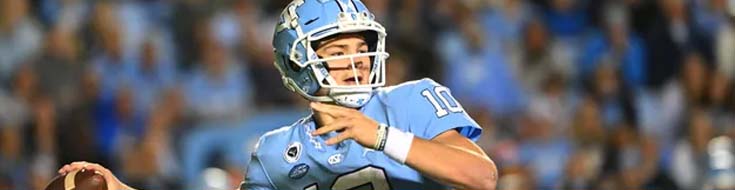
In the Super Bowl LX sportsbook markets, one of the more obvious awkward betting lines once again had Drake Maye in the crosshairs: Maye’s rushing yards line opened early and subsequently failed to settle into a comfortable range. This baffled a few types of bettors. Some see value, especially with Maye’s yards rushing line, and others see line inflection more aggressively. It’s a disagreement that sportsbooks will try to objectively balance, but, especially in the early betting, that disagreement typically ends up in the Drake Maye rushing paradox.
It’s a paradox in the sense that Maye is more than a statue, but by no means is he a run-first quarterback. Fewer rushing attempts can sometimes overshoot the design of the play. In anticipation of Maye’s rushing prop for the next game, he is placed a value by the sportsbooks that is typically the juxtaposition of a perceived greater than intentional design, and that is the essence of the paradox, anticipation vs. reality.
The Game Environment Shapes Everything
Super Bowl LX betting odds have Seattle favored while New England takes the role of the underdog. The betting odds have predicted New England to be the underdog from the beginning. The total is in the mid-40s, suggesting a physical and controlled game rather than a shootout.
Super Bowl LX Game Odds
| Market | Seahawks | Patriots |
| Spread | -4.5 | +4.5 |
| Moneyline | -195 | +165 |
| Total | 45.5 | — |
New England is not a likely candidate for a prop bet. A quarterback rushing prop bet is directly tied to game flow. If New England is losing, then the game will speed up and will become more pass-heavy. If the game is close, then risk management will take over; a likely scenario for the Super Bowl is that New England will want to protect their quarterback from a high rushing volume.
Drake Maye’s Rushing Profile Is Situational
No one is disputing that Maye can run. He is athletic and can escape pressure, and is strong enough to run if needed to finish drives. However, he has never been consistent with his rushing output from week to week.
Defenses broke down or lost containment, or he had his absolute best rushing games. When opponents were highly disciplined, he did not settle into really modest rushing totals. He did not run designed quarterback draws selectively as a core part of the offense. He used them sparingly.
That distinction matters. The current rushing line implies repeatable production, not occasional opportunity. That is a leap bettors should be careful to make, especially on the Super Bowl stage.
Seattle’s Defense Limits Quarterback Upside
Seattle’s defense is one of the most matched to the inflated rushing props of the QBs; from the most quiet to the most active. They focused on edge discipline, making QBs take quick decisions. Scramble lanes close fast. Containment is maintained even when pressure arrives.
Seattle’s defense is also true for mobile QBs. Yards were picked up when needed, but he stretched the play with long, momentum-shifting runs. That kind of defense doesn’t eliminate rushing yards, but it caps the ceiling.
When a prop number sits near 40 yards, the ceiling matters more than the floor.
Where the Rushing Props Are Priced
The market structure around Maye’s rushing tells its own story.
Drake Maye Rushing Yard Props
| Prop | Odds |
| Over 37.5 Rushing Yards | -110 to -115 |
| Under 38.5 Rushing Yards | -112 to -114 |
| 15+ Rushing Yards | -1200 |
| 20+ Rushing Yards | -550 |
| 25+ Rushing Yards | -320 |
Books clearly have a lot of confidence in Maye clearing the lower thresholds, and that makes sense. A few scrambles and one designed run can easily get him past 15 or 20 yards.
The issue is with the jump. Moving from mid-20s to mid-30s requires either consistent scrambling or a broken-down defense. That is a much narrower path, especially against a defense designed to prevent that.
Why the Over Keeps Taking Money
Given the matchup, the Over fully garners attention, and this is not random.
Bettors tend to overvalue mobility, especially during big games. The phrase ‘making plays with his legs’ is an example of an overused and unwarranted cliche to describe an offensive game plan that doesn’t prioritize the quarterback running the ball. The recent history plays off the averages of Maye’s games, and his higher rushing yard games tend to skew the perception.
There is a belief that trailing means the quarterback runs, but this is not the case. You generally see quicker throws and less willingness to extend the play as a result of the pocket. Super Bowl coaches are the most conservative with their quarterbacks, and this is during the entire playoffs.
What the Numbers Actually Suggest
When projection models remove narrative and concentrate on the use case, the opponent, and the game script, Maye’s expected rushing output is low-30s. That range is representative of his athletic ability and Maye’s likely rushing outputs given Seattle’s containment and the New England offensive tendency.
That doesn’t mean the Over can’t hit, but the most likely outcome is below the posted number. The paradox is due to the median result and the market price being out of sync.
Health Isn’t the Same as Opportunity
Maye can enter the game without any injuries. His range of motion is fully intact, which has caused some bettors to become more optimistic. However, health alone doesn’t indicate how many rushing attempts he will have. That depends on the system.
All season, New England has shown that they prefer Maye to be standing and efficient rather than mistaking contact. That philosophy doesn’t change in the Super Bowl. If anything, it becomes more conservative.
How the Game Could Tilt the Prop
Maye’s rushing against New England could be more reactive than proactive if New England gets the jump early. He runs to escape sacks, not to pick up large yardage. If the game remains close, he deploys his runs more strategically. The only scenario that truly favors the Over has New England in control of the game, which is not something the betting market is anticipating.
This is why the prop feels off. The Over is possible, but the chances are lower than the odds suggest.
Reading the Market, Not the Hype
This isn’t a trap line. Sportsbooks aren’t misleading bettors. They’re reacting to action. The public gravitates toward upside. The books respond by shading the number upward.
The Drake Maye rushing paradox exists because excitement pushes perception faster than reality can catch up. Recognizing that gap is where disciplined bettors separate themselves, especially when navigating Super Bowl betting online.
The floor is safe, but the ceiling is overstated. Against a disciplined defense in a game where New England is unlikely to control script, the most probable outcome lands below the number.
Pick: Drake Maye Under 38.5 Rushing Yards

Hilbert Mayer
Sports Writer
Hilbert Mayer is a professional sports writer, betting analyst, and content strategist with over 15 years of experience in the sports industry. Before focusing on sports betting analysis and handicapping, Hilbert worked as a sports writer for various news outlets, covering everything from game recaps to in-depth matchup features. Today, he specializes in MLB, NFL, March Madness, and UFC betting, combining his journalistic background with deep statistical expertise and real-world betting insights. His proven track record, sharp reads, and ability to break down complex matchups make him a trusted voice among both casual bettors and seasoned sharps.
Published on: February 3, 2026
Last updated: February 5, 2026