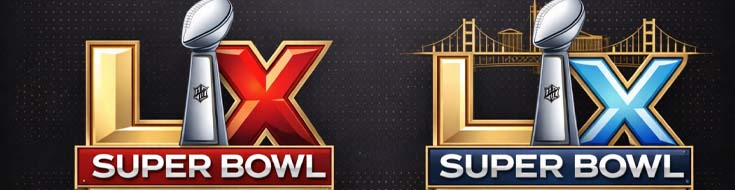
In the United States, more than 123 million people watched Super Bowl LVIII, breaking the record for the most viewers for a single television broadcast, and that number continues to grow. Given this level of interest, all the details about the next championship are analyzed early. One detail that fans always pay attention to is the Super Bowl’s official logo. For Super Bowl LX in 2026, the NFL announced a design with a focus on the logo’s blue, green, and yellow color scheme. Almost instantly, the betting community revived the longstanding logo color theory.
Some fans see it as superstition, while others see it as a plausible watching pattern. Regardless, it has become part of how modern bettors interact with the league, specifically with the Super Bowl sportsbooks online, where novelty and futures markets are available for months. Simple enough, logos from recent Super Bowls have colors that match the primary colors of the competing teams.
To begin, we will detail how accurate this theory has been, how active 2026 bettors are with the Super Bowl LX color scheme, props, and novelty bets at BetNow.eu, and most importantly, how value is recognized versus the myth.
When logo colors started matching Super Bowl teams
During the late 2010s, logo color theory attracted more attention after fans identified another example of odd visual overlap. Super Bowl LVI featured orange and yellow logo colors; Cincinnati (orange) faced Los Angeles (yellow/gold accents). The logo for Super Bowl LVII featured red and green, with the Chiefs (red) vs. the Eagles (green). In Super Bowl LVIII, the logo featured purple and red colors, which visually matched the Ravens (purple) and 49ers (red), although Baltimore did not make it to the game after losing in the AFC Championship.
Statistically, this cannot be deemed proof of causation. Logos, including those of the NFL, are often designed years in advance, and based on the host city, their design and branding, or broadcast elements. Still, repeated coincidences are enough to keep bettors talking. People tend to be pattern recognizers. This is especially true in sports betting, where the market for “futures” rewards those who bet at the earliest opportunity.
For Super Bowl LX, the design’s blue, green, and yellow colors led to a mention of certain franchises. The moment the logo was published on the internet, Seattle Seahawks (blue/green), Green Bay Packers (green/yellow), Los Angeles Chargers (blue/yellow), Miami Dolphins (aqua/teal), and Los Angeles Rams (blue/yellow) became among the most popular speculative picks.
It is not to say that the NFL is trying to signal outcomes. It is that the market behavior is driven by public perception when enough bettors focus on particular teams. This is how sportsbooks adjust the price of future bets, which in turn creates other betting inefficiencies.
Context matters more than coincidence
Examining team performance trends leading up to 2026 will show whether there is any realism to the logo theory. Over the last two seasons, the Packers have remained as one of the NFC’s youngest and most efficient offenses, finishing top 10 in EPA per play. The Chargers, now constructed fully around Justin Herbert, have top 5 passing metrics, but they still struggle defensively in high-leverage games. Seattle has mid-tier performance, competitive but inconsistent.
Comparisons are key here. The color logos of Green Bay are a poor offset to the network’s strength, the roster, the quarterback, or the schedule. Future prices float based on those parameters. The logo buzz, if anything, tends to shorten odds on appreciable teams, again creating a poorer entry point for those who bet late.
The determining variables are undoubtedly the conference strength and the quarterback’s continuity. The main reason the Super Bowl participants are so predictable is because of the second and third-year quarterbacks. Since 2010, around 70% of SB teams have had a top 10 scoring offense. That’s why Buffalo, KC, SF, and Dallas are all at the top of the lists irrespective of their logo color.
These examples show the understanding of how futures bets work. The odds of futures bets are always changing based on sharp money, the consensus, and injuries. The main influence of the logo chatter is the consensus. A bettor who knows how to track narratives is watching the lines and seeking the teams that are not color hyped and are drifting to better value ranges.
Turning a fan theory into practical betting ideas
Logo theory may not influence main wagers, but makes sense for novelties and props. Longshot future bets are posted by sportsbooks (like BetNow.eu) before the odds develop on things like which teams will win the common championships, exact matchups for the Super Bowl, etc.
For example, Green Bay may already be a team a bettor is interested in based on the roster, and the buzz around the team makes it easier for the bettor to justify placing a bet on that team before the odds tighten. If the Packers shorten their future odds significantly, the bettor can always bet on an associated market like the number of wins the Packers will have or whether they’ll win the NFC.
Logo theory can also be applied to props. These can be a bit more risky, and not always justified by only superstition. It can be beneficial to pair a popular team that is perceived to have a logo with an AFC team that is a bit more of a dark horse.
Finally, logo theory gives bettors more to analyze during the offseason. For many bettors, the more time they get to analyze, the more opportunities there are to find better values on the board prior to a significant change that may happen due to injuries in the preseason.
Looking ahead to Super Bowl LX projections
Early 2026 projections still see the NFC staying deeper, albeit less top-heavy, than the AFC. This increased volatility means more enticing speculative futures. The blue, green, and yellow teams are almost all NFC, further adding to the logo theory.
That’s all true, but the AFC still funneled through elite QBs. Since 2019, every AFC rep has had a Patrick Mahomes, Burrow, or Brady, and that trend doesn’t change because of a logo color. Any serious or realistic Super Bowl LX projections will still have to go through Kansas City, Cincinnati, or Buffalo.
The wise takeaway is balance. The logo theory is most valid as a conversation starter and less as a tool for betting. Logically implemented, it gives bettors a sense of where the public will be and when to place their bets. Completely ignoring it lets market psychology, which is a strong influence on futures lines months ahead, go unutilized.
Expert insights bettors actually use
Note Early Odds Movement
Document how the betting line shifts after the logo drops. If the odds change suddenly, it’s probably due to public betting and not a professional sharp. This creates value elsewhere.
Separate Novelty Betting From Serious Betting
Designate a small percentage of your overall bankroll to betting on novelty items such as team logos, but keep your serious betting based around the metrics (administrative efficiencies, injury status, strength of schedule, etc.).
Think Outside the Box with Betting on Conferences
If team logos of betting favorites shorten, betting on props for conference championships and divisions typically have similar upsides to the betting favorites but have much better value.
Consider Offseason Roster Overhaul
A quarterback, coordinator, or other key player(s) within the organization returning for a second season after a previous season can be expected to outperform future expectations.
Price Shop and Avoid Betting Trends
Different sportsbooks post odds at different times based on public sentiment. BetNow.eu tends to publish futures at similar times as their competitors, but they are much less risky during that time.
Frequently Asked Questions
Q: What is the Super Bowl logo color theory?
A: It’s a fan-driven idea suggesting the colors used in the Super Bowl logo hint at the teams that will eventually play in the game. It’s based on recent coincidences, not official confirmation or league intent.
Q: Has the logo theory ever been proven accurate?
A: No statistical proof exists. Some years show visual overlap, others don’t. It works more as a reflection of fan perception than a predictive model.
Q: Can bettors actually profit from this theory?
A: Only indirectly. It helps identify public sentiment and potential line movement. Profits come from timing bets and finding value, not blindly following colors.
Q: When is the best time to place Super Bowl LX futures?
A: Early offseason offers the widest odds but highest uncertainty. Many bettors split exposure, placing small early bets and adding later once rosters stabilize.
Q: What are the risks of novelty betting?
A: Novelty markets often carry higher house edges and lower limits. They should complement, not replace, core analytical wagers.
Q: How Sports Fans Stay Connected to Their Sportsbook?
A: Most fans use mobile for sportsbook online platforms, social media updates, and odds alerts. Engaging with futures boards, props, and live lines keeps bettors informed year-round.
Q: Does BetNow.eu offer Super Bowl novelty markets?
A: Yes. BetNow regularly posts futures, matchup props, and creative markets tied to major events like the Super Bowl.
Reading the logo without overthinking it
Super Bowl LX’s blue, green, and yellow logo has already done its job. It sparked debate, drew attention, and kept fans engaged months before kickoff. The key takeaways are simple. Logo theories influence public betting behavior. Public behavior moves odds. Odds movement creates opportunity.
Smart bettors don’t dismiss the chatter or blindly follow it. They watch how it shapes markets and act accordingly. On the top Super Bowl sportsbook online, those small edges add up over a long season.
For anyone exploring futures, novelty props, or creative angles tied to Super Bowl LX, BetNow.eu offers early access and flexible markets. Stay curious, stay disciplined, and let the logo be a tool, not a rule.

Hilbert Mayer
Sports Writer
Hilbert Mayer is a professional sports writer, betting analyst, and content strategist with over 15 years of experience in the sports industry. Before focusing on sports betting analysis and handicapping, Hilbert worked as a sports writer for various news outlets, covering everything from game recaps to in-depth matchup features. Today, he specializes in MLB, NFL, March Madness, and UFC betting, combining his journalistic background with deep statistical expertise and real-world betting insights. His proven track record, sharp reads, and ability to break down complex matchups make him a trusted voice among both casual bettors and seasoned sharps.
Published on: January 25, 2026
Last updated: January 25, 2026