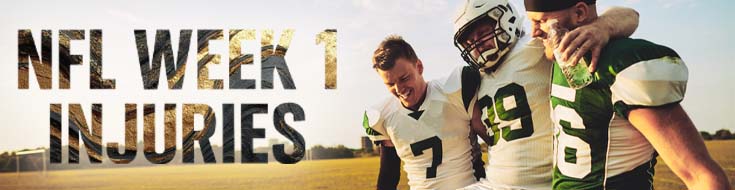
30% of bettors say they change their wager after injury reports before a game. And you don’t need a number to explain to you how much a game can change because of injuries. But Week 1? That’s where the profit is. The value is the easiest to find in the first week of the season. It’s the most unpredictable slate of the season, and if you’re not glued to the news of the most recent roster moves, you don’t understand. Certified NFL betting sites do that because they’re tracking every practice snap and status updates. The smart money is betting on the fastest.
Let’s dive into the details now. For you, there are potential game-changers, last-second inactive players, and subs that could all make or break your entire weekend. The essence is, you will see who is available, who isn’t, and how that affects spreads, props, and totals. You will see how we will make sense of the impactful injury noise and how we will apply those implications to the ticket. We will structure this into four sections: fast facts, context, actionable advice, and what to expect. We give you bets predicated on tournament strategy. Finishing is with what we call predictive analytics, a collection of questions where we summarize what you should do afterwards.
Key Injury Movers in Week 1
The Cowboys are completely relaxed. Shutdown corner Trevon Diggs was listed as a full participant in practice and is a go. Dallas’ defensive stats remain untouched, and there’s added value on under bets or defensive props against a pass-heavy opponent.
Now consider the Eagles. They are going into Week 1 with just one QB on the roster. That doesn’t sound serious until your starter gets one brutal shot. In contests where depth matters, the Eagles certainly become more difficult to play. It’s not about betting against the Eagles; it’s about where your risk tolerance lies.
Then there are the Bills. They are creeping into Week 1 with unknowns about their secondary and special teams configuration. Questionable are Keon Coleman and Christian Benford. Tre’Davious White remains on the IR, as does Tyler Bass with a hip pointer. That affects both sideline to sideline—field goals, coverage, and red zone stops.
The Dolphins as a whole are in even worse condition, with Tyreek Hill suffering from multiple issues in his lower half. Jaylen Wright and De’Von Achane are questionable or sidelined. Consider their offensive agility welfare. Plan on adjusting any total points and prop wagers.
The Falcons do have Darnell Mooney limited, and the Bucs are missing several starters: Vita Vea, Jack Nelson, and perhaps Chris Godwin Jr. Atlanta might have the advantage in WRs, particularly in slot-elimination situations.
All of this means that some of the sportsbooks changed the lines, but outdated almost as quickly as inaccurate.
Comparing Teams: Stability vs. Chaos
Let’s break it down.
For the Cowboys, it is business as usual. They get their top cornerback back, so the defense holds, and the game flow likely tilts lower in total scoring. If their opponent doesn’t have elite WRs, it is safe to say the under is a good bet.
The Dolphins, in contrast, are lacking in speed. No Tyreek? No Achane? That changes everything. This was a team known for blowing up totals. Defenses are now free to drop safeties and sit on shorter plays. Look for the under here as well.
Lions-Packers is a bit more nuanced. Both teams are in good health, but the Lions are dealing with soft tissue issues across their WR room, making them less explosive. That could shift your play toward the Packers against the spread.
Then there’s Falcons-Bucs. Mooney might play, but the Bucs are in a worse situation, missing defensive anchors and offensive weapons. Tampa Bay could struggle to keep up, providing Atlanta with the edge, especially in receiving props.
Every matchup above has a story to tell as it pertains to injuries. It’s not just about who’s not playing. It’s about who replaces them (if anyone) and whether that replacement is capable of satisfying the betting market’s expectations.
This also plays into football live betting. In-game line shifts happen fast when a big name goes down or a backup overperforms. If you’ve prepped your depth chart knowledge, you’re ahead of the curve.
What Bettors Can Do With This Info
First, track the ultimate injury reports. Not just the questionable tags, but the full participation listings. Limited on Thursday but full on Friday? That player’s probably fine.
Second, utilize it to gain value in props. If a team’s WR1 is out, WR2 is probably going to see an increase in targets. If a pass rusher is out, the QB may have more time to throw—and pass yards increase.
Third, change your totals. A team that is lacking in red-zone targets? Take the under. A defense that is missing starters? Perhaps the over is more appropriate. There will be drives that are greatly shortened, leading to injuries that can lead to field goals instead of touchdowns, or shootouts when secondary defenses collapse.
Fourth, the spreads. Primary quarterbacks have the most influence on spreads, but WRs, CBs, and the O-line are important too. One primary injury can move a line between 1.5 and 3 points. That is the difference between covering the line and a loss.
Lastly, you need to use certified betting sites for the NFL. They have the fastest updates. Don’t place a bet without considering the volatility of the line, especially in the first week of the season. You need betting sites that update in real time, not week 1. Bet smart.
Looking Ahead: Week 2 Watchlist
You have Week 1 as a reference point. What you learn now carries over to next week’s probabilities. Here’s what to monitor.
- If he covers WR1, props on Diggs, as well as defensive props on Dallas, might improve a lot in Week 2.
- Dolphins, if short-handed, perform poorly next week, may get some respect.
- The Bucs might be in better condition, which means Week 2 props will bounce back, too. Attack early.
- Most teams that get surprise IR returns will have sharps grabbing their lines midweek. Listen to the beat writers.
- Also, check to see which players in Week 1 get hurt. Not just the starters, but also the crucial bench players. Depth wins wagers as the season progresses.
You can access the Week 2 lines from Sunday Night. If you can guess which team was banged up or opaque, you have a very good answer on the edge before the market settles.
Turn Injury Info Into Action
1. Watch Practice Participation, Not Just Status
Limited status means nothing without context. A guy could be on a snap count. Track who’s limited Wednesday but full Thursday or Friday. That’s your green light.
2. Prioritize Injuries by Position Value
QBs change the line the most. WR1 and LT are next. Then CB1 and Edge. If it’s a backup DT, the line probably won’t move. Bet accordingly.
3. Hedge Early Bets with Props
If your bet depends on a questionable player, hedge with props for backups or teammates. If a WR1 is out, bet the WR2 over or TE anytime TD.
4. Know Your Book’s Update Speed
Some books adjust lines instantly. Others lag. If you’re fast, you can catch soft lines before they close. Be ready the moment reports hit.
5. Track Snap Counts
Depth doesn’t just mean names on a roster. Look at who’s actually on the field. A backup who played 70% of snaps last year is more reliable than a starter off IR.
6. Don’t Chase Preseason Hype
A rookie with good camp buzz means nothing if he’s not starting. Injury replacements matter more. Check the actual depth chart.
Frequently Asked Questions
Q: How does a player injury change betting odds?
A: Injuries shift expected performance. Sportsbooks adjust spreads, totals, and props based on the impact of the player lost.
Q: When should I check injury reports?
A: Midweek for trends. Friday for final status. Then again Sunday morning. Those three touchpoints catch all late-breaking info.
Q: Do injury reports impact over/under bets?
A: Yes. A team missing its top WR or kicker can tank a total. A defense missing its secondary might inflate it.
Q: How Quarterback Performance Impacts NFL Betting Odds?
A: QB play is the top driver of NFL betting odds. A great QB out? That’s a multi-point spread swing and changes every prop linked to scoring.
Q: Should I avoid betting Week 1?
A: Not if you’re informed. Week 1 offers soft lines because there’s no regular-season film yet. If you’ve tracked injuries, you have an edge.
Q: Can a player listed as “limited” still start?
A: Absolutely. Many vets get rest days. Check the trend. Limited Wednesday, full Thursday and Friday? He’s in.
Q: What’s the risk in betting on injury replacements?
A: They might be on snap counts or used differently than expected. Look for confirmation in press conferences and beat writer updates.
Q: How to use injury info for live bets?
A: Track who leaves mid-game. If a CB1 goes out, smash the over on WR1 yards. Books adjust slower than sharp bettors during games.
Injuries Move Fast—Smart Bettors Move First
Week 1 isn’t just about who plays well. It’s about who plays at all. Trevon Diggs being active solidifies Dallas’ defense. The Dolphins’ offensive firepower is questionable. The Bills and Bucs are walking wounded. All of this shifts how you bet.
You now know what to look for—who’s practicing, who’s out, and how each absence moves the line. You’ve got tactics: track status, bet props, watch the books. You’ve got timing: Friday updates, Sunday confirmations, and mid-game pivots.
Use certified NFL betting sites that react fast. That’s your edge. And don’t wait.
BetNow has lines moving already. Injuries don’t pause. Neither should you.

Hilbert Mayer
Sports Writer
Hilbert Mayer is a professional sports writer, betting analyst, and content strategist with over 15 years of experience in the sports industry. Before focusing on sports betting analysis and handicapping, Hilbert worked as a sports writer for various news outlets, covering everything from game recaps to in-depth matchup features. Today, he specializes in MLB, NFL, March Madness, and UFC betting, combining his journalistic background with deep statistical expertise and real-world betting insights. His proven track record, sharp reads, and ability to break down complex matchups make him a trusted voice among both casual bettors and seasoned sharps.
Published on: September 4, 2025
Last updated: September 5, 2025