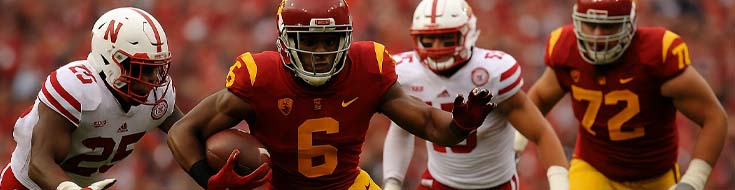
USC’s offense is humming at 326.1 passing yards per game — the highest in the nation heading into Week 10. That number matters because the Trojans now walk into Lincoln for their first Big Ten road test against a Nebraska defense giving up just 127.5 passing yards per game, second-best in the FBS. Meanwhile, nearly a thousand miles west, Cincinnati heads into Salt Lake City to face Utah in a prime-time Big 12 matchup where altitude and discipline collide.
Both games — USC–Nebraska and Cincinnati–Utah — aren’t just about rankings or hype. They’re pressure checkpoints for programs adapting to new conferences and new expectations. For anyone exploring college football betting platforms, these matchups provide real data-driven opportunities, not guesswork.
Here’s what readers can expect to learn:
- Key statistical matchups shaping both games
- How situational factors like travel, altitude, and tempo affect outcomes
- Practical ways to apply betting strategies to real betting lines
- Forward projections, expert insights, and betting takeaways for Week 10
Eye-Opening Numbers and Implications
USC at Nebraska – passing powerhouse meets elite pass defense
USC aggressively passes the ball at the rate of 326.1 yards every game, the highest in the nation. On the other hand, Nebraska gives up 127.5 yards passing each game, the second lowest in the FBS. This particular matchup is one of the few nationally that offers a value bet, as it is a significant contrast of high-volume offense versus a low-volume defense. There is a clear use case for an over bet here, with significant potential for an under bet for Nebraska.
Essentially, there is the potential for tempo to at least be in Nebraska’s favor should Nebraska’s pass defense be weak to the pressure. This would likely require a significant change in game plan for Nebraska. Given the trend of losing 28 top 25 games, Nebraska is likely able to pass to the next level.
The spread is at 6.5 points and a total of 59.5. This would lead to the prediction of USC covering the spread. This becomes a point of attack for over-bettors where Nebraska is likely to give the game’s flow. This drives the use of game tempo, 3rd down conversion/efficiency, and big play execution with total yardage as the key performance metric.
Cincinnati at Utah – altitude, offense vs defense, conference stakes
Transitioning to Big 12: Cincinnati (7-1, 5-0 Big 12) meets Utah (6-2, 3-2) this week in Salt Lake City. Cincinnati’s offense generates 437.6 total yards and 38.3 points per game, and the Cincinnati defense limits opponents to 19 points. Utah has the 5th best rushing offense in the country, with 267.1 rushing yards secured each game, as well as a passing defense that allows 148.8 yards a game, placing 7th in the FBS..
Considering the altitude, playing late in Salt Lake City and being in the mountains is not a small factor, especially for late-night games. For college football bettors in Cyberspace, the environment, travel, and team style play are important. The spread is estimated to place Utah as the favorite between 8.5 to 10, while the total points are estimated to be around 55-57.5.
Most important is Utah’s front seven of the defense, Cincinnati’s rhythm, and negative plays (they’ve had very few) that prevent offense movement and chains from being established. The stats say Cincinnati has only 32 negative plays this season in Big 12 play.
Supporting Comparisons and Context
Conference transition vs elevation challenge
USC’s road trip to Nebraska stands as a landmark moment in its history; it marks USC’s official entry to the Big Ten, and the Lincoln visit becomes more than just another road game. Nebraska, on the other hand, is trying to recover and show its relevance in the Big Ten as well. All of the context provided makes this game far meaningful than just the raw stats.
Contrast this with the Big 12 scenario: Cincinnati and Utah are both at the beginning of their respective tenures in the Big 12 (Utah through realignment). The “altitude” test in Salt Lake City adds another layer. In the comparisons, the narrative for USC–Nebraska is about conference alignment and then defense vs a hyperactive offense. In the case of Cincinnati–Utah, it is about the environment.
Another dimension: In each game, the data regarding turnovers and negative plays is particularly striking. Defensively, USC is ranked at the bottom, while Nebraska is rated highly for pass defense and coverage. For a long stretch, Cincinnati is turnover-free (QB Brendan Sorsby and 179 passes without an interception) while Utah’s pass rush is generating 3.1 sacks per game (Top 10 nationally). Cincinnati’s offensive line has allowed just two sacks all season, and that disparity is striking in comparing the respective matchups.
These contexts matter when using NCAAF betting strategies: style matchups, venue, recent trends, and opponents’ identity matter just as much as raw numbers.
Historical trends and relevance
Nebraska has not beaten a Top 25 team for 28 consecutive games. While this is cause for concern for Nebraska, it remains the case that USC is still working on its identity in the Big Ten and also looks to build playoff credibility. A mental edge or deficit could be decisive.
Cincinnati has momentum, having won seven straight and remaining undefeated within the Big 12. Although Utah is still in the title race, it will likely need this win to keep the title within reach. This is a crucial game for more reasons than the result.
In terms of betting, context and momentum are important. The former includes a “team coming off a strong run” and the “team under pressure to rebound,” which is an advanced betting strategy. There are also scheduling considerations. USC has Oregon as its last game against a Top 25 team, and Nebraska is on a lighter schedule, but needs a win. Utah needs to remain perfect in the remaining conference games to secure the path to the title.
Practical Applications for Readers
How to approach wager options
You will come across spreads, totals, and props when you place bets on college football.
- For USC vs Nebraska: Considering the pointed passing yards at USC and the restrained passing yards Nebraska permits, props like “USC over X passing yards” or “Nebraska under Y passing yards allowed” can be predicted. Given Nebraska’s robust passing defense, USC winning would be the most likely outcome, but likely, the total yards won’t be a blowout. The over/under is set at 59.5 – the expected total score is under, with the possibility that Nebraska will slow the tempo.
- For Cincinnati vs Utah: Defensive strength juxtaposed with altitude (Utah) and efficient offense (Cincinnati) makes props like “Utah to cover” or “Cincinnati underdog + cover” likely. There are props too – sacks allowed by Cincinnati, negative plays, and third-down conversion rates for Utah. Given Cincinnati’s clean turnovers, a prop like “no interception by Cincinnati” holds value.
Risk management and bankroll considerations
Avoid overcommitting on one side just because a team looks very strong. While USC does have the statistics, Nebraska’s pass defense is elite; that’s why the spread is just 6.5 points, which gives us a cushion. In the case of platforms, you can spread the risk by placing a half stake on USC ML, and the other half on USC +1.5 or +2, which is likely to cover. In the case of Cincinnati/Utah, there’s an 8.5–10 point spread, which justifies a smaller wager because you believe Cincinnati will cover the spread, but will ultimately lose the game. Also consider the total due to altitude; reduced pace and scoring is likely. If you expect Utah to impose a very strong pace on Cincinnati, you can lean under.
Timing and information exploitation
Make sure to place your bets before the lines move. Utah betting lines, for instance, opened at -8.5 and moved to -10. This means those who bet earlier got better value. Look at injury reports and weather, especially in Lincoln or Salt Lake. Winds and air density at altitude affect the distance kicks travel and stamina.
In the USC/Nebraska game, late night in Lincoln could affect offensive performance. On the NCAA Week 10 slate, the first College Football Playoff rankings will drop after these games. This could cause teams to play with extra urgency.
Forward-Looking Assessment With Projections
USC–Nebraska projection
All indicators suggest that USC will win and cover the spread, albeit more closely than anticipated. With Colorado’s elite pass defense, limiting pass attempts will frustrate USC’s steadfast lack of it. Thus, the total may land under the line and perhaps just around it. For bettors on college football betting platforms, the advice: lean USC on the money line and take USC at -3.5 instead of -6.5 when the latter makes no sense.
Also, consider a prop for USC passing yards — USC will likely try to pass for around 300-320 yards against a Nebraska defense that, on average, surrenders 130 passing yards. Expect USC to try and get it, but face some creativity.
Cincinnati–Utah projection
Utah plays at home, at altitude, with a strong rushing game and elite pass defense. Cincinnati’s offense is efficient, but in this environment, it will be untested. Projection: Utah wins by 7 to 10 points, successfully covering the -8.5 to -10 spread. The game total is likely to land in the mid-50s; given Utah’s slower tempo and Cincinnati’s disciplined defense, wagering the under is reasonable.
- Cash out Utah to win with a small stake or Utah to cover with a hedge on Cincinnati if the line moves, which is likely. The props on Cincinnati will be on turnovers (which have been minimal so far) — they might go turnover-free, but they will give up sacks and/or negative plays. For Utah, these props on sacks or on turnovers will have the most value.
Implications for playoffs and beyond
Both contests hold considerable importance for the playoff and conference championship scenarios. This result will impact USC’s position in the Big Ten and Nebraska’s importance. This game is also crucial for Utah’s Big 12 title aspirations.
For the astute gambler, estimating the value associated with these stakes will factor in game theory. Teams’ “must win” scenarios may change their risk tolerance. This will include taking aggressive shots and, in the case of a conservative coaching approach, higher passes. These shifts in situational strategy will impact the betting pool and the expected spreads.
Expert Insights
Focus on situational stats, not just averages
Many bettors look at yardage or points, but knowing how teams perform on third down, in the red zone, or under pressure gives a bigger edge. Nebraska excels in pass defense; USC thrives on explosive plays. The third-down battle may decide the game. On betting platforms, look for prop markets like “third-down conversion rate” or “first-down play type” for value.
Venue and environment matter big time
Altitude or night-road environments impact fatigue, tempo, and execution. Utah’s home altitude advantage and USC’s Big Ten road test both influence pacing. These factors can tilt totals and second-half lines — a slower pace often favors unders.
Turnover and negative-play metrics are underrated
Teams avoiding negative plays and turnovers outperform spreads more consistently than raw yardage would suggest. Cincinnati’s minimal negative plays and interception-free streak highlight efficiency. Props tied to “no interceptions” or “under X negative plays” can be profitable.
Line movement signals value opportunities
Early heavy action one way can create value on the other side. If Utah’s line drifts from -8.5 to -10, it signals strong sentiment. Watching early line shifts helps identify where sharp money goes and whether the public is overreacting.
Leverage Conference Context to Enhance Decision Making
Teams adjust their play styles depending on the conference stakes and relevance of the playoffs. Considering that this is USC’s first visit to Lincoln as a Big Ten member, there is added motivation. Utah’s pursuit of the Big 12 title adds additional pressure. Stay with a big picture perspective in mind.
Frequently Asked Questions
Q: What makes the spread important in college football betting
A: The spread attempts to equal the perceived differences in strengths of competing teams. It is important because it determines the margin that must be surpassed in order to generate a profit. For example, in the case of betting on USC- Nebraska, the spread of 6.5 points suggests that the bettor must assess whether the favorite is worth betting on or the underdog has a better chance of covering the spread.
Q: Why should turnover margin be a key metric when betting on NCAAF?
A: The turnover margin has a strong correlation with winning outcomes in games. Teams that possess the football and maintain a better position on the field throughout the contest are more likely to win and subsequently lessen the risk of betting.
Q: Does playing at altitude really impact game outcomes?
A: Yes, in altitude games, unaccustomed teams tend to lose energy quickly. The additional fatigue in the latter parts of the game can result in decreased scoring, and in the case of Salt Lake City, favor the under and aid the home team to cover.
Q: What role does tempo play in wagering totals?
A: The pace of the game ultimately decides the number of plays that will occur, which leads to a potential scoring outcome. Teams that play at faster offensive speeds will generate more scoring opportunities and higher totals; teams that play slower on defense will restrict drives. Knowing a team’s pace is essential for over/under betting.
Q: When should you choose prop markets instead of straight bets?
A: When the player or situational data shows a significant edge that is not accounted for in the spread. For example, if USC’s QB is very effective against zone defenses, like the one Nebraska plays, betting his passing yard total should provide greater consistent value than betting the team side.
Q: How significant is the analysis of betting line movement?
A: It is significant. When betting lines move early and by large amounts, it means there is either sharp action or an imbalance in the market. If a betting line moves by two or more points within a short period of time, it is a safe assumption that either new information is available or there is an extreme amount of betting volume. In such cases, it is advisable to act early or fade the overreaction to secure better odds.
Q: Is betting based simply on a team’s record safe?
A: No. A team’s record can be very misleading because it can hide the strength of the schedule and the nuances in the matchup. For example, context is everything for long-term profit, so Cincinnati’s 7-1 record is not as important as how efficiently they score and defend.
Q: How to Bet Over/Under in Bowl Games
A: In NCAAF bowl games totals betting focuses on tempo, recent scoring trends, and player availability. Long layoffs or opt-outs can change rhythm and scoring. Compare each team’s average points to the posted total — if they trend under 60 combined and the line’s 65, the under might offer value.
Taking the Edge into Week 10
Three key takeaways:
- Matchup specifics matter. USC’s elite passing versus Nebraska’s pass defense and Cincinnati’s offense against Utah’s defensive front define betting edges.
- Environment and situational pressure shape outcomes. Altitude, road crowds, and conference implications all shift probabilities.
- Smart platform use equals better results. On college football betting platforms, don’t just chase moneylines — analyze props, totals, and line movement for real value.
These Week 10 games carry playoff significance and emotional stakes. That intensity often amplifies statistical trends — not overturns them. Whether you’re backing USC to cover, Utah to protect home turf, or hunting for player prop value, stay disciplined, analyze context, and bet where the edge truly lies.
When you’re ready to act with confidence and flexibility, place your wagers responsibly — and check BetNow for updated odds and game-day markets.

Hilbert Mayer
Sports Writer
Hilbert Mayer is a professional sports writer, betting analyst, and content strategist with over 15 years of experience in the sports industry. Before focusing on sports betting analysis and handicapping, Hilbert worked as a sports writer for various news outlets, covering everything from game recaps to in-depth matchup features. Today, he specializes in MLB, NFL, March Madness, and UFC betting, combining his journalistic background with deep statistical expertise and real-world betting insights. His proven track record, sharp reads, and ability to break down complex matchups make him a trusted voice among both casual bettors and seasoned sharps.
Published on: October 31, 2025
Last updated: October 31, 2025