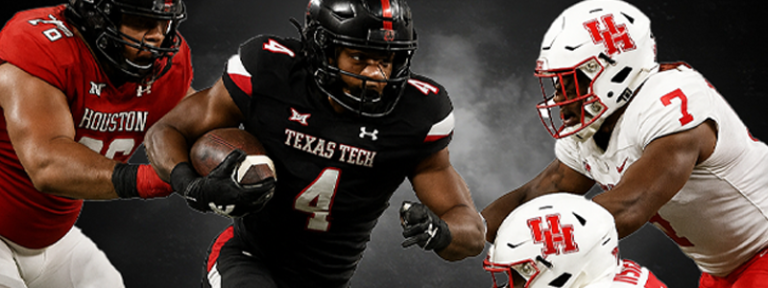
In 2025, only six FBS teams entered Week 6 undefeated — and two of them meet head-to-head Saturday: Texas Tech and Houston. Meanwhile, Ohio State stands pat at No. 1 and hosts Minnesota in a Big Ten night game that could ripple into playoff seeding. With both matchups kicking off around 7:00 PM ET, stakes are high.
We’ll break down how Texas Tech vs. Houston and Minnesota at Ohio State matter not just for conference bragging rights but for playoff resumes. You’ll see:
- Key metrics and matchups that could swing both games
- How “college football betting strategies” can be applied (when used carefully)
- What bettors and fans should watch for in real time
- Projections for how results could shape playoff trajectories
This is not about fluff; it’s about insight you can use ahead of kickoff. And yes — we’ll also note what reliable college football betting sites are showing in terms of odds and movement, so you know what the market is reflecting.
Lone Star Clash: Texas Tech’s Offensive Prowess vs Houston’s Grit
Texas Tech comes into this matchup scoring 52 points a game, which puts them second in the nation for scoring offense. The Red Raiders also only give up 11.3 points a game which is almost unheard of in the Big 12 on the road, especially with that kind of balance.
On the other hand, Houston is not an easy opponent. Their defense is very strong with DT Carlos Allen Jr. Houston’s offense has been able to keep drives alive with passing and the tight ends. QB Conner Weigman has shown a lot of calm and composure.
Initially, oddsmakers gave Tech a spread of an 11.5-point favorite. Analysts like Joel Klatt expected the game to be a blowout, stating a score of 42 to 17 in favor of Tech, primarily due to the advantage the Red Raiders have in both trenches. Most predictions are focused on Tech being able to get to Weigman, causing turnovers, and allowing their aerial attack to score massive points.
- A convincing win for Tech would firmly establish them as a power in the Big 12 and send a strong message to the national polls and playoff committees. If Houston manages to keep the game close or wins, the Cougars resume an underdog status and shake public perception. For gamblers, movement on the spread, counter props around live turnovers, and overall game flow will be revealing, specifically the over/under. Most important to track: turnover margin and explosive plays allowed.
Defensive Steel and Offensive Strain: Minnesota at Ohio State
Ohio State has a fierce defense. They are ranked No. 1 in the nation in scoring defense, permitting only 5.5 points a game. Their offense, although not as impressive, is also efficient: QB Julian Sayin has gone 78.8 % in the passes he has thrown, accomplished 987 yards and 10 touchdowns and only a couple of interceptions. Freshman RB Bo Jackson is gaining attention with 297 rushing yards on just 35 attempts.
Minnesota is coming in with a 3-1 record. QB Drake Lindsey has accomplished 958 yards with a 66 % completion rate, 7 TDs and 2 interceptions. The Gophers’ defense is solid against the run— allowing just 65.5 rushing yards per game— but that unit has not faced this caliber of offense.
Originally, Ohio State was favored by 22.5 points. Many betting analysts are anticipating a defensive standoff, which has led analysts to expect a total under 44.5 as a key wager. Others have proposed an implied score of 34-10, handing Ohio State a 96.6% implied win probability. The odds favor OSU as they are most likely to win and hold the line of scrimmage, which will defend and force mistakes from Minnesota.
- Ohio State would force the top playoff committee to see that they are a dominant contender by winning. Minnesota would give the playoff committee the hesitant seal of approval if they hold or show any signs of competitiveness, which they will give as a reference. Players who are betting on this would have the most control when watching the live props, streamlined betting.
Using Betting Markets as Informants (Without Losing Your Shirt)
Knowing how to apply college football betting strategies helps turn raw insight into smarter wagers. But it’s not about chasing lines — it’s understanding where value is.
Line Changes Point to Smart Money: A line move from -11.5 to -13 with Texas Tech probably means some bigger players put their bets down early.
Props and Totals Are Inefficient in Different Ways: There are times props/totals or the overall game total are mispriced and don’t align with team habits. For example, OSU’s defensive effort might force an under to pay.
Live Hedging Is Quality: If the early game scenario plays out poorly from your betting perspective, hedging strategically gives you a shot to save value.
Correlation Is Good: Lowering the randomness by linking bets logically together, such as Tech to win and over on passing yards.
Risk management: Although a game may be “hot,” never risk a large amount on any one selection, as volatility in college football is a factor.
Cross-performance analysis: Advanced stats (explosive plays, adjusted rates, etc.) should help identify areas where expected value diverges from market value.
With appropriate sizing and contextual analysis, luck plays a smaller role in betting as it becomes more about strategic inefficiencies in the market.
What Sets These Games Apart
These two matches contrast in style and storyline.
Conference Dynamics vs National Stakes: Texas Tech vs. Houston constitutes an intra-conference rivalry within the Big 12 with stakes on who wins the league. Minnesota at Ohio State is a marquee matchup in the power conferences that affects the national playoff picture.
Offense vs. Defense Matchups: Texas Tech has an overpowering offense and a rigid defense, with Houston providing the counterpunch in resiliency. Ohio State has a clear tendency towards defensive dominance, while Minnesota has to make the most of its limited chances to score.
Perception & Resumes: A Tech win is valuable and certainly on the committee’s radar as long as it looks dominant. Ohio State is in the clear as far as margins of victory go—a blowout win will be focused on the strength of their metrics.
Avoidance Potential: Tougher Houston likely gets more chances to beat Tech singularly than Minnesota does to upset Ohio State, because of the odds differences. Because of that, it makes the Houston scenario fairly “wild” from a betting and fan perspective.
Game Flow & Adjustments: Tech, most likely, tries to push the pace and makes Houston think fast. Minnesota will OSU will use defense to slowly and fully control the game, to limit the options and let the game and the clock do most of the work.
So, yes, both games matter. But it will be obvious that they are operating under different principles. One is a contest between equals (at least on paper); the other is a test of strength against underdog resolve.
Who Advances Toward Playoff Picture?
Texas Tech: A victory here puts Tech at 5-0, boasting a signature non-power alliance win. If they hold Houston off convincingly, they could vault into late top-10 consideration. A loss or narrow win invites doubt regarding the strength of the schedule.
Houston: Beating Tech shakes up the Big 12 race and offers Houston a remarkable win to add to its resume. Yet, as long as the game is close, losing doesn’t sink them at all.
Ohio State: A dominant win over Minnesota further establishes OSU as a playoff front-runner. The committee appreciates consistency in margins.
Minnesota: If they close the gap or at least cover the spread, they prove they belong in the national conversation. However, a blowout loss will cause them to fade as a pretender.
Across both, the Lone Star Fire meets the playoff volley. These matchups will likely separate contenders from pretenders.
5 Tactical Tips You Should Use
1. Watch early down aggression
Teams exposing blitzes or stunts early are confident with their line fronts and scheme—attacking the line first shows the confidence of Houston or Minnesota. That’s a clear game plan you can use to bet props like sacks or tackles for loss.
2. Track run/pass splits live
If Tech shifts to run the ball more during the later quarters, you can bet the passing yard props are going to be weak. OSU may control the game more on the run if Minnesota proves to be pass-vulnerable.
3. Use turnover props late
Turnovers can be a major factor in both games. If the game is mid-late and turnover props like interceptions or fumbles are soft, then they can be a good value to bet on.
4. Monitor betting markets and reverse lines
If a game is moving in the opposite direction, like an early Houston lead and the line is picking down, that indicates contrarian betting. Having alerts for these is a good idea.
5. Correlate team performance metrics
Avoid betting on mixed parts. For Tech, use an arrangement like Tech + “cornerbacks” over a certain pass yard threshold. For OSU use + total under. That gives you a better shot to win your correlated bets.
These are high-leverage plays. Execute with discipline, test small, and scale when confidence is high.
Frequently Asked Questions
Q: How to Use Power Rankings for College Football Betting?
A: College football power rankings reflect team strength beyond wins/losses — they adjust for schedule, pace, injury, and efficiency. Using them helps detect undervalued teams: if a team is ranked far higher than its odds suggest, that may be a value bet.
Q: When should bettors pick props vs game outcomes?
A: Use props if you have an edge in a specialized area (for instance, you predict a QB will throw more than his season averages). If your level of confidence is more general, focus on game outcomes or correlated parlays.
Q: Is betting on Big 12 games riskier than Big Ten?
A: Not necessarily—but Big 12 games do tend to be higher-scoring and more volatile, so there is higher variance. Big Ten games (especially with dominant defenses) may be more predictable, but there are likely edges to be found in the margins.
Q: What’s a good bankroll strategy for two big games in one week?
A: Split your exposure across games. You should really bet all of your weekly bankroll on one outcome. Pick a percentage (for example: 2-5%) for each game. This works better for reserves for halftime or live trades.
Q: Are closing lines or opening lines more reliable?
A: Closing lines tend to have more information and sharper money put on them; they are more effective. Opening lines are mostly bait. You can use them for your first positioning, but range them for value for later movement.
Q: How do I avoid getting “off” the line?
A: Take action when you see value and pass on the line if it moves against you. Don’t chase it; use a hedge and lock in some profit. If you stay disciplined, you won’t be left out.
Q: How do injuries impact in-game betting?
A: Injuries to important players like the quarterback, offensive line, and edge rushers really change the expectations in the game. Keep and adjust your bets based on injury reports and sideline updates.
Q: Can weather or conditions alter my bets?
A: Of course! Rain and wind can minimize the passing game and make rushing more important. It also makes risky field plays of any sort. Always check the weather when you are thinking of totals and prop bets.
Final Takeoff: Lone Star Blaze & Buckeye Steam
Here are takeaways to walk into kickoff with clarity:
- Texas Tech’s offense and defense combo gives them a clear edge. Houston must disrupt in the trenches to stay alive.
- Minnesota is in a tough spot — a strong run defense helps, but OSU’s balanced attack and elite defense likely overwhelm.
- Betting markets reflect confidence: Tech’s line movement, OSU’s heavy favorite status, and totals all offer signals (if you know how to read them).
- For your own plays, apply college football betting strategies with discipline: use props, correlated plays, and live adjustments, not wild guesses.
If you want a safe, high-odds bet to start: lean Texas Tech to cover, Ohio State to win big, and a total under in OSU game. For deeper plays, monitor turnovers and prop lines live.
If you’re looking for trustworthy markets and odds, check BetNow — they’re reputable among online college football betting sites.
Get your wagers in, enjoy the tension, and let the scoreboard tell the story.

Hilbert Mayer
Sports Writer
Hilbert Mayer is a professional sports writer, betting analyst, and content strategist with over 15 years of experience in the sports industry. Before focusing on sports betting analysis and handicapping, Hilbert worked as a sports writer for various news outlets, covering everything from game recaps to in-depth matchup features. Today, he specializes in MLB, NFL, March Madness, and UFC betting, combining his journalistic background with deep statistical expertise and real-world betting insights. His proven track record, sharp reads, and ability to break down complex matchups make him a trusted voice among both casual bettors and seasoned sharps.
Published on: October 4, 2025
Last updated: October 4, 2025