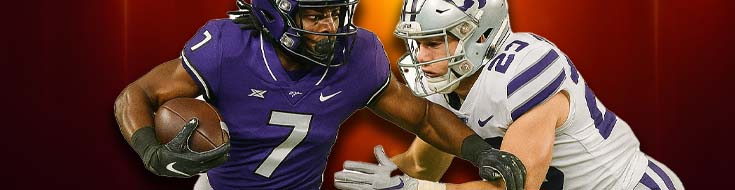
Over the past decade, the Big 12 has averaged more than 1.5 teams in the College Football Playoff conversation each season. That’s part of why TCU traveling to Kansas State this Saturday carries more weight than just another conference contest. And in the SEC, the showdown between Florida and Texas A&M already has ripple effects across the division. For fans and bettors tracking college football online sportsbooks, this week’s pair of games offers both narrative tension and potential edge plays.
We will discuss the stakes involved in both matchups, analyze the strengths of each team along with their respective rosters, examine the real-time changes in sports betting odds and probabilities, and provide useful perspectives for readers interested in these games. A comprehensive analysis of each contest’s critical metrics, benchmarked against wider conference metrics, predictive analytics, and professional commentary, will be featured. Betting strategy, appropriate timing, and risk will be answered in the FAQs section. Finally, you will receive concise instructions and a call to action redirecting you to BetNow.
Big 12 Title Implications in Manhattan
The Numbers Behind the Stakes
TCU enters Week 7 with an overall record of 4–1 and 1–1 in Big 12 play. Kansas State’s record is 2–4 overall and 1–2 in the conference. At face value, that is a lopsided record; however, the Wildcats have suffered some close losses in their previous games (three of them within 10 points). On the other hand, TCU has suffered some weaknesses as well–its red zone defense is 88th in the FBS (allowing an 88.2 percent conversion rate), and the Frogs average 65.2 penalty yards a game, which puts them near the bottom. In contrast, Kansas State has one of the red zone offenses in the country (94.1 percent conversion rate, 23rd) and has penalty yards discipline (32.3 yards per game, 10th).
Due to those splits, this isn’t merely a mismatch. TCU must execute—or risk allowing a home dog to nab momentum in Manhattan. Kansas State’s home-field advantage and these positive underlying metrics warrant consideration.
A victory for TCU bolsters its positioning for the upper tier of the Big 12 standings while keeping the team in the thick of the title chase. An upset or cover for Kansas State, on the other hand, would reignite momentum within the conference while complicating the road ahead for everyone else.
Matchup Context
Traditionally, TCU has found success in Manhattan, and with Manhattan, the Frogs haven’t won there since 2017. That trend adds psychological weight. Kansas State’s offense is led by dual-threat QB Avery Johnson, who is composed under center and during pressure situations, especially at home. Some analysts even support Kansas State at +1.5, banking on undervalued metrics backing the Wildcats.
In contrast, TCU’s offense is led by Josh Hoover, who is one of the most efficient passers in the league. Having transferred momentum from prior seasons, Hoover is an Air Raid scheme weapon, especially with the deep passing game. But the Frogs’ defense has been undersized, with Kansas State able to exploit and sustain time and down distance.
In the context of the Big 12, the league is more top-heavy than in recent seasons. Texas Tech and TCU, which top consensus power rankings, have tightened the middle tier so that tier is more difficult to navigate.
Betting Angles
You are encouraged to monitor Kansas State against the home line, as their red zone offensive/defensive mismatch while historically competitive at home, suggests Kansas State should at least cover the line, if not win outright. Kansas State might win against the early spread prediction support at sportsbooks. You should consider TCU’s red zone ineptitude, as it might allow Kansas State to take a strong position late in the game to offer a positive payoff.
Due to the potential explosiveness of both offenses along with possession constraints, expect a “middle ground” expected total. Lean under if the expected total decreases, and expect a score gap with an over if the expected total increases.
Game Outlook
Prediction: TCU wins, but by only a narrow margin, perhaps 31-28 or 34-30, yet Kansas State should be able to cover the spread. TCU will move the ball on the offense, but the lane Wildcats’ goal line, the Wildcats’ ability to convert and extend drives will give them life. Of all the remaining season contests, this game will be a defining gatekeeper or seeding game in the Big 12 Conference standings.
The danger for TCU in such a narrow situation will be pressing and risking mistakes or penalties if any trailing margin. Conversely, a close loss will give K-State the confidence to meet a reasonable set expectations for the final stretch. TCU needs the game to maintain credibility; Kansas State needs it to change the directional focus of their season.
Right now, across betting markets, the balance between analytics and gut instinct matters more than usual. This is where understanding sports betting odds and probabilities really pays off. Lines aren’t just numbers—they reflect implied chances of victory, bookmaker adjustments, and public money trends. Bettors who grasp how probability translates into real-world value can see when the market is misaligned. For example, a +1.5 line with a 94% red zone offense behind it isn’t just a toss-up—it’s a calculated risk with measurable expected return.
SEC Showdown: Florida vs Texas A&M
Stakes & Statistical Breakdown
With a record of 5–0, including 2–0 in SEC play, Texas A&M is in a favorable position in the SEC, and even more so is over .500 in Florida with a 2–3 record. Texas A&M is a 7.5-point favorite in this week’s game, with an over/under of 46.5 points. This is a confident expectation, albeit with little risk, in A&M.
The Texas A&M offense, and in particular the ground game, was dominant in the last game, with 31 points, while the defensive front secured a 31-9 victory, and even more so while the ground offense secured a more systemic preferential treatment of the offense. Florida, on the other hand, while erratic, still has offensive potential that surfaced in the Texas game.
This is also reflected in the line for the A&M game, where Texas A&M is an even greater favorite in the moneyline position to win the game, to further underscore the expectation, and to set the risk of betting.
Team Context
The SEC is jam-packed this year. A performance like A&M’s ‘A’ crushing of Mississippi State suggests they are trending toward the SEC upper echelon. A&M’s identity is physical and dominant in the trenches, something Florida must either match or be overrun. Florida’s strength is in volatility. If their offense can produce enough early chunk plays, they can remain in the contest. But it will be difficult against A&M’s secondary and pass rush.
In their historical matchups, A&M and Florida have previously split their meetings each time by narrow margins. Those margins swing wildly and are directly correlated with momentum shifts and turnovers. This indicates to me that under certain game conditions, especially when Florida is backed against the ropes, we may see protracted low-scoring periods or contests of field position.
Betting Strategy
In terms of betting, line movement can be quite telling. A&M opens -7.5 and goes to -9, there’s likely a significant betting consensus. If you think Florida will be valuable as an underdog, it makes sense to take a position on them before the line moves. If the line weakens back toward -7, it indicates contrarian bettors taking Florida.
Make sure to also pay attention to the first half lines and live betting opportunities. Florida may come out strong—if they do, there’s first half dog value. For total bettors, given the weather or tempo, 46.5 is high enough to invite overplays. If both sides flip into ball-control, an under might have value.
Don’t forget about correlated props. A&M’s strong run game implies a rushing prop may be a safer option to cover versus the spread in a more unpredictable game.
Game Outlook
Prediction: Texas A&M will capture the victory with a 10-14 point advantage. Something like 28-17 or 31-19 would fit. Florida will most likely stay within a possession in the beginning, but A&M’s depth will let them run away with the score in the second half. For the SEC, a performance like this aids in solidifying A&M’s recognition in the upper-echelon tier, marking them as a more challenging candidate for the CFP.
If Florida’s performance is a surprise, it would most likely come from the turnover margin or explosive passes, but it is an unstable gamble. A&M is prepared for unwavering physicality and consistency—not in an impressive style, but in effectiveness.
Expert Insights & Betting Tips
1. Monitor Sharp Money Early
Initially, books release lines. If within hours those lines sharply move, it reflects professional/sharp bets responding to more insightfully constructed lines. Jump early in these cases instead of waiting to chase.
2. Use Situational Metrics Over Win-Loss
Records should not be over-valued. Kansas State and Florida’s close-to-the-chest/loss games are telling compared to the superficial W–L. Always assess the myriad of still-ignored measures, such as red zone efficiency, penalties, and third-down stalled drives.
3. Hedge Live Around Red Zone Breakdown
Games are oftentimes tilted at the goal line. With TCU’s red zone defense being weak and Kansas State extremely strong in that aspect, live hedges in that zone will yield prize betting opportunities.
4. Lean Toward Totals When Spread Is Lopsided
When one side is highly favored, the spread is hard to beat. In these cases, target total lines (over/under) or props (rush yards, receptions) still possess betting line inefficiencies.
5. Watch for Line Latency Across Sportsbooks
When one book moves and others do not, there is likely hidden information (injuries, sharp bets) that is not being disclosed. Set alerts or use multiple sportsbooks to identify cases of hidden information.
6. Don’t Ignore Public Sentiment Shift
When the public leans too heavily one way, the other side can sometimes obtain contrarian value. Especially in these situations, when public money is pushing the lines too far.
Every tip is based on either market behavior or matchup statistics. Use them selectively, and always size your bets according to the level of discipline.
Frequently Asked Questions
Q: What is the safest way to use college football online sportsbooks?
A: Choose sportsbooks that are reputable and licensed. See if the sportsbooks are regulated where you are located and if there are safe deposit and withdrawal options. Check if there are responsible gambling features such as self-exclusion and deposit limits. Gambling is entertainment; do not consider it a source of income.
Q: What is the optimal time to place a bet on these games?
A: In general, the earlier the better, as the lines tend to widen, are moved as news comes in, and get sharper in the opposite direction. The earlier you place a bet, the more positional size you can place and make close to kick-off for the second time, where you are allowed to scale out, hedge, or re-evaluate if the edge has shifted in other directions.
Q: Should I bet the spread, moneyline, or total?
A: This highly depends on the structure of the matchup. If the spread is tight and fluctuating, the total or player props may offer better value. If you like a team with a strong edge, the moneyline may offer a suitable option without margin risk.
Q: How to Use Power Rankings for College Football Betting?
A: College football power rankings synthesize metrics (offense, defense, strength of schedule). Use them to identify undervalued teams: if a team’s power rank is much higher than public perception, that often suggests positive betting value.
Q: How do injuries and late scratches affect odds?
A: Injuries and late scratches have the potential to shift odds reasonably quickly. Changes to the offensive line, quarterback, and key defenders in football have a multiplicative impact. Information on injuries comes in right up until the game starts, and that is when you are advised to make adjustments or hold back and pull back.
Q: What risks should bettors know in college football?
A: There is a lot of volatility in college football. This is driven by turnovers and their ability to shift the momentum of the game, which can also come from excessive hype surrounding the game. Betting more than you can afford to lose should also go without saying, and you should also steer clear of loss chasing.
Q: Are live betting props more favorable than pregame bets?
A: They can be in the sense that live odds are less reactive to the changes in possession, which allows the bettor to identify poorly priced props in the yard and next play outcomes, and thus provides better opportunities to make a profit during the game.
Q: How to manage a bankroll through a season?
A: Best to use a fixed-percentage approach, which means that you would bet a certain fixed percentage, for example, between 1 and 3 percent of your bankroll on a single play. Don’t go on tilt after a loss, and try to vary your bets and avoid all-or-nothing bets on big games.
What to Watch and Why It Matters
Here’s what to keep in mind as Saturday unfolds:
- TCU vs Kansas State is tight. Look for conversion efficiency in red zone, penalty differentials, and historical road trends.
- Florida vs Texas A&M will hinge on tempo control, run defense, and turnover margin.
- Respect how sports betting odds and probabilities adjust in real time—lines shifting early can reflect sharper insight.
- Use props and totals where spreads look too sharp or overextended.
- The value often lies off the beaten path—live bets, first-half lines, hedges.
BetNow offers access to real-time lines, prop markets, and live betting tools. Use it to monitor shifts, strike when value appears, and stay alert through kickoff. Let the analytics guide, but trust your strategy.

Hilbert Mayer
Sports Writer
Hilbert Mayer is a professional sports writer, betting analyst, and content strategist with over 15 years of experience in the sports industry. Before focusing on sports betting analysis and handicapping, Hilbert worked as a sports writer for various news outlets, covering everything from game recaps to in-depth matchup features. Today, he specializes in MLB, NFL, March Madness, and UFC betting, combining his journalistic background with deep statistical expertise and real-world betting insights. His proven track record, sharp reads, and ability to break down complex matchups make him a trusted voice among both casual bettors and seasoned sharps.
Published on: October 9, 2025
Last updated: October 11, 2025