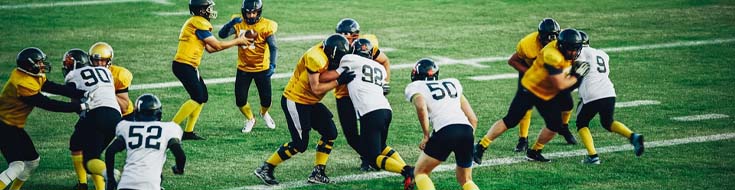
This weekend’s Notre Dame-Syracuse matchup has a 35.5-point spread favoring Notre Dame on NBC. On first glance, it’s easy to see how imbalanced the matchup is on paper. However, the game becomes more interesting once you intersperse the dynamics of tradition, schedule importance, and betting. For reliable NCAA football sportsbooks, it’s more than just another weekend slate; it’s another Saturday prime window with significance on both season and betting narratives.
This analysis of Notre Dame and Syracuse will be paired with a discussion of Texas and Arkansas, both 3:30 PM ET games on the same afternoon, with equal national broadcast coverage and pressure of their own. From emotion and historical rivalry, we will determine where the pressure is for each game, along with statistics, betting correlation, and predictions. From pressure, we will examine what joy, ranking context, and rivalry history bring to the odds.
Matchups Headline, Stats Speak, Implications Clear
Ranked ninth with an 8-2 record, Notre Dame faces 3-7 Syracuse, which is on a six-game losing streak after losing their starting quarterback, Steve Angeli, to an injury. Notre Dame is a -35.5 favorite with a total set at 51.5. This large spread indicates extreme dominance, but there is a risk to that. When a spread is this big, the question is whether the favorite can maintain its intensity or if it will start to relax.
Defensively, Notre Dame has been a powerhouse, limiting their opponents to negligible yardage. Syracuse, on the other hand, has been scoring in the teens for quite a while. The spread paired with the total indicates the difference. If the Irish take control of the game early, the under is a likely scenario; however, if the Orangemen can put up a fight, a backdoor cover is likely.
In the Texas-Arkansas matchup, Texas is 7-3 with odds in their favor by about 10, with a total set at 57.5. Texas has recently fallen from a top 10 position to the mid-teens with a rough loss, while Arkansas has an abysmal record of 2-8, dealing with cancelled coaching contracts and a total lack of success in the SEC. Rivalry games, however, can be quite unpredictable. Texas has an overwhelming lead in the all-time series, and despite that, this matchup can be very unpredictable.
There is value in both matchups, but for very different reasons; one for determining whether or not a team can maintain dominance, and the other for determining whether or not the chaotic nature of a rivalry game will take over.
Breaking Down the Differences That Matter
Now compare the two games directly:
Ranking pressure: Notre Dame currently ranks in the Top 10 with CFP aspirations still in play. Texas, ranked 17, is still a big-name fundamental football program and is still in the hunt, even if it is a long journey. Arkansas and Syracuse will play the role of spoilers. This creates asymmetric motivation where Notre Dame needs a signature, and Texas needs a bounce-back win.
Rivalry vs. prestige: Syracuse and Notre Dame do not have a rivaling history. However, in the games’ prestige, Texas and Arkansas have one of the historical classic rivalries games of college football. This classic, featuring decades of emotional value, provides unpredictability. Arkansas, even in a down year, plays better than the statistics against Texas.
Line structure: Notre Dame, with a 35.5 point spread, is almost a different sport than with Texas, with a 10 point spread. Big spreads are often dangerous for the favorite. One explicit quarter, a single turnover, a quarter rotation, and the cover just falls apart. One explicit quarter, a single turnover, a quarter rotation, and the cover just falls apart. Medium spreads in rivalry games, though, often update in the final quarter.
Momentum & coaching: Notre Dame is stable, physical, and going upwards. Syracuse is staggering and is very limited when it comes to offensive capabilities against Texas and Arkansas. Texas is inconsistent week to week, and Arkansas is rebuilding in the middle of the season. These contrasts are stated above and impact prop betting more than spread betting.
Grasping these nuances enables gamblers to analyze these games more deeply. Even if the two favorites come away with the expected wins, the margins in those wins—and other statistical outcomes’ alignment with the Vegas odds—are what define the value. One can examine how differently various sports betting platforms treat these nuances: Notre Dame’s line reflects the degree of projection certainty; Texas’s line reflects projection degree of rivalry volatility.
Actionable Takeaways You Can Use Immediately
For anyone using reliable NCAA football sportsbooks, these matchups offer several actionable strategies:
Cover vs. blowout risk
While Notre Dame can be a frontrunner in a game from the start, the risk clearly comes from a lack of strong performance in the second half, which is needed to cover the spread. If you expect a rotation of backup players to be conservative in call plays, Syracuse +35.5 has value at this number. The total is set at 51.5, indicating a game in which the second half has a significant risk of slowing to a crawl.
Rivalry volatility
The volatility in this game is Texas vs. Arkansas, which is also a rivalry game. If Texas hopes to re-announce its CFP narrative, they are likely to come out quickly on offense and make a statement. But because this is a rivalry game, it can lead to Arkansas being more competitive on the field. This leads to good value on the Razorbacks +10 and likely the over. It’s important to consider the emotional element of the game, not just the numbers.
Prop-bet edges
There are good prop bets for Notre Dame’s 2 running backs, Jeremiayah Love and Jadarian Price, especially around yards and touchdowns. For Texas, prop bets involving the QB, especially if going through Arch Manning, are likely to be a good bet as Texas seems to be a strong offense. Arkansas’s defensive weaknesses lead to even more good prop bets.
Line-movement timing
Since both games occur at 3:30 PM ET, keep an eye on both. If there is a lot of public betting in favor of Notre Dame in the Syracuse game, the line is likely to move in favor of Notre Dame, which leads to increased value in betting on Syracuse. If sharp bettors are involved, Texas’s line seems more likely to shift.
Portfolio balance
Try to keep your betting fairly even. Do not focus on a single game too much. Spread risk out of bets across multiple games for things such as total, props, bets, and alternate lines. 2 games that are highly visible and play at the same time should be avoided as creating a large amount of exposure.
In-game wagering strategy.
If Notre Dame goes into the half up 21, there might be value in the live unders or quarter markets. Conversely, if Texas comes out firing, the live over will likely be more appealing. Have preset thresholds to guide your strategy.
These applications make the mid-afternoon window more navigable and more profitable when handled with structure.
Future Impact: What Comes Next After Saturday
Looking ahead, these games could shift perception significantly.
If Notre Dame fully covers against Syracuse for another likely victory, it strengthens the argument for Notre Dame’s playoff bid. Their consistent dominance will impact future odds lines for remaining games. However, if they simply win likely by a large margin but don’t cover, odds will likely be tighter against Notre Dame in the remaining games, presenting a value opportunity.
Texas will regain national attention with a ranked win if they cover large odds. However, if they win other than large covering, it will present Texas as a team with deeper inconsistency than their current perception. For Arkansas, even with a loss, a respectable cover will likely lead to a win projection inflation.
More broadly, the 3:30 PM window has become a proving ground for public lines. More props focused on public usage, with injuries likely leading to value-efficient lines. Notre Dame and Texas rolling likely leads to wider odds for highly ranked teams mid-afternoon in the future. More sharp action focused on a likely public overreaction.
Both rolling leads to highly ranked teams mid-afternoon future with wider odds public likely underestimating the future with sharp. Notre Dame also has better value with Texas. More room for sharpness.
Expert Insights
Recognize what a spread really is
A spread like Notre Dame -35.5 assumes perfection. One drive stall, one early sub, losing quarterback, etc., can derail the cover.
Rivalry games change the picture
Texas–Arkansas isn’t a standard game. There’s rivalry, anger, a frenzied crowd, and tight margins, which often lead to chaotic and unpredictable scoring late in the game.
Follow team scoring tendencies
Like the Syracuse game, where they’ve gone weeks without crossing 20. Or Texas, which is both explosive and flat. These scoring tendencies can end up being more important than any ranking.
Look for early week sharp money
If there’s a lot of early activity, moving a spread in one direction, they tend to have info. When the public debt arrives, the prediction tends to be much weaker.
Live bet based on your presets
Rather than reacting, set a pre-defined live-bet trigger for things like leads at halftime, fast scoring, or injuries.
Know how to manage your bet size for hype games.
Big games tend to attract big emotional bets. If it’s a high-visibility game, stick to unit sizes in the established bet range and try to avoid chasing.
Frequently Asked Questions
Q: Is Betting on Underdogs at Sportsbooks a High-Reward Strategy Worth the Risk?
A: It can be, but only when the market misjudges the matchup. In sportsbook underdog betting, value appears only when there are real reasons—injuries, motivation, tempo, coaching, or inflated spreads. Underdogs win less often, so the reward only makes sense when those edges are clear and measurable.
Q: Do rankings predict spread performance?
A: No. Matchup quality is a factor. Achievements are displayed in rankings. A top 10 team can win but still lose a spread by a good amount.
Q: How should I adjust my strategy for rivalry games?
A: Anticipate greater diversity in outcomes. Offer less money on these bets. Emotions and motivations in the rivalry and rivalry in general are good angles for analysis. Maybe use props or totals instead of the spread.
Q: How should totals be used in these matchups?
A: When the favorite is likely not to score in the 4th (Notre Dame unders) or when a rivalry game is likely to score (Texas-Arkansas overs). Tempo and scoring history of the teams should be used to evaluate this.
Q: When is the best time to place bets for these games?
A: A few hours before the game starts is usually the best time to place these bets. Stable prices and updated information are available. Don’t place bets right before the game starts, as prices can spike due to betting by the public.
Q: How do I manage multiple bets during the same window?
A: Keep your betting amount the same for every bet, then avoid betting heavily on highly correlated outcomes. You can also diversify your bets by using props and totals.
Q: Are prop bets safer than spreads in these types of games?
A: Not safer, but in some cases, they are more predictable. Since props are centered around single outcomes of the game instead of the game as a whole, they can provide more of a clearer angle.
Key Takeaways & Next Step
Mid-afternoon games have a lot of context: Notre Dame is pursuing playoff prestige, Texas is trying to regroup, and Syracuse and Arkansas are looking to spoil. The Irish game depends on whether a massive spread holds; the Texas game depends on rivalry volatility. For bettors picking lines on NCAA football sportsbooks, the value doesn’t lie in picking winners; it’s in finding the lines that mispriced motivation, pace, and matchup specifics.
Bet on spreads and totals that make structural sense. Use props. If your total stays in value, hold it. Watch for line movement. And most importantly, have the same betting strategy across both games.
If you are trying to build your mid-afternoon card, the time is now to evaluate your angles and make your move at BetNow

Hilbert Mayer
Sports Writer
Hilbert Mayer is a professional sports writer, betting analyst, and content strategist with over 15 years of experience in the sports industry. Before focusing on sports betting analysis and handicapping, Hilbert worked as a sports writer for various news outlets, covering everything from game recaps to in-depth matchup features. Today, he specializes in MLB, NFL, March Madness, and UFC betting, combining his journalistic background with deep statistical expertise and real-world betting insights. His proven track record, sharp reads, and ability to break down complex matchups make him a trusted voice among both casual bettors and seasoned sharps.
Published on: November 19, 2025
Last updated: November 24, 2025