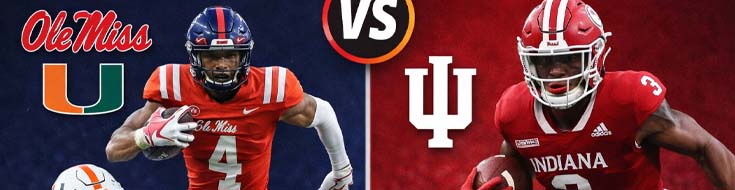
When college football started in January, there were still many teams competing, and some were not expected to be there. It all comes down to figures. Four teams finished the season with the highest efficiency, increasing their credibility for a real playoff and garnering national attention. That combination of factors is the reason there was interest not only in NFL broadcasts but in major NFL betting platforms, which were operating on the same level as college betting.
Ole Miss vs. Miami and Indiana vs. Oregon present two ends of the same spectrum: programs with ceilings that they were finally able to break through. One blends the SEC speed with ACC depth, while the other has a Big Ten underdog with a West Coast collegiate powerhouse that is built for playoff football.
What follows describes how these teams got to this point, why they got to this point in January, and what the data captures that others do not. You will see how impactful roster, speed, and situational betting were on the team’s postseason odds, what the matchups look like, and how bettors could apply this in the future without creating a focus on headlines.
Breaking the Ceiling: Ole Miss and Miami’s January Moment
The Ole Miss Rebels and Miami Hurricanes did not just become good by luck. Both programs started getting attention in January by fixing their weaknesses. For Ole Miss, that meant controlling the pace of the game by cutting down the number of defensive snaps played while still being one of the most efficient passing teams in the SEC. For Miami, that meant finishing up games strongly, something that had plagued them in the previous seasons.
The notable differences showed up in their third-down and red-zone efficiency. Ole Miss got better at scoring touchdowns in the red zone and cracked the nation’s top tier, whereas Miami’s close games ended with better turnover margins than they previously lost. These changes are not for show. In playoff-caliber matchups, one extra possession is often what decides the outcome.
Recruiting played a huge role as the teams brought back veteran quarterbacks and experienced offensive lines, leading to fewer negative plays due to pressure. This caused the oddsmakers to put more value on experience than mere athleticism to strengthen January projections.
From a betting standpoint, the focus won’t be on the brand names of the teams. Instead, it will be on the two teams peaking simultaneously. January did not show what they could do. Instead, it validated all the work they put in since September.
Indiana vs. Oregon: Contrast in Identity, Similar Stakes
For the Indiana Hoosiers, reaching this stage signals one of the most significant jumps in efficiency of the season. Indiana didn’t dazzle their opponents with speed; instead focused on winning with discipline: low penalties, good special teams, elite field-position control, and that type of profile travels well in the postseason.
In contrast, the Oregon Ducks brought depth and speed. Oregon rotated skill positions with reckless abandon to keep its fourth-quarter explosiveness. Even against top-25 defenses, their offensive success rate remained above average, a good marker for playoff readiness.
Relative to Indiana, Oregon can afford more mistakes. Indiana has to play a clean game. For most of the game, Oregon can afford a mistake and continue to press its advantage.
Midway through, this is the point most bettors usually decide to switch to mobile betting sites due to tempo and personnel changes, while Indiana games tend to end up tighter, and Oregon games tend to end up with bigger margins.
When it comes to the record, it reflects more on the expectations for the game, and it becomes more pronounced in January when styles rather than surprises take center stage.
Turning Insight Into Action: What Bettors Should Track
Playoff football squishes the variance. That is the baseline. With Ole Miss–Miami, early down success is critical. If Ole Miss stays ahead, Miami’s pass rush loses its impact. That favors sack props on Miami going under and completions on Ole Miss going over.
In the Indiana-Oregon game, special teams are the odd piece. Indiana is efficient in both punt coverage and return. Short fields keep them in it. Bettors can watch live field position for the Indiana spread.
Another example is coaching tendencies under duress. Ole Miss was more fourth-down aggressive this season, while Miami was more red zone conservative. Those patterns impact alternate totals and team totals.
Avoid putting too much stock into preseason narratives. January lines price the momentum. The real edge is in situational data. Third and medium conversions, time between subbing and snaps on D.
Doing this type of betting is not about volume. It is about waiting and responding to what the teams actually do, rather than what they are supposed to represent.
Looking Ahead: Playoff and Title Implications
If Ole Miss moves forward, the road ahead gets narrower, but it also doesn’t close off completely. Their offense is versatile enough to challenge any remaining defenses, particularly indoors or in neutral-site games. The only real concern is how deep the defense is, particularly against elite running teams.
Miami is looking at how high their ceiling is, and that totally depends on the consistency of their protection. Against the elite of the defensive fronts, the pressure rates increase. Crack that, and their championship odds drastically improve.
With Indiana, its future is hopeful because of sustainability. Another game with no blemishes, and it locks them in to be something more than a feel-good story. It is a sign that the shift in the balance of power of the Big Ten is structural.
Oregon is still the best of the best. Their championship odds only stay high with their high rotation being the only factor holding them back, as long as depth in the rotation is the concern and never the scheme.
January doesn’t just crown winners; it resets the expectations and the odds for the following season, along with the recruiting power. These games ripple forward.
Expert Insights
Choose Experience Over Hype
Veteran quarterbacks reduce volatility. Experience often leads to fewer negative plays. Use this by putting greater emphasis on QB tenure when betting matchups.
Over/Under First Half Pace
Tempo is what dictates totals. If the first drives are slow, the second half over loses value. Adjust your live bets.
Special Teams Are Hidden Advantages
Swings in field position are not glamorous, but they decide close contests. Before betting the spread, look at the averages for net punting and returns.
Don’t Chase Blowouts
Margins tighten in the playoffs. Big spreads are not rewarding. Stick to derivatives, like team totals and alternate spread lines.
Depth Beats Stars Late
The ability to perform in the fourth quarter is a byproduct of rotation. Teams with a deeper bench tend to surprise people with what they can do.
Let the Market Settle
Lines are changing rapidly at the start of January. Waiting for the dust to settle is often a better way to pick your spots.
Frequently Asked Questions
Q: Why is there national interest in these basketball matchups?
A: They have exceeded all previous expectations as far as data performance is concerned. It is that combination that drives viewership and betting volume.
Q: What is the difference between betting on playoff games and betting on regular-season games?
A: Variance tightens. Coaches shorten their rotations and possess their value, which minimizes the likelihood of a blowout.
Q: Is there more value in live betting for these January games?
A: More often than not, yes. Adjustments happen more quickly in these games, and there are tempo shifts that create exploitable windows.
Q: What to Look for in a Top-Rated Sportsbook for the Best Betting?
A: For a top-rated sportsbook site, always look for fast live updates, transparent odds movement, strong limits, and reliable payout history. Those factors matter more than bonuses during playoff volatility.
Q. Is there more value in betting on underdogs in playoff matchups?
A: It depends. When the totals drop and there is a premium on possession, the underdogs cover more than what the perception of the public is.
Q: How should bettors approach their bankroll during the playoffs in basketball?
A: Bet smaller units. There will be fewer games, and the lines will be sharper. Consistency is better than aggressive betting.
Q: Do injuries affect the game more as the season progresses?
A: There are depth issues that come into play. Pay attention to snap counts and be sure to look at late-week injury reports.
January That Changed the Map
Ole Miss, Miami, Indiana, and Oregon didn’t stumble into January relevance. They earned it through efficiency, discipline, and adaptability. The biggest takeaway is simple: playoff football rewards structure over flash. Experience, depth, and situational execution matter more than brand.
For bettors, the value comes from understanding those layers, not chasing noise amplified across major NFL betting platforms and college markets alike. These games reshape odds boards for months, influencing futures, win totals, and perception.
January’s spotlight won’t fade when the confetti falls. It carries into spring projections and early lines. Staying ahead means applying what these matchups reveal, not what they promise.
If you’re ready to act on sharper insight and real data, take the next step with BetNow and approach the rest of the postseason with clarity instead of guesswork.

Hilbert Mayer
Sports Writer
Hilbert Mayer is a professional sports writer, betting analyst, and content strategist with over 15 years of experience in the sports industry. Before focusing on sports betting analysis and handicapping, Hilbert worked as a sports writer for various news outlets, covering everything from game recaps to in-depth matchup features. Today, he specializes in MLB, NFL, March Madness, and UFC betting, combining his journalistic background with deep statistical expertise and real-world betting insights. His proven track record, sharp reads, and ability to break down complex matchups make him a trusted voice among both casual bettors and seasoned sharps.
Published on: January 7, 2026
Last updated: January 12, 2026