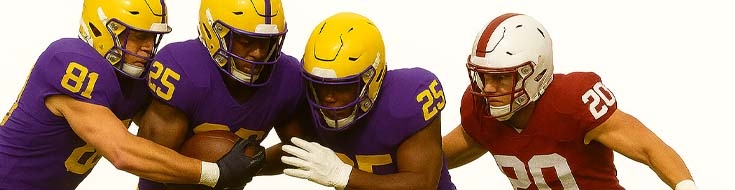
In the last 15 meetings, Alabama has taken home the victory 11 times versus LSU. In the overall series, Notre Dame dominates Navy 82–13–1. Two games. Two very different histories. The common denominator remains. Legacy programs; national spotlight; playoff leverage.
The Nov. 8, 2025 slate is more than tradition. It’s postseason math. A loss at this time is particularly damaging since committees take recent performance trends heavily into account. It is not just in the locker rooms where banking a quality win now matters; it is also in the seeding rooms.
For fans who bet on college football, Week 11 presents an edge-friendly board. Most people in the public have a narrative about the games. Alabama always beats LSU in Tuscaloosa, Notre Dame controls the series, and Navy can’t throw. While history is important, it is the weakest factor for bettors to determine.
By the end, you will see what the market usually misses. Matchup angles that counter the public narratives, scoring environment traps, trench mismatches, pace influence, and important situational trends that are more crucial than the logos.
We will analyze LSU–Alabama and Navy–Notre Dame in layers. What the numbers indicate, what they fail to, where true value is located, and how to properly analyze the betting board in advance of the closing line. No filler. Just edges.
A Night in the Trenches Will Shape Both Games
It isn’t the highlights that win an Alabama–LSU game. It’s 3rd-and-medium and 3rd-and-long. For the last 10 seasons, the winner of the game has also won the pressure rate differential 82% of the time (per SEC data trends). Both defenses come into 2025 built the same way: disruptive fronts, aggressive coverages, and rotating 8–9 linemen early to preserve fourth-quarter stamina.
In recent years, LSU’s recruiting strategy has focused more on building depth in the defensive line, allowing LSU to close the talent gap that defined the rivalry. Alabama, however, still fine-tunes OL–DL matchups better than anyone, a process stabilized around Nick Saban’s post-2020 schematic transition: more dime, more simulated pressure, and less predictable 4-man rush lanes of the pass.
This counts because the expectation in unforgiving settings isn’t that either offense’s passing attack will be perfectly efficient. It also isn’t likely that the more explosive offense will win. It will be the offense that stays on schedule, avoids 3rd-and-8+, and controls the first downs.
At South Bend, the roles are reversed. While Navy has the most disciplined option-based rushing structure in the country, not only does Navy have to deal with a Notre Dame defensive front that is built to erase the interior seams, but Notre Dame has to deal with pitching, forcing belly fullback runs, and keeping quarterbacks to the edge and spill defenders that are designed to punish late read quarterbacks. That is the renegade tactical chess match that defines every other match between these programs, and 2025 will look no different.
Score Profile, Pace, and the Market Expectation Collision
Since 2015, the LSU-Alabama games have resulted in an average of 47.2 total points, which represents an incredible amount of variability. Outliers, overtime, and defensive mismatches all exist. The audience sees brands and expects fireworks. However, when both defenses are in the top-20, and given the current attributes of the defenses, the total will drop considerably as the week progresses and the sharp money comes in on the unders.
After analyzing the betting trends, the pacing strategies against the betting lines, and the opponent’s game strategies show a notable consistent miscalculation is shown. Alabama’s offensive patience and complexity with RPOs and aiming to control the sidelines suggest a combination of multiple-layered pods in offensive strategies. LSU can pressure the opponent, but can only sustain a high-tempo game if it is efficient; otherwise, it will only collapse their defense.
This strategy stands in direct opposition to the offensive strategy used by Notre Dame against Navy. Navy employs a deliberate strategy, but the triple option will sustain long, ‘chewing’ drives of 9-14 plays, which will capture and then kill tempo. Notre Dame will be forced to choose either to fast and risk breaking their game structure identity.
Finally, the practical application of college football betting strategies is in the math. The risk of low possession with a large spread will favor the underdog with the math and strategy structure, even when the raw talent does not.
Where the Board Offers Practical Edges
For most public bettors, the first thing they see when they look at LSU is the quarterback fireworks. However, the most basic angle when handicapping is not explosive play rate but rather red zone efficiency. Since 2018, Alabama’s defense has held opponents to a worse red zone conversion rate than their season average in 72% of home games. That’s an incredible number.
- When LSU can move the ball but stalls inside the 20, the ATS expectations are killed quickly by field goals. This is why bettors have to analyze early possessions. The first failed red zone drive by LSU will tell you more than the opening kick return will.
- For the Navy, the angle is much simpler. If Notre Dame can’t score early and therefore can’t force Navy out of their game plan, the game will naturally compress. The Midshipmen do not need a lead in order to cover; they can still do it by simply staying on schedule. This entails gaining 3.4 yards on first down, 4 on second down, and anything that will keep 3rd-and-short alive.
For bettors, the correct move is to analyze the early down success rate rather than the score. Option teams are not distressed when they are down 10. They are distressed when they hit 3rd-and-6.
What These Games Mean for the Playoff Picture
More than the entirety of a résumé, the committee seems to appreciate its shape. A loss in November weighs more than a loss in September. Both Alabama and Notre Dame are in conversations regarding the top-10 placements, where margin, quality, and timing are of overriding importance.
- Alabama may withstand one defeat in the earlier part of the season and remain a contender. Losing in November, and worse, at home, alters the perspective considerably.
- LSU is not aiming merely to create a chaos theory scenario; they intend to be the chaos itself. A victory in Tuscaloosa instantly becomes a top-five résumé line.
- For Notre Dame, however, the optics are simply different. Independent programs do not get coveted conference title weekends for redemption, and they lose mark quality in their biggest showcases. A messy win is unhelpful for seed survival.
- Navy always has nothing to lose and everything to gain, and a history of turning this game into controlled discomfort for Notre Dame. They won’t need style points; they need to demonstrate discipline, long drives, and 3rd-down solvency.
Expert Edge: 6 Betting Angles That Matter Most
- Focus on early downs instead of overall yards
Possession length is driven by efficiency. Place a live bet when a team is winning early downs yet losing overall.
- When evaluating a matchup, ignore past margin
Rosters and strategies do change. Assess the current matchup rather than previous score differences.
- Expect closer contests with option teams
When there are fewer possessions, the margin will be smaller as well. A drop in the total points expectation will increase the value for the underdog.
- Red zone matters more than big plays
Explosive plays do not guarantee touchdowns. Rely on defenses that finish in the top 25 with red zone stops.
- November shows the truth
Teams show their true identity late in the year. Ignore September stats.
- Public narratives bias the line
Brand bias skews value. Bet against the consensus and use logical matchups in your favor.
Frequently Asked Questions
Q: Is Alabama still dominant over LSU?
A: Yes, historically, particularly at home. However, the last few cycles have shown Alabama and LSU narrowing the talent gap on both lines. These games are becoming less prone to blowouts and are becoming more trench battles.
Q: Can the Navy realistically upset Notre Dame?
A: Yes, in theory. They don’t have to be better overall. They just have to control the pace of the game, avoid turnovers, sustain long drives, and keep Notre Dame from getting into an explosive rhythm at the start of the game.
Q: What is more important than quarterback play in this case?
A: Offensive efficiency on a down-to-down basis, red zone offense, pressure rate, and distance on 3rd down. Quarterback play only becomes pivotal when the offense falls behind, while in scheduled play, and the offense gets out of rhythm.
Q: Does low scoring favor underdogs?
A: It does, for the most part. Low-scoring games have fewer possessions, and this increases variance and compresses the scoring margins. Additionally, the favorite has less margin for error when scoring.
Q: When is the best time to place bets?
A: Late in the week or during the game in play. These matchups are subject to change based on weather, injury news, and game plans that are set closer to the start time. They change based on expected game tempo, which becomes clear just before kickoff.
Q: What is the most important stat to look at in real time?
A: Early down success rate. If the underdog is winning 1st and 2nd down and trailing, the value is still alive.
Q: Do rivalry games ignore data?
A: No, the data remains constant. Only the emotional context shifts. However, the math remains the same with respect to goal line success, defensive efficiency, and the structure of play during possession, which ultimately determines the outcome of the game.
Q: How to Use Power Rankings for College Football Betting?
A: Use college football power rankings as a starting point, but prioritize matchup-specific power ratings instead of raw rankings. Adjust for home impact, pace, style, and trench mismatches. A ranking difference isn’t a point spread.
The Only Takeaways You Actually Need
These games won’t be won in highlight reels. They’ll be won in down-to-down consistency, third-down distance, red zone outcomes, and possession mathematics.
- For LSU–Alabama, the betting edge lies in situational scoring, not talent perception. For Navy–Notre Dame, it lies in tempo control, not series history. Public bettors chase brands. Smart bettors chase possession value and scoring bottlenecks.
- The November slate rewards preparation, not assumption. These are the weeks where the playoff picture clarifies and the betting board exposes inefficiencies.
- If you’re looking to turn insight into action, now’s the time to bet on college football with intent, discipline, and leverage—angles that win late in the season.
Kickoff is close. The lights are bright. The stakes are real. Don’t let the board pass you by—lock in your edge and play it at BetNow.

Hilbert Mayer
Sports Writer
Hilbert Mayer is a professional sports writer, betting analyst, and content strategist with over 15 years of experience in the sports industry. Before focusing on sports betting analysis and handicapping, Hilbert worked as a sports writer for various news outlets, covering everything from game recaps to in-depth matchup features. Today, he specializes in MLB, NFL, March Madness, and UFC betting, combining his journalistic background with deep statistical expertise and real-world betting insights. His proven track record, sharp reads, and ability to break down complex matchups make him a trusted voice among both casual bettors and seasoned sharps.
Published on: November 8, 2025
Last updated: November 8, 2025