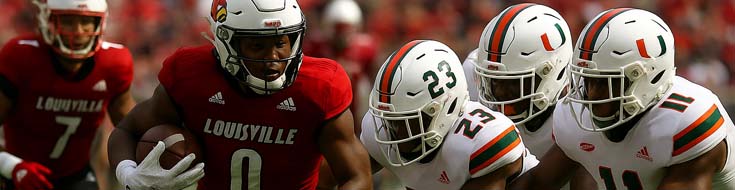
Louisville and Miami are set for one of the biggest Friday-night clashes of the 2025 college football season — and bettors are paying attention. According to early lines from major NCAA football betting sites, the Hurricanes opened as double-digit favorites, while Nebraska sits just under a touchdown favorite on the road at Minnesota. Both matchups carry real conference stakes, shaping the ACC and Big Ten title pictures before late October even arrives.
We are analyzing two nationally televised games which includes ranked matchups, changing betting lines, and opportunities tied to matchups. You will observe how the market prices Miami’s dominance, why Louisville’s efficiency could close the gap, and what the surge from Nebraska means for the Big Ten opener against a tough Minnesota team. Throughout the analysis, we will incorporate real-time statistics, historical perspective, and some applicable strategies for Friday night.
Louisville vs. Miami — Rivals, Trends & Tipping Points
Rivalry Weight and Line Movement
Currently, Miami is leading the all-time series 12–4–1, and the Schnellenberger Trophy is on the line. As for the sportsbooks, Louisvillians are the underdogs starting at +13.5. The sportsbooks also suggested Miami would take the win most likely by a margin of 14, and the total score would be under 54.5.
Given the betting odds, Miami is the obvious favourite. The next question is, therefore, is this a justified Miami position, or is there a good bet in Louisville or the total?
Stat Profile and Vulnerabilities
As of mid-October, Miami’s turnover margin stands at +6, placing them 8th across FBS. They also rank among the top 15 in FBS for time of possession, averaging close to 33 minutes. However, their red zone defense remains a serious issue, permitting scoring on almost 85% of red zone incursions.
In contrast to Miami, Louisville’s red zone offense is among the best in the country, scoring 94% of the time. This disparity allows Louisville an opportunity to stay competitive, provided it can put together some extended offensive possessions.
Unfortunately, the Cardinals continue to struggle with penalties, accruing, on average, more than 70 yards per game, which is among the highest in the country. Such issues have the potential to nullify the positive play of the offense.
The Miami passing attack, directed by Carson Beck, has also performed well, with over 1200 yards, 11 touchdowns, 3 interceptions, and close to 73% passing by mid-October. This offensive efficiency has become the cornerstone of the Hurricanes’ offense and substantially contributed to the defensive front’s ability to create turnover opportunities throughout the season.
Implications & Edge Ideas
Given that Louisville is proficient in red zone efficiency while Miami’s defense weakens in red zone situations, red zone scoring props could be of value. If Louisville does not shoot itself in the foot with drive-killing penalties, they should be able to cover a two-touchdown spread.
That being said, Miami’s control over the pace of play and the length of her drives will most likely help her control the tempo. Therefore, I believe the better betting edge will be in the props provided, or in the alternate lines — first half totals, turnover props, or red zone scoring — as opposed to picking a side outright.
Nebraska vs. Minnesota — Big Ten Opener Under Pressure
Line Trends and Public Money
Initially, Nebraska was a moderate road favorite at approximately -4.5; however, this changed to -6.5. This increase implies that sharper bettors are supporting Nebraska, giving an implied two-thirds win probability.
Although totals are resting at approximately 46.5, there is consistent betting movement toward the over. The Nevada betting line movement within this historical context suggests that bettors are confident.
Team Trends, Strengths & Concerns
With a 5–1 record, Nebraska approaches this contest after a remarkable victory against Maryland, where they won 34–31. Quarterback Dylan Raiola recorded 260 yards and four touchdowns, albeit with three interceptions. Their offense, likewise, tends unpredictability. In this context, running back Emmett Johnson’s 176 yards on 21 carries was a remarkable achievement and, much more importantly, a greatly needed contribution toward offensive balance.
From a defensive standpoint, Nebraska does not break, even as they bend. In this regard, they allow yarding but contain explosive play potential. They also have a disappointing 2–4 record against the spread in their last six games, and the totals have gone over in each of their last five games.
Minnesota has the better head-to-head record, as they have won 5–1 straight up in its last six meetings against Nebraska and 6–1 in its last seven home games overall. That consistency at home, particularly on a Friday night with crowd noise, can create conditions that cause false starts and delay of game penalties for an offense as young as Nebraska’s.
Edge Ideas & Matchup Quirks
Considering Nebraska usually goes above on the total and coupled with Minnesota’s ability to maintain home drives at a stretch, suggests that the over is the optimal perspective to take. A closing score falling either side of the 50 total, as assessed from the past, will work.
Nonetheless, Minnesota’s historical supremacy with innate ease at home makes them a tough underdog to fade. A Minnesota first-half bet, for the reasons stated above, would look reasonable to many.
In the event you predict Raiola is likely to find it tough early on with hostile conditions, you would find the first-half prop or interception range interesting. There are going to be points, but there are going to be volatile turnovers, and that will be worth it.
Comparing Game Narratives & Betting Context
Similar Stakes, Different Paths
The signficance for each game is clear. Louisville and Miami battle for supremacy in the ACC while Nebraska and Minnesota open the Big Ten conference with divisional stakes. Yet the narratives differ.
For Louisville and Miami the narrative is that of a contender trying to prove it can control an emotionally charged game against a disciplined underdog.
For Nebraska and Minnesota it is a narrative of public perception and the challenges of history. The big brand rival minnesota is an underdog of sorts and plays at home.
In both these match ups, bettors have to deal with recency bias and matchup specifics.
Where Sportsbooks Might Misprice
When making betting predictions, sportsbooks may be placing too much value on Miami’s dominance and too little on Louisville’s efficiency in critical situations. Should the line move to more than a two-touchdown spread, it will be too leaky against a top-25 team.
When it comes to betting on Nebraska–Minnesota, sharp line movement in favor of Nebraska may ignore the number of times the Cornhuskers have not won this matchup outright. Historical trends strongly suggest that Minnesota will keep this one close.
Applying Smart Angles
This is where college football betting strategies matter most: look beyond records and headlines. Identify where efficiency metrics, pace, and situational mismatches contradict public opinion. That’s where value hides — red zone differentials in the ACC game, and tempo/turnover balance in the Big Ten game.
Practical Betting Applications
Focusing on the red zone props for the Louisville–Miami game, there could be soft lines for both the scoring attempts and the total points within the 20 yard lines.
Tracking line movement, if Louisville shifts to +14.5, that could be a buy point for fading the public.
Exploit live-betting opportunities. If there is an early surge from Nebraska, a good second half bet will be on Minnesota. They tend to wear out teams late.
Due to the overs betting streak from Nebraska and the fast paced offense from Miami, the total will be worth monitoring.
The first half differential is important. Nebraska tends to start slow on the road. Miami tends to open fast at home.
Before the game, analyzing player props for turnovers, completion percentage, and rushing attempts will give a good indication of where there is value.
Forward-Looking Projections
Louisville–Miami Projection
While one should expect a comfortable victory for Miami, it should not be overly comfortable. Miami’s balance and turnover differential should be the key deciding factors; however, Louisville’s offensive efficiency will ensure the result remains relatively close.
Projected final: Miami 35, Louisville 24.
One should expect a total in the mid-50s, which should be slightly above the total if Louisville can score in the red zone.
Nebraska–Minnesota Projection
That Nebraska has superior talent claims the prize, though the contest should be close. Minnesota’s defense coupled with the energy at home will allow them to remain competitive until the final quarter.
Projected final: Nebraska 28, Minnesota 20.
The totals remain in the lower 48-50 range which again suggests that the over remains mildly the best option.
Across the two games, the anticipated live betting markets will be fluid with line movements. Shifts in the lines that happen late on Friday should benefit those bettors that remain disciplined by tracking changes in the weather, injuries, and other important information.
6 Actionable Tips
Track Line Drift
Pay close attention to movements in Miami’s and Nebraska’s lines, as they stand out in their differences and movements. Nebraska should remain stable while Miami tends to tighten late. Seize the early opportunities.
Look for Imbalances in the Prop Market
The props associated with red-zone scoring and turnovers frequently lag in comparison with the primary lines. In these instances, the discipline and understanding of the matchups will reward the bettor.
Exploit the Halves
The first and second halves often become misaligned and fail to account for the team’s tendencies. For example, in the case of Nebraska’s slow starts and Miami’s fast ones, the.
View Trends as Context, Not the Aim
While there is historical data, each team is a new roster and therefore will perform differently. In this case, you should focus on the relative efficiency and the historical data.
Don’t Bet on Oversized College Football Favourites
Even the top-tier teams will perform inconsistently, especially during the tight week-long breaks. Over 70+ point spreads, assume there will be variability, and thus keep the exposure low.
Pay Attention to Venue Momentum
Nighttime Friday audiences will impact the variance. In this case, Miami’s home speed advantage and the atmosphere created by Minnesota’s crowd will both impact the tempo of the game.
Frequently Asked Questions
Q: When should I place bets on the Friday games?
A: Preferably, you should place bets a few hours before the kick-off, after the injury reports and weather forecast are released, but before the sharp money comes in and causes extreme line movement.
Q: How do I choose between betting the over and the under?
A: Analyze offensive pace and efficiency. Nebraska’s recent trend towards high-scoring games suggests leaning towards the over, while the turnover margins in the Louisville-Miami game may present more scoring opportunities.
Q: Which is better to bet–spreads or totals?
A: When teams are matched evenly and the game does not have a strong favorite, the game totals may present less volatility. Spreads tend to decrease in predictability the more game plan conviction is needed for one team.
Q: What are the risks of betting on collegiate sports at online casinos?
A: College sports are unpredictable. Player variance, small sample sizes, and emotional swings raise volatility. Always use a licensed, trusted online casino and set strict limits.
Q: How do live bets fit into a betting plan?
A: They can hedge or enhance pre-game positions, but they are sharper and faster. Use live bets selectively, considering the situation and weighing the potential payoffs.
Q: Should I chase moving lines?
A: No. Late line movement reflects sharper betting lines. Instead, concentrate on positions taken earlier in the week, or on certain props whose prices have not yet adjusted.
Q: What stats matter most in these matchups?
A: Turnover margin, red zone efficiency, and penalty yards. These stats affect scoring margin and are less predictable.
Q: Can trends like “Nebraska is 0 – 5 vs Minnesota” really matter that much?
A: They can provide context, but the results still lack certainty. Use trends to frame a risk, not to define it. Teams change rapidly, especially at the collegiate level.
Sharpen the Edge
Two games. Two conference statements. Louisville–Miami gives us a disciplined offense versus an explosive favorite; Nebraska–Minnesota offers a national brand facing a persistent underdog. Both deliver value for bettors who read beyond surface stats.
Key takeaways:
- Louisville’s red zone advantage offsets Miami’s turnover power.
- Nebraska’s offensive volatility opens both over and prop options.
- Home-field dynamics in both games amplify variance — manage exposure wisely.
As always, timing and discipline are the difference between a good idea and a profitable one. Stay data-driven, use regulated NCAA football betting sites, and execute before late money sharpens the market.
Ready to act? Head to BetNow for live odds, prop updates, and secure college football markets before Friday night’s kickoff.

Hilbert Mayer
Sports Writer
Hilbert Mayer is a professional sports writer, betting analyst, and content strategist with over 15 years of experience in the sports industry. Before focusing on sports betting analysis and handicapping, Hilbert worked as a sports writer for various news outlets, covering everything from game recaps to in-depth matchup features. Today, he specializes in MLB, NFL, March Madness, and UFC betting, combining his journalistic background with deep statistical expertise and real-world betting insights. His proven track record, sharp reads, and ability to break down complex matchups make him a trusted voice among both casual bettors and seasoned sharps.
Published on: October 13, 2025
Last updated: October 14, 2025