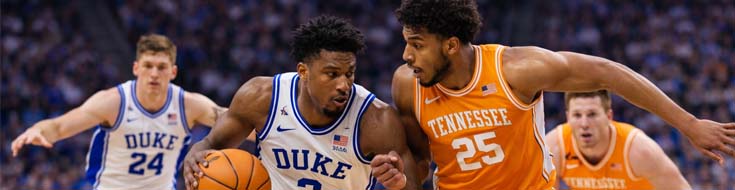
There is a lot of movement occurring on futures boards for betting on national championships for 2026, and several teams have had notable changes in price when compared to earlier periods. With pressure building in the conference due to the series of leading national contenders close to Duke, Arizona, and Houston, there has been an adjustment to the point spread. This adjustment has been tied to early line changes made by opportunistic early backers.
Right now, March Madness betting sites are adjusting prices weekly. Futures odds remain fluid until Selection Sunday locks in the bracket, and that volatility creates opportunity. Bettors who research before seeding is finalized can lock in favorable prices before markets compress.
It’s a matter of how early futures lines work in your favor, how to parachute in on line movement, how injury and coaching changes adjust the market, and how to identify the top Tier-1 favorites from the Tier-2 upper-middle range. Prop market strategies offer risk-adjusted returns, and we’ll show you how to set up before the market narrows.
The closing of the value window is happening, but it has yet to close completely.
Early Futures Pricing Still Offers Edge
Betting companies release odds on championships well in advance before the brackets are finalized in the NCAA Division I Men’s Basketball Tournament. This is because odds are based on preseason predictions, movements in the transfer portal, recruitment rankings, returning players, and power ratings.
Basically, lots of inefficiencies are present in the early odds.
It’s well known that the odds for champions shrink dramatically. For example, a +1800 team in the winter and then in March a projected No. 1 seed, that same team would be +800. This is referred to as the closing line value for those who placed bets early.
When looking at 2026, the odds are already beginning to form. Duke and Michigan have had stretches ranked very high, while Houston and Arizona have elite offensive and defensive efficiency and maintain strong positions in future betting.
Until the brackets are finalized, betting odds will continue to change. Massachusetts is the first to finalize the betting odds as the brackets are revealed, so there is little to no uncertainty left.
Those who are willing to leap first will have the most to gain.
How to Track Line Movement Before Selection Sunday
Tracking futures properly requires discipline.
Weekly tracking should include and be prioritized by opening odds and current prices. For example, if a team moves from +1400 to +1000 in two weeks, clearly something has changed — from performance, to analytics upgrades, to sharp money movement.
Watch for:
- Ranked offensive and defensive efficiency
- Accumulation of Quad 1 wins
- A strength of schedule adjustment
- Current and presiding injury reports and return timeframes
- Changes in coaching staff or shifts in strategy
When analytics models improve a team’s efficiency margin, sportsbooks adjust. This can lead to value discrepancies. It’s about scouting Injury reports.
The timing of injuries becomes critically important. If a key player will miss 3 weeks in January, but will be returning before the championship conference tournament play, this creates a potential entry opportunity during the slumping odds.
And pay attention to conference races. A team trending toward a No. 2 seed instead of a projected No. 4 seed drastically improves path probability. Seeding clarity shortens March Madness betting odds quickly.
The bettors who track these indicators weekly capture numbers that won’t exist in mid-March.
Tier-1 Contenders vs Mid-Tier Value Plays
The 2026 board currently breaks into two tiers.
Tier-1 Favorites
Michigan, Duke, Arizona, and Houston headline most futures markets. These teams share common traits:
- Top-20 offensive efficiency
- Top-20 defensive efficiency
- Experienced guard play
- Coaching continuity
- Strong depth rotation
National champions have historically ranked highly on both offense and defense entering the tournament. Balanced teams will outperform teams with strong one-dimensional offenses over six-game stretches.
If you anticipate Tier-1 teams to obtain a No. 1 overall seed, it is reasonable to back them early. That said, due to the market respecting them, the ceiling on price is limited.
Mid-Tier Value Opportunities
The value often lives in the +2000 to +4000 range.
These are teams that:
- Return 65–75% of prior season minutes
- Added impact transfers
- Rank well in rebounding margin
- Show defensive improvement trends
- Possess veteran backcourts
Futures prices show a lot of volatility for mid-tier programs that have strong conference runs. An example of this is locking in a mid-tier program at +3000 and then experiencing a run that causes them to shift pricing to +1200. This illustrates equity and hedging opportunities.
An example of a good futures portfolio would be having one Tier-1 anchor and a couple of mid-tier upside plays.
Using Futures and Prop Markets Strategically
Futures betting isn’t limited to championship tickets.
Many sportsbooks now offer:
- Final Four appearance props
- Region winner markets
- Conference champion futures
- Player performance props
Building exposure strategies within variance for parallel bets is more important than some +2500 future bets. A +500 Future Bet on a team reaching the Final Four is more likely to provide a positive return.
Next steps should be on the methodical side:
- Identify 8-10 programming teams to meet efficiency criteria and hold.
- Watch early, pressure-neutral site tournaments for evaluative performance.
- Expect to buy with injury-related dips.
- Expect to refresh for conference play weekly.
It is important to remember that the goal is not to correctly guess the champion, but to hold tickets that win against the closing number.
What Happens to the Market After Selection Sunday?
The unveiling of the brackets leads to tight-futures market compression.
Brackets provide clarity to the seeding process. There’s less ambiguity and more information. All potential matchups and their travel routes are determined. At that point:
- Top seeds (1) are priced more aggressively
- Teams on the bubble are priced more aggressively because of the difficulty of the region.
- Teams from the mid-major conferences are priced more aggressively because of the perceived strength of their region.
The overwhelming majority of the value that was present when prices were first offered vanishes as the tournament approaches.
For the tournament in 2026, projected prices will be influenced by eventual inter-conference rivalries and possible injuries. Pricing in early 2026 will show the greatest variation.
Expert Insights for 2026 Futures Bettors
Give Guard Experience Priority
Historically, veteran backcourts surpass seed expectations. Experience levels out the tournament’s unpredictable nature.
Defensive Credibility is a Must
Winners of the tournament often sit within the top 20 for defensive efficiency.
Take Buying Opportunities After Overreactions
Early-season losses to top-ranked teams can lead to overhyped expectations. Value loss creates buying opportunities.
Limit Dependence on Freshmen
While elite freshmen bring talent, their contribution can be inconsistent in high-stakes moments.
Spread Your Bets
Instead of placing a single bet on a championship, diversify your bets and include Final Four and conference championship bets.
Track Changes Weekly
Changes are a result of a combination of factors. Your bet is a long-term bet, so make sure to check on the movements often.
Frequently Asked Questions
Q: When is the best time to bet on March Madness futures?
A: Preseason to just before January betting has the largest range of prices. When closer to March Madness, odds tighten quickly as the conference standings become clearer.
Q: Are early favorites worth betting?
A: This may be true as long as you can predict the possible placement of top seeds. If not, mid-tier teams tend to be more valuable due to flexible pricing.
Q: How do injuries affect futures markets?
A: If the injury is short, there is the possibility for prices to increase. If the injury has a recovery timeline that ends just before the tournament, early bettors will be able to take advantage of the lower prices.
Q: Should I wait until after Selection Sunday?
A: If you wait for clearer prices, you will likely lose a lot of value on the price. Price uncertainty is a huge factor, but it can be very beneficial to bet earlier.
Q: How many futures bets should I place?
A: Most people will place three to five bets. Most people will pick one favorite, two mid-tier bets, and sometimes a long shot.
Q: Can I hedge during the tournament?
A: Yes, if the futures ticket is looking good, you will be able to hedge in the later rounds to guarantee yourself some profit.
Q: Do prop markets reduce risk?
A: Yes, betting on specific teams to make the Final Four is less risky and has a lower variance in cash outcomes vs betting on teams to win the whole championship.
Q: How to Find the Best March Madness Betting Promotions and Maximize Value for Bettors?
A: Compare futures boosts and March Madness betting promos across sportsbooks before wagering to maximize long-term value.
The Value Window Is Shrinking
The 2026 futures market is already tightening. Michigan, Duke, Arizona, and Houston headline the board, but movement continues weekly as conference play reshapes projections.
Three takeaways stand out:
- Early prices offer the most upside.
- Balanced efficiency metrics remain the strongest predictor of championship viability.
- Portfolio diversification reduces volatility while preserving upside.
March Madness betting sites are adjusting numbers in real time. The bettors who prepare early, track line movement, and evaluate roster stability will hold the strongest positions when Selection Sunday reshapes the board.
If you’re serious about capturing value before the bracket locks in, review the updated futures markets and prop options available at BetNow and position accordingly. The best numbers don’t last.

Hilbert Mayer
Sports Writer
Hilbert Mayer is a professional sports writer, betting analyst, and content strategist with over 15 years of experience in the sports industry. Before focusing on sports betting analysis and handicapping, Hilbert worked as a sports writer for various news outlets, covering everything from game recaps to in-depth matchup features. Today, he specializes in MLB, NFL, March Madness, and UFC betting, combining his journalistic background with deep statistical expertise and real-world betting insights. His proven track record, sharp reads, and ability to break down complex matchups make him a trusted voice among both casual bettors and seasoned sharps.
Published on: March 3, 2026
Last updated: March 4, 2026