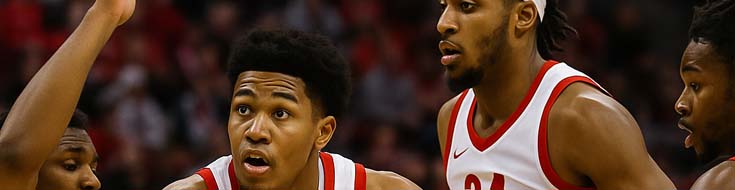
Over 30 teams enter the 2025–26 college basketball season with top-25 potential, and preseason chatter is already reshaping how bettors and fans view the field. Interest in college basketball online betting sites has never been stronger, with sharp players trying to get ahead of the first major lines before tipoff.
As of October 13, the data models and transfer updates, along with roster movements, are beginning to clarify who’s truly impactful and who’s overrated. Analyzing early framework indicators, changes within the lineups and coaching staff, pragmatic wagering opportunities, and the anticipated developments leading into the holiday season offers considerable value. This is usable information, rather than empty hype, plus an educated projection of potential outcomes based on the seasonal evolution observed so far. This is helpful to both bettors and fans.
Metrics Over Hype: Why Efficiency Rankings Matter
The most significant early indicator is not in polls but in efficiency projections. Kentucky is 4th on KenPom’s metrics and has a projected offensive rating of 120.1 and a defensive rating of 91.2. Some of the media polls have Kentucky ranked just inside the top 10. This discrepancy is important because it signifies value that is not visible in the public eye.
The betting opportunities will most likely be in the areas where mathematical models and rankings contradict each other. Teams like Duke that are very highly rated in the media because of top prospects like Cameron Boozer and Dame Sarr are undershot. This is mainly because teams with a lot of newcomers tend to start slowly and then improve. Duke has the opportunity with the most balance and continuity, which traditionally results in stronger performances early against the spread.
For those looking at futures or early matchups, it is crucial to assess how a team’s efficiency metrics align or do not align with their public perception. This will help in scoring undervalued teams.
Transfers, Coaching, and Tournament Contexts
Without losing context, preseason assessments must be analyzed in relation to the roster and coaching situation of the respective teams.
Transfer portal impact: The offseason results in the market flipping multiple rosters, with some programs losing the continuity that programs like Kansas, Purdue, and Houston retain. Kansas, Purdue, and Houston not only retain continuity, but enter with built-in chemistry and experienced units that tend to outperform during the neutral site tournaments. Higher turnover teams, however, need the time to gel.
Bounce-back candidates: Programs like NC State, USC, Ohio State, Indiana and even more during the season, had disappointing runs. Each returns a large upperclassmen core with deep, top-20 recruiting classes, but books undervalue these units even with price. Early in the season, these teams present value.
Multi-team events: The Maui Invitational and Battle 4 Atlantis are examples of early-season tournaments that provide initial serious evaluations. High-energy competitions over back-to-back days differentiate contenders from pretenders — and that is where disciplined bettors can spot mispriced underdogs. Young rosters that are still forming often have a greater likelihood of cracking during quick turnarounds.
And here’s where it gets interesting — March Madness betting online discussions are already surfacing even before the first jump ball. Oddsmakers assign value for March tournaments based on these preseason events. Gauging the early-season performance against elite competition provides key data for long-term odds positioning. Some programs do better than others with travel, pressure, and short rest, and these variables also inform which teams’ odds-makers can rely on with greater certainty.
Coaching changes: The changes at the helm for Indiana and Villanova attract attention. For Villanova, the seamless continuity advantage is gone, while Indiana’s new head coach Darian DeVries will likely experience at least a short adjustment phase. For the early season volatility presented by these programs, the caveat is hidden opportunity and the willingness to speculate before the market corrects.
Assessing preseason buzz without context invites poor conclusions. Stumbling for certain teams corresponds with coaching changes, fatigue, and the chemistry formation timeline, while others quietly slide into December with a hidden surge of winning momentum.
Applying It All: Smart Moves Before Tipoff
Here’s how to convert preseason info into a strategy that actually works:
Lock in futures before others do.
Whenever in doubt, trust the metrics. If you think Kentucky or Houston is undervalued in title odds and seems undervalued, go for it. By the time the crowd comes in, it’ll be too late to capture the value.
Analyze early tournaments.
Neutral-site MTEs are where sharp bettors thrive. Look for experienced rosters facing hyped but untested squads. Underdogs with depth and travel experience often overperform here.
Player eligibility and mid-season fatigue.
Integration lag is real. A talented sophomore cleared late might not immediately move the needle, and newcomers often do take time to assimilate. Fade the hype until minutes and chemistry stabilize.
Use efficiency gaps and find mispriced lines.
If two teams have similar records and vastly differ in adjusted efficiency, it is likely the books still price them the same. That’s an exploitable mismatch.
Risk is best managed with smaller stakes early.
Variance is highest in November. Use smaller unit sizes until teams stabilize, then scale up once you’ve confirmed which models are accurately tracking.
Public sentiment and futures.
After an early upset or loss, sportsbooks and bettors alike overreact. Take advantage and find contrarian spots in the aftermath of these moments before the market corrects itself.
These are not abstract concepts; they are actual strategies you can employ to ensure that you start the season strong.
Looking Ahead: What the Next Few Months Could Bring
As the season starts, expect fluid rankings and volatile markets. But a few trends already stand out.
Power conference dominance
The top seeds are likely to remain with the Big Ten, SEC, and Big 12, as all three contain several top 10 teams characterized by balanced efficiency and depth. While the nation’s focus may be lost on mid-majors, those teams will likely be the December bracket busters.
Regression Patterns
Teams comprising primarily of freshmen will often start the season on a strong note, but will likely regress once scouting catches up to them. Conversely, veteran squads may start sluggish, but as rotations become more settled, they are likely to rise in the standings. This season cycle is predictable, and one must learn to plan around it.
Transfer chemistry and lineup adjustments
Teams with high cohesion will have smoother Decembers. Conversely, teams with an excess of newcomers will burn their early spreads, as they will struggle to find cohesion and will exhibit a lack of stabilization. The best sign of cohesion is the tracking of rotational minutes.
Bracketology volatility
Even pre-Thanksgiving, there are results from early tournaments that will change odds on the futures line. Analysts will have early projections on which teams are likely to be seeded, but those projections will lack accuracy until January. The key is to remain flexible, as not.
NCAA Landscape Evolution
For the 2026–27 season, there are talks of expanding March Madness to 76 teams and adding an extra regular season game, and those potential changes is already affecting how coaches are scheduling and rostering for the season. As a result, programs may be more inclined to prioritize the strength of schedule within early non-conference play.
The major takeaway here is that early data trends – not polls – will help separate contenders from hype machines before the start of conference play.
Expert Betting & Strategy Insights
Bet the stats, not the name.
The public bias on large programs, such as Duke and North Carolina, can lead to overestimations. Prior to making any wagers, always analyze efficiency ratings along with the metrics of true shooting.
Check pace and possession stats.
Tempo will always determine the totals. If two defensive teams with a slow pace are matched, it is safe to assume an easy under. Do not rely on raw points per game stats — adjust for possessions.
Follow lineup stability.
Performance becomes predictable when coaches shorten the rotation. For heavy betting, look for teams that have settled on 7 or 8-player cores.
Track late eligibility and injury updates.
Even small rotation changes will impact a spread by several points. Monitoring verified beat reports provides a time advantage over casual bettors.
Use early losses as buy-low opportunities.
A team won’t be defined by a single ugly performance. When a solid team has a public abandonment following a bad loss, look for an immediate value appearing in the next line.
Diversify your bets.
For balance, combine single-game bets with futures. In this manner, the short-term variance won’t impact your overall outlook which is based on a season-long view.
These strategies are the difference between casual fans and disciplined bettors. The disciplined bettors are the ones who capitalize on early inefficiencies as opposed to chasing highlights.
Frequently Asked Questions
Q: What is a College Basketball Betting Parlay?
A: College basketball betting parlay is a single wager combining multiple bets. You only win if all selections hit, which boosts potential payout but increases risk significantly.
Q: When do NCAAB odds open for the season?
A: Conference odds open mid-October and early November, typically coinciding with early-season tournaments and key opening matchups.
Q: Should I trust preseason rankings?
A: Use them for contextual narrative only, as analytics and efficiency ratings provide a more objective and true measure of team strength.
Q: Do early-season results predict March success?
A: They do signal some consistency and depth, but certainly not the final answer. Many of March’s strongest teams begin the season slowly and find their rhythm mid-season.
Q: How often do sportsbooks update lines?
A: They do so continuously, as key results, injuries, and public betting appetite may cause drastic changes to lines within a few hours.
Q: Is bankroll strategy different for college basketball?
A: They certainly should be, as the number of games and the inherent game-to-game variance in college basketball results demand tighter bankroll discipline and smaller stakes. Avoid large portions on parlays and betting on college games with emotional bias.
Q: When should I place futures bets?
A: You want to do this just before the first major tournaments, as betting value plummets then and teams will be showing their real form for the first time. You will be simply chasing after the value betting and odds if you wait too long.
Q: What’s a good way to research teams?
A: Investigate proven efficiency metrics as well as player usage and coaching tendencies. Avoid knee-jerk responses to single headlines or social media hype.
Where the Edge Lives Right Now
Here’s what matters as the 2025–26 season approaches:
- Efficiency projections reveal undervalued teams long before polls catch up.
- Coaching changes and transfers make early betting risky but full of hidden upside.
- Nonconference tournaments will expose weaknesses and shape futures odds fast.
- Smart bettors act before the public — and before sportsbooks tighten their models.
The early season always rewards preparation. Stay sharp, trust the numbers, and look for inefficiencies before the rest of the market notices.
For the best live lines and futures tracking, visit BetNow and monitor how these early shifts translate into real betting value.

Hilbert Mayer
Sports Writer
Hilbert Mayer is a professional sports writer, betting analyst, and content strategist with over 15 years of experience in the sports industry. Before focusing on sports betting analysis and handicapping, Hilbert worked as a sports writer for various news outlets, covering everything from game recaps to in-depth matchup features. Today, he specializes in MLB, NFL, March Madness, and UFC betting, combining his journalistic background with deep statistical expertise and real-world betting insights. His proven track record, sharp reads, and ability to break down complex matchups make him a trusted voice among both casual bettors and seasoned sharps.
Published on: October 13, 2025
Last updated: October 14, 2025