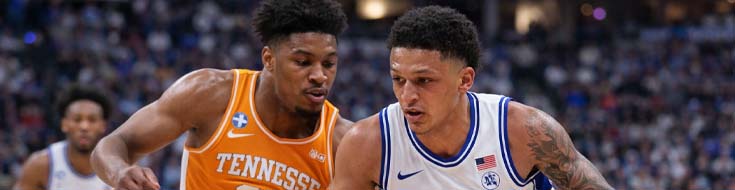
Starting on the 2026–27 season, NCAA Division I teams will be allowed to begin placing commercial sponsors on game-day uniforms. Other division I teams will have the same opportunity a year later. Up to two commercial sponsor patches that do not exceed four square inches will be allowed to be displayed on the uniforms during regular-season contests. From that time on, college basketball jerseys will be used to promote businesses.
To bettors on college basketball sportsbooks platforms, this represents a considerable change to the discipline. It will create a genuine economic shift in the sport, and this will have a cascading effect on the game. It will impact the overall quality and depth of rosters, recruiting, and the coaching base. It will also reshape the financial landscape of college basketball at a time when the costs of doing business are already sky high. Compensation for athletes is also a factor.
This breakdown will examine the impact of the new sponsorship rule changes, how the revenue will be distributed, the potential for a shift in competitive balance, and the impact of new sponsorship economics on future wagering on NCAA basketball, wagering for the entire season, and assessing individual programs.
A New Revenue Engine Enters College Basketball
The NCAA accepting advertising patches is their first real uniform sponsorship deal and a pretty big philosophical change for them, considering that advertising was previously only accepted from apparel manufacturers and conference logos. That is no longer the case.
Beginning August 1, 2026, all Division I schools will be able to sell advertising patches to outside sponsors who will be able to advertise on the uniforms. This will apply to all sports, but basketball will probably benefit the most from the advertising due to the national broadcasts and national relevance.
Industry analysts have projected that college basketball could make as much as $500,000 and as little as $10,000,000. This will all depend on the number of students, their market, and their visibility. Athletic departments will be most affected by the larger Power 5 schools with more than 20,000 students. This will also affect the mid-major and lower-level schools, as they will bring in less money, but that revenue will be important for them.
This is also important as schools will be sharing more of their revenue with the students, and schools will have to coach $20 million to make up for the revenue. That will bypass the need for raising ticket and student fees.
New funding is usually invested into improved program facilities, expanded staff, better recovery resources, and sustained coaching. From a betting perspective, those factors might alter a program’s point spread, but not government bond yields.
Competitive Balance and Sponsorship Gaps Between Programs
There will be unequal benefits across institutions, and that is where bettors should be interested.
The sponsorship race will be dominated by large-market and blue-blood programs. Corporate sponsorship opportunities go to schools with national television exposure, frequent tournament appearances, and robust alumni networks. These programs have advantages, and patch revenue only reinforces them.
More interesting are the programs below the top tier.
The mid-major and mid-tier schools can now tap into revenue streams that previously evaded them. A sponsorship deal that is well negotiated can support the retention of assistant coaches, recruiting travel, NIL frameworks, and sports science staff. This is how programs incrementally close competitive gaps in silence.
For bettors, this produces opportunities. A historically average school that receives a sponsorship agreement may outperform its market preseason expectations, which is a signal to the market. Institutional changes are slow, but season win totals and futures odds are often slow to respond.
There is a defensive rationale as well. A peer with secured sponsorships will now be at a market advantage over a program that does not have sponsorships, be it a market, brand, or sponsorship appeal. This is a significant consideration in institutional alignment for competitive gaps, tournament seeding presage, and betting value in the long haul.
While uniform patches will not decide games, finances do influence aspects of preparedness and give the needed consistency and depth, especially late in the season when fatigue and injuries set in.
Why Uniform Sponsorship Matters to Betting Markets
Jersey patches might look like a cosmetic change, but to a bettor, they mean something. More resources.
More resources typically mean:
- More recruiting support
- More NIl deals
- More trainingand recovery
- Less turnover
- More consistent coaching
All of these factors can lead to better performance over the course of a season.
While sportsbooks look at efficiency metrics, matchups, injuries, and sentiment for game odds, much of the program’s trajectory determines the odds for futures. Revenue from sponsorships is considered for this trajectory.
If a team has more increasing financial support, they can retain more players, and lose potential rebuilding years. Consistently, this can lead to tighter spreads for betting, lower odds for futures, and more consistent outcomes.
For a smart bettor, this is why sponsorships should be compared to recruiting changes and new facilities. It won’t change the odds weekly, but it will change the indicators over time.
For those following a structured college basketball betting guide, patch revenue becomes another variable in long-range evaluations rather than a headline to chase.
How Bettors Can Apply This Information Right Now
The patch rule doesn’t change tonight’s spread, but it does change how bettors should evaluate programs heading into future seasons.
Here’s how to use it practically:
Monitor announcement of sponsorships
Multi-year sponsorship deals with schools should be scrutinized. The funding often has a targeted use—recruiting, expanding staff, or NIL.
Combine revenue reports with roster
A sponsorship is more meaningful when matched with good recruiting classes or retention of key players. Money without talent makes no impact.
Monitor preseason future movement
Stronger institutions could quietly be shortening their future odds. The early numbers could be more valuable than what is to come when people start to close in on the public narratives.
Stay away from the hype
Not every sponsorship deal affects the outcome. A sponsorship deal with little patches of sponsorships could just be budget fillers. Pay attention to the continuous use of recap, the scale, and how the school intends to use the money.
Seek edges by conference
In lower-tiered conferences, a sponsorship deal, even one that is less than grand, could provide differentiation from the rest. This is often where betting value is found.
What the Next Few Seasons Could Look Like
Looking ahead, expect a rapid adoption phase once the rule takes effect.
Within the first season, most prominent Power Five basketball programs will have patch sponsors, with mid-majors, particularly those with solid regional brands or recent tourney success, following suit. Sponsorship levels will then be established, and bettors will be able to gauge which programs have structural advantages.
One big question mark is postseason play. Currently, patches are prohibited during NCAA championship events. If those restrictions are loosened, it will likely be a windfall for sponsorship, exacerbating the disparity between the top programs and the rest.
An NIL crossover is another area to watch. Schools could attempt to tether patch sponsors to a more holistic branded approach that indirectly enhances the ecosystem for student-athlete endorsements. That synergy may, or may not, influence athletes in more proprietary ways.
From a betting perspective, the truth of the matter in these situations is that, over time, the more resources and stability a team has, the more they will outperform expectations. The patch rule will promote that trend.
Expert Insights: Betting Smarter in the Patch Era
Consider Sponsorship Revenue as a Program Signal
Significant sponsorships show institutional faith and market valuation, which usually corresponds with ongoing commitment to basketball operations.
Shift to Mid-Tier Programs Over Blue Bloods
Top programs are increasing in price and providing less competitive value. The value is in programs moving to competitiveness.
Don’t Overreact to Headlines
Sponsorship news should inform futures and season-long bets and not short-term wagers.
Recruiting Performance Lag
Investing revenue in better recruiting infrastructure will result in better performance in one to two seasons
Sponsorship Data is About Expectations
This is about adjusting probabilities and not certainties.
The Financial and On-Court Metrics Combination
Money is most relevant when combined with systematic improvements and a steady roster.
Frequently Asked Questions
Q: What is the NCAA patch rule?
A: Beginning in the 2026-2027 season, it will allow Division I teams to place 2 commercial sponsor logos on their uniforms for regular season games.
Q: How much money can teams make from uniform patches?
A: Because of the wide range of uniform patch monetization estimates ($100,000 to $10,000,000), it is clear that the range is driven by school size, exposure, and market value.
Q: Will March Madness have patches?
A: Currently, that is no. However, this may change, as currently, patches are banned from even NCAA championship events, but this policy could change going forward.
Q: How does this change NIL for players?
A: Patches won’t change NIL for players much directly on the patches, but it will help with recruiting and infrastructure related to NIL.
Q: How does this change betting odds?
A: Not in the short-term, but in the long-term, on-season wins, futures, and overall program evaluations.
Q: Is this more important for small schools or big schools?
A: Both. It depends more on the betting odds, which are seen in the mid-tier to mid-major schools. There, new revenue will shift the competitive balance.
Q: What is a College Basketball Betting Parlay?
A: NCAA basketball parlay betting combines multiple bets into one wager. All selections must win for the bet to pay out, offering higher potential returns with increased risk.
The Edge Going Forward
The NCAA patch rule isn’t just a branding update. It’s a structural change that adds money, visibility, and leverage to college basketball programs. For bettors using a college basketball sportsbook platform, understanding where that money flows — and how it’s used — matters.
The biggest takeaways are clear:
- New revenue changes long-term program stability
- Mid-tier schools may quietly gain betting value
- Futures markets will reflect these shifts before spreads do
- Financial strength increasingly supports on-court consistency
This is the kind of edge that doesn’t show up in box scores. It shows up in preparation, depth, and late-season performance — the moments that decide bets.
If you’re ready to apply this kind of deeper analysis to your wagers, BetNow gives you the lines, markets, and flexibility to act before the crowd catches up.

Hilbert Mayer
Sports Writer
Hilbert Mayer is a professional sports writer, betting analyst, and content strategist with over 15 years of experience in the sports industry. Before focusing on sports betting analysis and handicapping, Hilbert worked as a sports writer for various news outlets, covering everything from game recaps to in-depth matchup features. Today, he specializes in MLB, NFL, March Madness, and UFC betting, combining his journalistic background with deep statistical expertise and real-world betting insights. His proven track record, sharp reads, and ability to break down complex matchups make him a trusted voice among both casual bettors and seasoned sharps.
Published on: January 29, 2026
Last updated: January 29, 2026