March Madness games are increasingly defined by one number: the three-point line now accounts for a massive share of scoring and shot attempts across Division I, with many teams pushing near 40%+ of their shots from deep. At the same time, average 3-point accuracy still sits in the mid-30% range, which means volatility isn’t occasional—it’s constant.
That gap creates real betting opportunities, especially if you live bet on March Madness instead of locking in pregame lines.
Live markets aren’t perfectly efficient. Odds are shaped by models, data feeds, and built-in delays—sometimes up to 15 seconds—so they lag behind real game conditions. Tempo changes, shooting swings, foul trouble, and fatigue all happen faster than sportsbooks can react. That’s where sharp bettors step in.
The edge isn’t predicting winners. It’s identifying when the current line is already outdated.
Focus on two things: tempo shifts and 3-point variance. These drive most in-game mispricing during the tournament. Understand how they interact, and you’ll start seeing moments where the market is just behind.
Tempo Swings That Don’t Show Up Fast Enough
Possessions—not points—control totals.
Across Division I, teams typically operate between 65–72 possessions per game, depending on style. But in March Madness, that number fluctuates constantly. Coaches shorten games when protecting leads. Underdogs slow things down to stay competitive. Fatigue kicks in faster due to neutral sites and tight rotations.
Here’s where the market slips.
Early in games, pace is usually inflated. Teams run. Shots go up quickly. Live totals climb based on that early rhythm. But then something changes—teams settle into half-court offense, transition disappears, and possessions stretch past 20 seconds.
The total should drop meaningfully. Often, it doesn’t—at least not right away.
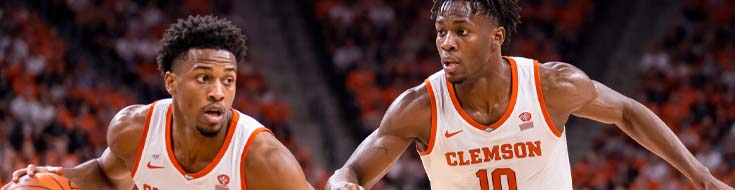
We saw this pattern again in the 2025 tournament. Clemson scored just 13 first-half points in one game, driven by slow possessions, poor shot creation, and turnovers. That type of pace collapse doesn’t fully reflect in live totals immediately, especially if the opening minutes were faster.
If you’re tracking tempo in real time—counting possessions, watching shot clock usage—you can get ahead of the adjustment.
Unders become valuable when:
- Possessions lengthen consistently
- Transition scoring disappears
- Teams rely on half-court sets
The scoreboard reacts late. Tempo doesn’t.
3-Point Variance: The Biggest Illusion in March
No stat swings games—and betting lines—faster than 3-point shooting.
And nothing is more misleading.
In a 2025 Elite Eight game, Alabama hit a record 25 three-pointers, shooting close to 50% from deep. That’s not just skill—that’s variance at its extreme. On the other side, BYU started ice cold from beyond the arc in the same matchup.
That’s March Madness in one snapshot.
Here’s the key: hot shooting doesn’t last, and cold shooting rarely stays cold.
But live markets often treat short-term performance as if it’s sustainable.
If an underdog opens 6-of-9 from deep, spreads tighten immediately. Sometimes they flip. But if those shots are contested or off broken plays, regression is coming—and the market is slow to price it in fully.
Same with cold stretches.
Arizona, for example, shot around 33% from three during the season but spiked above 40% entering tournament play. That kind of fluctuation is normal, not exceptional.
So when a team starts 1-for-10 from deep but is generating clean looks, you’re not seeing bad offense—you’re seeing temporary variance.
That’s your cue.
Betting against shooting streaks—both hot and cold—is one of the most repeatable edges in live betting.
Turning Reads into Profitable Moves
This is where observation turns into execution—and where a real sports betting strategy forms.
Start with totals.
If pace drops and both teams are grinding through half-court possessions, look to bet unders before the line adjusts. This often happens mid-first half or just after halftime, when sportsbooks are still anchored to earlier tempo.
Now flip it.
If the total drops because of cold shooting—but teams are creating open looks—overs regain value. Shooting regression combined with stable pace pushes scoring back up quickly.
Spreads are where 3-point variance matters most.
When an underdog starts hot:
- Check shot quality
- Look at rebounding margins
- Evaluate turnover differential
If the favorite is still controlling those areas, you’re getting a discount on the better team.
When a favorite starts cold:
- Are they getting inside?
- Are they winning second-chance points?
- Are they dictating tempo?
If yes, the market may be overreacting.
Timing is everything.
Live bets aren’t instant. Delays mean your wager might be accepted seconds later at a slightly different number. That forces you to act before the obvious shift, not after.
If you’re reacting to the scoreboard, you’re late.
Where the Edge Is Heading Next
Live betting markets are getting sharper.
Data feeds are faster. Models are incorporating tempo more efficiently. Shot quality metrics are starting to influence pricing in real time. That will shrink obvious inefficiencies.
But two things aren’t going away:
- Human decision-making in games (coaching, adjustments, fatigue)
- 3-point variance
Even in the 2025 championship game, both teams shot roughly mid-20% from three, well below their averages. That’s variance showing up on the biggest stage.
And variance creates mispricing.
Going forward, the edge will rely less on raw stats and more on interpretation:
- Why is tempo changing?
- Why are shots missing or falling?
- What adjustments are coming next?
Markets react to outcomes. Sharp bettors react to causes.
That gap—small, fast, but real—is where value will always exist.
Expert Insights: Winning Live Betting Angles
- Track Possessions Manually
Don’t rely on broadcast pace. Count possessions over 3–5 minute stretches. If you see a drop, totals are about to lag behind reality.
- Separate Shot Quality from Results
Open looks matter more than makes. A team missing clean threes is a buy signal for overs or favorites.
- Identify Unsustainable Runs
A 12–2 run fueled by contested threes isn’t momentum—it’s variance. Fade it before the market stabilizes.
- Watch Foul Trouble Closely
Key players sitting changes both pace and efficiency. Markets adjust slowly to lineup changes, especially in college rotations.
- Use Media Timeouts as Indicators
Post-timeout possessions often reflect coaching adjustments. If tempo or shot selection changes, act quickly.
- Anticipate the Move
Delays mean you’re betting into a moving market. If you wait for confirmation, you’re already behind.
Frequently Asked Questions
Q: What is live betting in March Madness?
A: Placing bets during the game as odds update in real time based on score, pace, and performance.
Q: How does tempo affect live betting?
A: Tempo controls possessions. Slower pace means fewer scoring chances, making unders valuable if odds haven’t adjusted.
Q: Why is 3-point shooting so important in March Madness?
A: It’s highly volatile. Hot or cold streaks can mislead the market and create betting opportunities.
Q: When should you bet live totals?
A: When pace changes but the total hasn’t caught up yet—especially during slowdowns or fast transitions.
Q: Are live betting markets beatable?
A: Yes, briefly. Markets lag during rapid in-game changes like tempo shifts or shooting runs.
Q: What’s the biggest mistake bettors make live?
A: Chasing momentum. Most runs are short-term variance, not sustainable performance.
Q: How can beginners improve?
A: Watch games first, learn tempo and shooting patterns, then make small, targeted bets.
Q: What are the essential tips for live betting during major sports events?
A: For live online betting, focus on tempo, shot quality, and flow. Anticipate changes early, avoid chasing runs, and use market delays to your advantage.
Exploit the Seconds That Matter
The edge in March Madness isn’t about predicting chaos—it’s about reacting to it faster than the market.
Tempo shifts quietly. Shooting swings loudly. And sportsbooks take a few seconds to catch up.
That’s enough.
If you’re watching possessions, evaluating shot quality, and anticipating regression, you’ll consistently find spots where the number is wrong—even if only briefly.
To live bet on March Madness effectively, think in moments, not outcomes. Small windows. Quick decisions. Clear reads.
The opportunity is there every game.
Take it seriously, stay disciplined—and when you’re ready to apply it in real time, BetNow is where those edges turn into action.

Hilbert Mayer
Sports Writer
Hilbert Mayer is a professional sports writer, betting analyst, and content strategist with over 15 years of experience in the sports industry. Before focusing on sports betting analysis and handicapping, Hilbert worked as a sports writer for various news outlets, covering everything from game recaps to in-depth matchup features. Today, he specializes in MLB, NFL, March Madness, and UFC betting, combining his journalistic background with deep statistical expertise and real-world betting insights. His proven track record, sharp reads, and ability to break down complex matchups make him a trusted voice among both casual bettors and seasoned sharps.
Published on: March 19, 2026
Last updated: March 24, 2026