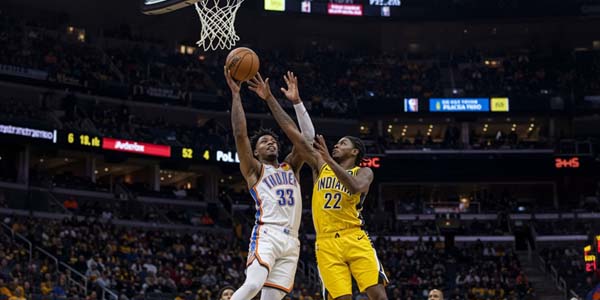
As of December 2025, NBA trades are picking up. Most contracts are now tradable, and front offices have to act quickly. Fringe contenders are considering trades that can lead to a championship, while others are making trades for future assets. Because of these trades, the futures market is moving. Odds for championships, conference wins, and individual awards are being updated based not only on results but on the trust and timing of surrounding rumors.
Trades of stars such as Giannis Antetokounmpo and Anthony Davis are speculated to have a major impact on championship odds. The ongoing trades of quiet role players seem to have a major impact on win potential. The bets being made on futures in the top NBA betting platforms are now based more on potential than current form. There is potential for bettors to make a profit from trade speculation.
Trade Season Momentum Is Driving Futures Volatility
Contenders, Buyers, and Sellers Are Now Defined
The impact of the NBA trade season on the market is immediate. Once teams cross the early contract-restriction window in December, most rosters can be altered in any significant way. That freedom compels sportsbooks to adjust at team ceilings. Contending teams are not judged on current net rating or record, but on how much they are poised to go after significant roster upgrades.
In the Eastern Conference, contenders are expected to go after scarce bench additions, while the teams stranded in the congested middle of the standings are anticipated to pivot fully to the sell-side. That difference has an impact. A team labeled as a buyer often sees its championship odds shorten, even before it acquires someone. At the same time, a team viewed as a seller is likely to watch its championship odds drift regardless of how it performs in the interim.
The market effects are driven by star-driven rumors, even in the case of a trade being unlikely. The market has to account for the collapse of the status quo, anticipated or not.
How Stats, Roster Gaps, and Rumors Intersect
Projected win shares, opponent-adjusted ratings, and efficiency metrics act as the baseline for pricing out futures for sportsbooks. Rumor cycles, however, require an overlay of probability. If a playoff team has an offensive rating in the bottom third, the team is a target for trade speculation, particularly for high-usage scorers. The market is not waiting for a trade to be completed; it is waiting for the trade speculation to make sense for the team’s roster.
This is why speculation on scoring wings, secondary playmakers, and rim protection moves odds more than ‘backup-level’ trade chatter. The more closely aligned the speculation is with the roster’s statistical needs, the more sportsbooks are on their toes. If they are not, they get a swift visit from a sharp bettor.
Roster elasticity is the other primary factor. Capped-out teams are treated differently from teams with tradable contracts and draft capital. Even if the futures odds are not moving, the market is reflecting the balance of a team’s front office.
Live Betting Accelerates Futures Movement
Just like the in-game markets, live betting on sports does not end with the game. When news comes out, the odds on the game’s outcome change over time. As news breaks, the sportsbooks continue to adjust the odds on the outcome to control potential losses, either on the champions themselves or the winning teams within the game. A betting update on the odds changes more often than the odds on the game itself.
How fast the odds change out of control depends on the site. Some sites change their odds quickly to mitigate losses, while others do not, and that has created a loss of value. Preseason odds on the outcome of a game do not remain static, and that has created a fin instrument that bets on the value of news, bets, and rumors.
Applying Trade Buzz to Practical Betting Decisions
Not all speculation is worth considering. The advantage comes from selectivity. Scenarios where speculation drives up a team’s price without a confirmed deal are usually a good selling opportunity. On the contrary, teams that have evident needs, relevant assets, and motivation often go under the radar until a deal is about to go through.
Some actionable strategies are:
- Purchasing futures before speculation reaches a fever pitch
- Not placing emotional bets that might be based on superficial social media chatter.
- Looking at how bookmakers are shifting their lines on correlated markets like conference championships or total season wins.
- Noting when the odds shift on days where there is little to no new available information. This is often a sign that the sportsbooks might be concerned.
The most favorable futures bets tend to be available when there is a lot of uncertainty surrounding the event, and a good chance that the odds available do not reflect the event’s true likelihood.
What Futures Markets Are Pricing Looking Ahead
With the February trade deadline coming closer, the narratives that have developed are predicted in the futures pricing of the league. The league is taking note of how top-heavy contenders are approaching roster depth, whether aging cores are doubling down, and how teams on the postseason bubble are deciding their direction.
Markets are also predicting demand for improved defense, shooting, and frontcourt insurance. Even trades of lower-tier players have the potential to influence playoff matchups, which in turn affects their championship odds. For the next six weeks, futures pricing will reflect the “what if” scenarios more than the current standings.
Expert Insights: How to Read Futures During Trade Season
Relevance trumps speculation
Reliable quotes are better than wild conjectures. The market will reflect this.
Be patient
Possibilities shift even before we get proof. The most reward is always on early bets.
Consider the underlying implications
It only matters when the team has inefficiencies to improve on for trades to get rumored.
Be aware of interrelated markets
MVP, Conference, and Championship futures tend to move in tandem. Imbalances are a good bet.
Don’t chase the market
Value is removed when the market has moved significantly.
Prepare to manage risk
Speculative futures are often volatile. When markets reverse, hedging is a way to protect your position.
Frequently Asked Questions
Q: What are NBA trade rumors?
A: Rockets trader rumors are reports and/or speculation of alleged player movement. Some are more credible than others. Some trade rumors are credible while others are simply rumors.
Q: Why do futures odds move before trades happen?
A: Odds are based on the likelihood of a given outcome. If a trade seems likely and the outcome of the game is impacted by the player being traded, it is likely the sportsbook will move its odds first to mitigate risk.
Q: Do all rumors affect betting markets?
A: No. Only rumors that involve significant rotation players or stars on one of the teams that would have a logical fit and be a good reason to move their players usually result in movement in the futures pricing.
Q: How risky is betting on futures during trade season?
A: The risk is the uncertainty in the market and volatility, but that volatility will create a profit for the player if managed correctly.
Q: What markets are most affected by trade buzz?
A: This tends to affect Championship futures first, followed by Conference futures and awards that are given for team success or individual success that increases due to the role of the player in the team.
Q: How Sharp Bettors Outsmart the Public in NBA Betting?
A: In NBA online betting, smart bettors wait for inefficiencies, verify information, and bet before odds fully adjust. Public bettors tend to react late and emotionally.
Q: Should beginners avoid trade-driven futures?
A: No, but they have to be managed correctly. Overall, beginners had a more restrained attitude and possibly a smaller betting stake for the trade season.
Q: When is the best time to place futures bets?
A: This is best done as early as possible in the rumor cycle or after the market has over-adjusted to one side and is basing an initial line on the rumor all the time.
Where the Smart Money Goes Next
Trade rumors aren’t background noise anymore. They’re a core driver of NBA futures pricing. As December turns into January, sportsbooks will continue pricing expectation, not just performance. Bettors who understand how roster speculation reshapes implied probability gain an edge before trades go public.
Top NBA betting platforms already reflect much of the current chatter, but inefficiencies remain — especially during quiet news windows. The key is discipline, timing, and source evaluation. Futures betting during trade season rewards patience and preparation.
If you’re ready to act on these insights, now is the time to explore futures markets and in-season opportunities at BetNow, where fast-moving odds meet real-time opportunity.

Hilbert Mayer
Sports Writer
Hilbert Mayer is a professional sports writer, betting analyst, and content strategist with over 15 years of experience in the sports industry. Before focusing on sports betting analysis and handicapping, Hilbert worked as a sports writer for various news outlets, covering everything from game recaps to in-depth matchup features. Today, he specializes in MLB, NFL, March Madness, and UFC betting, combining his journalistic background with deep statistical expertise and real-world betting insights. His proven track record, sharp reads, and ability to break down complex matchups make him a trusted voice among both casual bettors and seasoned sharps.
Published on: December 26, 2025
Last updated: December 30, 2025