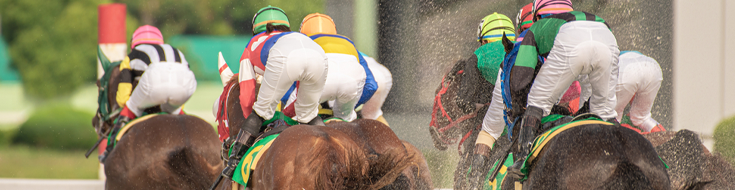
Each edition of the Arc draws legions of punters to horse race betting sites, chasing a slice of the €5 million purse and bragging rights. In 2024, the winner Bluestocking carried off about €2.857 million—for sheer scale, few races compare.
For the Qatar Prix de l’Arc de Triomphe this year (at Longchamp), there are the necessary ingredients for a classic: a large array of field contenders, numerous odds that have shifted, tactical concerns for the ground, and possible new market access. Primarily, we will present: the odds and contenders breakdown in the most current state and a more comparative view to market history for increased contextual understanding, ways to practically structure your betting (especially regarding live horse racing betting), and finally, how the year 2025 might look with regards to the future of this event as a legacy.
This piece will also present tips that relate to the above, a set of assumptions to answer questions I presume you will have, and in the end, answer the questions I most anticipate and give the planned summary, closure, and present instruction.
Top-Level Dynamics & Odds Landscape
The main focus is on Minnie Hauk, who is being supplemented and is currently priced at roughly 7/2 after getting stall one. That is historically significant — stall one hasn’t produced a winner since Zarkava in 2008. Also, drawing one requires quick, early tactics, and any misstep in a loaded field can be disastrous.
The Japanese challenge is strong in 2025. Byzantine Dream, Croix Du Nord, and Alohi Alii are all contenders. Although Japan has never won the Arc, the expected conditions may help: a going reading of ~7.2 (good to soft) is predicted, which is more advantageous for the Japanese runners.
Aventure is just behind Minnie Hauk in the market — rated at ~9/2. Other horses getting market attention include Kalpana, Cualificar, Estrange, and Los Angeles.
What stands out: the betting market is relatively open. Odds are compressing, but there’s value in horses slightly off the top. Trends over the last several years show the favorites win about 4 of the last 12, but there are plenty of winners in the top 3 ranked betting horses.
In a nutshell: Minnie Hauk will probably try to survive an unfavorable draw, the Japanese brigade will end the losing streak, and value will be chased by mid-tier contenders.
Trends & Comparisons: What History Suggests
Looking at past editions gives us perspective. Some key patterns in winners’ profiles:
- The past 12 winners all had a previous Group 1 win.
- All had at least 4 previous flat wins.
- Over the last dozen, 8 winners came from stall 8 or lower.
- 9 of 12 won their last outing before the Arc.
- Ages 4 and 5 dominate: 8 of the last 12 winners fall in that band; 3-year-olds are less frequent.
This means it’s better to go with tried-and-true horses that have competed at the highest levels instead of flankers who don’t have the pedigree or history. There has been a consistent over-round (bookmaker’s margin) whereby 20 iterations of the Arc bet have returned an average of 123% with a 23% cushion being built in by the bookmakers.
Look at 2025’s field, for example. Minnie Hauk seems to check a lot of the relevant boxes (top form, strong backing,) but her draw is a hindrance. Even though Japanese runners may not have the extensive local experience, their turf adaptability has improved, especially with the training shift to European prep-style gearing.
Also, keep in mind, the ground’s speed matters. A “quick” surface (good-to-soft leaning firm) is more favorable for more aggressive or adaptable runners. A going of 7.2 charted is mixed—neither heavy nor overly fast, and this is a mixed signal.
Therefore, a horse that has recent high-level form, has run at or close to the 1m4f distance, and is coming from a middle stall or will have enough to get over early traffic is historically going to be more favorable than an untested outsider.
Tactical Insights & Live Betting Application
One of the key advantages for bettors is the ability to adjust during the race—i.e. live horse racing betting. In the Arc, split-second decisions or track changes can upend pre-race logic.
Here’s how to apply tactical thinking:
- Check early sections and pace breaks: When the early speed of the race is soft, front-runners are likely to be targets for back markers. On the other hand, an overly fast early pace is lethal for horses trying to make middle moves.
- Rain or water presence mid-race: Follow the jockey’s lines; if inside strips are boggy, the horses switching to racing wide may gain an advantage.
- Position change at the final turn: Some of the jockey’s unexpected moves mean something, and the overlays can be watched.
- Evaluate the real-time odds drifting versus your predictive model: If the horse you are supporting is drifting in odds, that horse is likely to be underbet, giving you a window of value.
- The fallback of watching horse shape and how the horse is working is less predictive and more direct. Some horses look effortless until the final 200 meters, while others work hard from the start.
The stamina of a moving horse is a powerful predictive signal and an advantage. So while pre-race picks are starting points, the dynamic adaptation while the race is running is what separates the winners from the losers. You can start with your shot list, but be ready to change.
Practical Applications for Bettors
Here are direct ways you can use these analyses:
Split your betting strategy: Bet on one or two “safer” horses (Minnie Hauk, Aventure), then pair with one “value” pick (maybe Byzantine Dream or Estrange) in exotics.
Check draw-adjusted forms: If a horse has a history of poor performances in wide draws, unless it has shown draw-breaking ability.
Tempo modeling: Forecast model of estimated splits in 400m segments. You should compare early splits live and adjust your forecasts if the pace is over or under.
Horses with multiple recent runs: Prioritize horses with 2–4 runs in the season over lightly run horses or horses with gaps of over 120 days.
Cross-check condition adaptability: In some horses, soft is a track condition. If track condition changes, adjust your bets to horses with proven versatility.
Layer in odds movement triggers: If a horse is sharply slashed late, that is inside info and confidence you want to follow.
Put simply: Integrate the trend-insight, odds surface, draw, form, and within-race signals. An edge is built with each layer in such a tightly contested race.
Forward View: What This Arc Could Mean
Maybe 2025 will be a turning point. If a horse trained in Japan snaps the Arc drought, it will change perceptions regarding turf adaptation and export training. The preparation at European-style spending shows that the Japanese contenders are not flukes.
The draw for Minnie Hauk is a test. If she overcomes stall one, she’ll solidify her place as a generational filly. If she does not, it weakens the belief that the favorites will always win.
Look for the betting markets to be under even more pressure. If a mid-tier horse gains momentum during the race, the late odds will be more volatile than in the past.
Expect even more Japanese and, likely, Australian horses to enter the Arc weekend in 2026. It will push the Arc even further as a global battleground. For bettors, that means even more uncertainty and, potentially, more opportunity.
5 High-Impact Tips
1. Favor Stall 8 or Below (When Possible)
For the last 12 winners, 8 of them came from stalls 8 or lower. If a contender meets other criteria and has a favorable draw, give it more weight.
2. Prior Group 1 Win Is Non-Negotiable
For every recent winner, they had a Group 1 win at least once before the Arc. A horse missing the top level wins should be dismissed unless compensating heavily elsewhere.
3. Monitor Odds Movements Closely
From late-day shortening or drifts can give clues. Downgrade a horse you like if it drifts without a reason. One shortens sharply could mean the opposite.
4. Use Dual Strategy: Win Plus Exotics
Since Arc’s favorites aren’t the dominant horses in all permutations. You can take safe picks and use them for exotics with value horses. This gives you more options.
5. Track Mid-Race Tempo vs. Expectation
Before the race, draw a plan for expected splits by segment, such as first 400m, then 800m. If the actual splits are way different, there is a chance to profit with live betting.
Each tip is meant to be actionable, not theoretical — test them during the race warm-up and early splits.
Frequently Asked Questions
Q: How long is the Qatar Prix de l’Arc de Triomphe, and how much do the horses weigh?
A: The Arc covers a distance of 2,400 meters, and horses race for 1 mile 4 furlongs. 3-year-olds, 56.5 kg, older horses 59.5 kg, with 1.5 kg allowance for fillies/mares.
Q: How competitive is betting for this event?
A: The competitive horse race betting sites are highly competitive. The average bookmaker margin in the Arc betting market is 123% over a study of over-rounds. In simple terms, bookmakers build a 23% edge.
Q: How Do I Choose the Best Racebook Platform for Online Betting?
A: Look for strong liquidity (tight odds), reliable live streaming, rapid bet placement, transparent commission/fees, and good reputation/regulation. A best racebook platform with historical integrity and strong customer support is ideal.
Q: Does stall/draw position influence the outcome significantly?
A: Definitely! Stall position matters more in larger fields. Historically really recent winners have all come from stalls 8 and below. A horse in a tight inside position gets the advantage of shielding a horse in the early stages; a wide stall position will require tactical speed or good early cover.
Q: Are 3-year-olds viable winners?
A: 3-year-olds are less common, but in recent years, 8 of the last 12 winners were 4 or 5, and only a few were 3. A 3-year-old would need to have exceptional form and route maturity, but it is possible.
Q: When should I place my bets? Pre-race or during the race?
A: Placing bets on early races should remain your core bets, but reserves should be left for live betting. If splits or jockey moves really deviate from the expected, you would want flexibility to adjust bets mid-race.
Q: How much should I rely on historical trends versus current form?
A: Have a combined approach. Historical trends (draw, age, form patterns) provide a structure. However, current form (recent runs, condition adaptability) most of the time overrides the historical trends when it is clear a horse is dominant to take the race.
Q: What risks should bettors watch out for?
A: Risks would be sudden weather changes and surface shifts, pace misjudgment early on, and late drift from the insiders. Late or early drift are shift on the betting line. Favoritism bias is also a common risk; it occurs when people overbet on the fancied horses, which compresses value somewhere else.
The Arc 2025 in Your Hands
Minnie Hauk is the headline, but doubt lingers in her draw. The Japanese challengers bring intrigue. Historic patterns point toward horses with top form, favorable stalls, and recent wins. Live horse racing betting will let you adapt midrace and exploit deviations. Use layered strategy: back safe picks and chase overlays, monitor splits vs expectations, and never disregard odds movement cues.
Your edge lies in combining data, trends, and on-race observation. If you want to test selections, take a balanced approach.
Ready to act? Head to BetNow to fire up positions and track live markets as the Arc unfolds.

Hilbert Mayer
Sports Writer
Hilbert Mayer is a professional sports writer, betting analyst, and content strategist with over 15 years of experience in the sports industry. Before focusing on sports betting analysis and handicapping, Hilbert worked as a sports writer for various news outlets, covering everything from game recaps to in-depth matchup features. Today, he specializes in MLB, NFL, March Madness, and UFC betting, combining his journalistic background with deep statistical expertise and real-world betting insights. His proven track record, sharp reads, and ability to break down complex matchups make him a trusted voice among both casual bettors and seasoned sharps.
Published on: October 5, 2025
Last updated: October 6, 2025