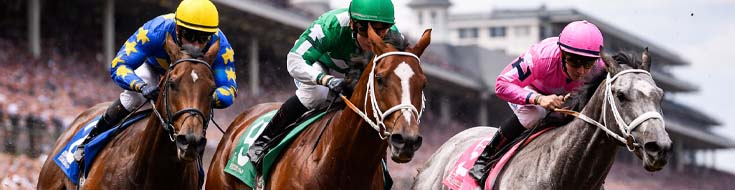
Nearly 40% of Kentucky Derby winners in the past decade ran in at least one major prep race like the Louisiana Derby. That stat alone tells you why this race matters. It’s not just another stop on the calendar — it’s a filter for serious contenders and a signal generator for anyone using horse racing betting sites to find value early.
Run annually at Fair Grounds in New Orleans, the Louisiana Derby sits deep in the prep schedule, typically offering one of the largest qualifying point totals on the Road to the Kentucky Derby. That means higher stakes, sharper competition, and more reliable data for bettors. You’re not guessing at raw potential anymore — you’re evaluating developed form.
What follows breaks down how this race actually plays out, what the numbers say, and how to turn that into betting decisions. We’ll look at performance trends, compare it to other prep races, identify patterns sharp bettors rely on, and project how this year’s field could shape the Derby itself. If you’re serious about betting, this race isn’t optional viewing — it’s required study.
Breaking Down the Louisiana Derby Edge
Pace, Distance, and Winning Profiles
The Louisiana Derby is run over 1 3/16 miles (9.5 furlongs), making it one of the longest prep races before the Kentucky Derby. That matters more than most bettors realize. Horses that succeed here are already proving stamina — not just speed.
Looking at recent results, winners typically post Beyer Speed Figures in the mid-to-high 90s, with elite contenders cracking 100. More importantly, closing fractions tell the story. Horses that finish strong in the final three furlongs tend to outperform in the Kentucky Derby.
Front-running winners are rare here compared to shorter prep races. The Fair Grounds track tends to favor stalkers and mid-pack runners who can conserve energy early. That creates a predictable pace scenario — moderate early fractions, with positioning becoming critical entering the far turn.
For bettors, this narrows the field quickly. Horses reliant on early speed often fade late at this distance. Meanwhile, proven closers with prior two-turn experience gain value, especially if they’ve shown consistency over longer distances.
The implication is simple: this race filters out sprinter-types and exposes stamina gaps. If a horse handles this distance well, it’s already ahead of many Derby rivals.
How It Stacks Against Other Derby Preps
Compared to races like the Florida Derby or Santa Anita Derby, the Louisiana Derby offers a different profile of contenders. The Florida Derby tends to produce sharper speed figures, while Santa Anita often features more tactical speed.
The Louisiana Derby, by contrast, leans toward endurance and race management. Historically, horses exiting this race don’t always enter the Kentucky Derby as favorites — but they consistently finish in the money.
From 2015 to 2024, multiple Louisiana Derby participants placed in the Kentucky Derby top five, even if they didn’t win outright. That’s a key distinction. This race produces grinders, not always headline-makers.
Another difference is track bias. Fair Grounds has a reputation for fairness — fewer extreme biases compared to tracks like Gulfstream Park. That makes form from this race more transferable. What you see here is closer to what you’ll get on Derby day.
For a handicapper in racebook betting, this is where the race becomes especially valuable. It provides cleaner data, fewer distortions, and more reliable indicators of true ability. You’re not adjusting as much for track quirks or pace anomalies.
That reliability is why experienced bettors often weigh Louisiana Derby performances more heavily than flashier prep races with inflated speed figures.
Turning Analysis Into Betting Decisions
Knowing how the race plays out is one thing. Applying it is another.
Start with pace mapping. Identify which horses are likely to lead, which will stalk, and which will close. In the Louisiana Derby, the ideal betting target is often a stalker sitting 2–4 lengths off the lead at the halfway point.
Next, evaluate distance progression. Horses stepping up successfully from 1 1/16 miles to longer routes tend to show improvement here. If a horse has already won or placed at similar distances, that’s a strong indicator.
Trainer patterns also matter. Certain barns use this race as a peak performance target, while others treat it as a stepping stone. Trainers with strong Fair Grounds records deserve extra attention.
Then there’s trip analysis. Watch replays. A horse that lost ground wide but still finished well may offer better value than a winner with a perfect rail trip.
Finally, odds context matters. Because this race often features evenly matched contenders, value frequently sits in the 5/1 to 12/1 range. Favorites win, but not at a dominant rate compared to other preps.
The key takeaway: don’t chase the fastest horse. Bet the most complete one — the horse that fits the pace, distance, and progression profile.
What This Means for the Kentucky Derby Picture
The Louisiana Derby doesn’t just produce participants — it shapes expectations.
Horses exiting this race often enter the Kentucky Derby with fewer starts but stronger distance credentials. That’s increasingly important as modern training trends favor lighter racing schedules.
Looking ahead, expect Louisiana Derby contenders to play a major role in the Derby’s middle and late stages. They may not always lead early, but they’re often the ones still running when others fade.
Projection models suggest that horses finishing in the top three here have a significantly higher probability of finishing in the Kentucky Derby top five compared to runners from shorter prep races.
Another trend: these horses often improve with added distance. The jump from 1 3/16 miles to 1 1/4 miles suits their running style, especially if they’ve shown late acceleration.
For bettors, this creates a strategic opportunity. Louisiana Derby runners often go off at higher odds in the Kentucky Derby than their true probability suggests. That’s where long-term value lives.
If you’re planning ahead, tracking this race closely isn’t optional — it’s one of the clearest previews of how the Derby will unfold.
Expert Betting Insights for the Louisiana Derby
1. Prioritize Proven Distance Ability
Horses that have already performed well at 1 1/8 miles or longer are safer bets. Look for runners that finish strong late, not just early speed.
2. Focus on Late Pace Figures
Final fractions often matter more than overall speed. Compare how fast horses run the last three furlongs to spot strong finishers.
3. Don’t Overvalue Undefeated Records
Undefeated horses can be overhyped. Give more weight to runners with experience and consistent results at similar distances.
4. Track Trainer Intent
Some trainers target this race specifically. Check their past results at Fair Grounds to see who prepares horses well for this spot.
5. Watch for Ground Loss in Prior Races
Horses that ran wide may have performed better than the result shows. Adjust your view beyond just finishing position.
6. Evaluate Post Position Impact
Inside posts can help save ground but may lead to traffic. Match post position with running style to judge the real advantage.
Frequently Asked Questions
Q: What makes the Louisiana Derby important for bettors?
A: It offers major Kentucky Derby points and a longer distance, giving clearer insight into stamina and race strategy.
Q: When is the best time to place bets on the Louisiana Derby?
A: Look early for value, but finalize bets after post positions and track conditions are confirmed.
Q: How does track condition affect results?
A: Wet tracks can favor certain runners. Horses proven on off tracks gain an edge.
Q: Are favorites reliable in this race?
A: Not consistently. Mid-range odds horses often outperform in this competitive field.
Q: What role does jockey experience play?
A: It’s key. Experienced riders manage pace and timing better over longer distances.
Q: Should bettors focus more on speed or stamina?
A: Stamina matters more. The longer distance rewards horses that finish strong.
Q: Can longshots realistically win the Louisiana Derby?
A: Yes. Closers with improving form often beat their odds.
Q: How Does the Age of a Horse Affect Racebook Betting Odds?
A: All are three-year-olds, but experience varies. Proven horses get shorter racebook betting odds, while less experienced ones offer higher risk-reward.
Where Smart Bettors Get Ahead
The Louisiana Derby isn’t just another prep race — it’s a sorting mechanism. It separates raw talent from Derby-ready contenders. If you’re paying attention, it also separates casual bettors from informed ones.
Three things stand out. First, distance matters more here than in most preps. Horses that handle it are already ahead. Second, pace and positioning consistently shape outcomes — this isn’t a race you can win wire-to-wire without resistance. Third, value often sits outside the favorite, especially among experienced runners with strong closing profiles.
Using horse racing betting sites effectively means leveraging races like this for both immediate bets and future projections. The data you get here doesn’t just apply to one race — it carries forward to the Kentucky Derby and beyond.
If you’re ready to act on that edge, platforms like BetNow give you the tools to track odds, analyze fields, and place informed wagers. The difference between guessing and betting smart often comes down to how well you understand races like the Louisiana Derby.

Hilbert Mayer
Sports Writer
Hilbert Mayer is a professional sports writer, betting analyst, and content strategist with over 15 years of experience in the sports industry. Before focusing on sports betting analysis and handicapping, Hilbert worked as a sports writer for various news outlets, covering everything from game recaps to in-depth matchup features. Today, he specializes in MLB, NFL, March Madness, and UFC betting, combining his journalistic background with deep statistical expertise and real-world betting insights. His proven track record, sharp reads, and ability to break down complex matchups make him a trusted voice among both casual bettors and seasoned sharps.
Published on: March 21, 2026
Last updated: March 24, 2026