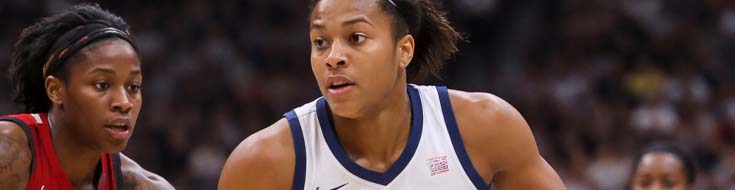
The WNBA continues to grow as it heads into 2026. Last season, some of the biggest attendance numbers in league history were recorded. General consumer interest in the league grew as betting handles increased. Furthermore, the league’s star power reached unprecedented levels. However, the excitement was short-lived. Lynx forward Napheesa Collier, one of the WNBA’s most consistent two-way players, is now out for several months due to extensive reconstructive surgery on both of her ankles. In the meantime, Caitlin Clark made it known that her WNBA return would be, in part, focused on the 2026 FIBA Women’s World Cup.
For bettors looking to bet on WNBA online, these two storylines matter immediately. Injuries don’t just affect rotations. They shift futures, change early spreads, and reshape how books price teams weeks before opening tips. International commitments do the same, especially when they involve high-usage guards and heavy minutes.
The goals of this analysis are to determine the impact of Collier’s injury on the Lynx’s summer expectations, the significance of Clark’s summer focus, track the odds as they come in for the 2026 season, and take a look at what sportsbooks do under these circumstances. We will discuss betting implications, as well as what to watch as the 2026 betting lines crystallize.
The Impact of Collier’s Surgery on Minnesota’s Core
Napheesa Collier has been the stabilizing factor for the Lynx for multiple years. In 2025, she scored over 21 points per game, played major minutes versus highly skilled players, and ranked at the top of the league for defensive win shares. Losing her for 4-6 months is not a “next player up” situation.
Minnesota’s offense has depended on Collier’s ability to change the game. She can drive and score on her own, she can create plays for others from the free throw line, and she can defend any position, staying vertical on the defense. The Lynx will certainly not be able to create a reliable late game situation and will not be able to create spacing. Due to this, from a betting perspective, it will hit totals and side bets immediately. Until things are clear regarding injuries to players, early betting lines will show Minnesota scoring lower and lower as a result of Collier not being able to play.
Recovery will run to the start of the regular season, meaning preseason projections will overvalue Minnesota if they rely on last year’s data. Gambling lines generally respond quite quickly to news of a player needing surgery, but when it is a matter of public bets, the delay means there will be a deficit of information for some time. This is particularly true regarding early line projections, as well as over/under totals for the number of games a team will win.
Another angle is load management. Even when Collier returns, there will likely be minutes restrictions. That limits her impact on back-to-backs and road games — areas sportsbooks already approach with caution. Minnesota will likely be seen as a mid-tier team early, with a lot of uncertainty due to injury reports.
Clark’s World Cup Focus and What It Means for the Fever
Caitlin Clark’s name drives consumer interest. This is not an exaggeration: Indiana games attracted some of the highest handle spikes last season when her name was mentioned. With Clark’s decision to play professionally overseas, bettors need to start thinking differently about her workload in 2026.
International play creates potential exposure to fatigue and minor injuries. It also shortens recovery windows before the WNBA season begins. For Indiana, that shouldn’t mean panicking. It means planning. Anticipate careful scaling of minutes in the beginning and planned rests during games that have less on the line.
This is not new in the grand scheme of things. WNBA players have always balanced overseas schedules. What is different is the volume of overseas play. Clark is at an elite level with her usage rate, and her shooting pressure is felt by everyone on the court. Even a minor drop in efficiency due to a lack of play time can cause a swing in predicted point differentials by an entire point or greater.
Sportsbooks, on the other hand, work on putting a higher level of variance rather than correcting lower. Early on, player points and assists will likely be more imbalanced than team spreads due to Clark’s high usage at the start of the season. For that reason, bettors will need to navigate around high predicted data capture numbers during that time.
This is also where mobile sports betting sites matter. Live updates on minute restrictions, travel schedules, and late scratches are often the difference between value and dead money. Clark’s availability won’t be guesswork — it will be priced minute by minute.
Practical Betting Adjustments for Early 2026
The best bets tend to be made before the hype, important facts have not yet come out. Given that Collier is out and Clark has to split her time, bets should be made that allow for more variance rather than relying on preseason bets.
First, for the teams affected by these changes, do not make long-term futures bets too early. With Collier out, we do not know how high Minnesota can go, and Indiana may be unpredictable in her early performances. When it comes to shorter-term markets, first-half spreads, game totals, and specific player props tend to have more reliable information.
Second, keep an eye on experimenting with lineups. When star players are unavailable, early-season games are meant for coaches to tinker with their lineups and rotations. When that happens, unders come into play more, especially when the benches are not great at scoring.
Third, be careful with the betting public’s reaction. People bet on Clark no matter what. Because of this, the betting lines might be a little higher than they should be. It is better to wait to see how many minutes a player will play or if they have to travel before they play to get better bets.
Lastly, spread bets out. When injuries take place in a season, it is better to have bets focused on different teams and markets rather than sticking with just one story. When there are fewer games, there will be more of a spread in the outcomes, so it is important to bet with discipline.
Projecting How the 2026 WNBA Market Will Settle
Measurable volatility is to be expected for the first third of the season. Identity formation for Minnesota sans Collier will take time. Should the younger players step up defensively, totals may drop, but the sides will stabilize. In the absence of Collier, the Lynx may be fade candidates.
Indiana’s approach is different. With Clark, it will be more difficult to contain them, but early-season inefficiency will be present. With the conclusion of international play and settled rotations, lines are expected to tighten quickly. During this time, the books will not be fully recalibrated, which often presents value.
Depth is more important than it has ever been. Outperforming preseason expectations will be the teams that absorb injuries with minimal drops in performance. With advanced metrics, bettors will predict the teams that the market has yet to catch up to using pace, defensive rating, and usage shifts.
Expert Insights: Betting the WNBA Injury Cycle
Look at injury timelines rather than headlines
News of surgery moves the market, but recovery windows matter more. Place bets based on expected recovery, not recognition.
Note the first half lines early
Teams missing a star often start slow, but adjust late. First-half unders and spreads on the slow-starting team can be positive expected value.
Adjusted usage tracking
When a star sits, the usage doesn’t go away. Identify players who will be impacted by the missing star before props adjust.
No blind futures on the first mark
Futures that lock in early uncertainty are bad bets. Wait until you see a full rotation unless you have a number that is clearly out of line.
Know the international calendar
Fatigue travel is real, and it shows in shooting efficiency first before the end score.
Frequently Asked Questions
Q: What is the effect of Collier’s injury on WNBA Betting lines?
A: The effect on the betting lines is immediate. There is the highest effect shift in these examples early on in the season, when the replacement player has not yet been evaluated.
Q: Is it safe to bet on a team that has players coming back from surgery?
A: It is not safe to bet on these teams in the early season. The performance is suppressed, and they might not play as much because of minute restrictions.
Q: How Early Odds are Set in Sports Betting and What Influences Their Changes?
A: Early sports betting odds are based on power ratings, projected rosters, and historical data. Injuries, lineup news, betting volume, and sharp action drive adjustments as new information becomes available.
Q: Does player performance get negatively impacted when they come back from international commitments?
A: It is possible, especially at the beginning of the season due to the packed schedule, but it is not always the case.
Q: Are player props more volatile in injury situations than betting lines?
A: Yes, player props adjust more than betting lines, and when injuries and usage patterns are established, there will be more value on player props.
Q: When in the early season WNBA games is the best time to bet?
A: It is best to bet after lineups have been announced, but be sure to do so before the public bets on the lines.
Where Smart WNBA Bets Begin
The 2026 WNBA season is already defined by uncertainty. Napheesa Collier’s injury reshapes Minnesota’s ceiling, while Caitlin Clark’s global ambitions add complexity to Indiana’s outlook. For bettors, that uncertainty isn’t a problem — it’s an opportunity.
The key is patience. Track health updates, understand how sportsbooks react, and don’t chase narratives without numbers. If you plan to bet on WNBA online, focus on information gaps early, then scale exposure as the market stabilizes.
The edge doesn’t come from predicting headlines. It comes from reacting faster and smarter than the crowd. When you’re ready to put that knowledge to work, head to BetNow, compare the latest WNBA odds, and make every wager count.

Hilbert Mayer
Sports Writer
Hilbert Mayer is a professional sports writer, betting analyst, and content strategist with over 15 years of experience in the sports industry. Before focusing on sports betting analysis and handicapping, Hilbert worked as a sports writer for various news outlets, covering everything from game recaps to in-depth matchup features. Today, he specializes in MLB, NFL, March Madness, and UFC betting, combining his journalistic background with deep statistical expertise and real-world betting insights. His proven track record, sharp reads, and ability to break down complex matchups make him a trusted voice among both casual bettors and seasoned sharps.
Published on: January 3, 2026
Last updated: January 11, 2026