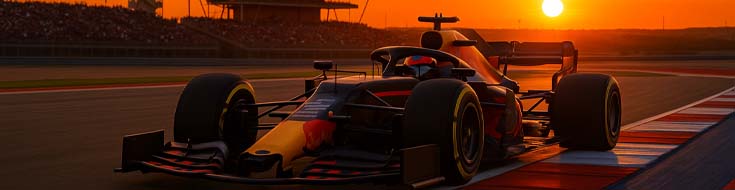
In 2025, Formula 1 will once again host the 19th US Grand Prix at the Circuit of the Americas in Austin Texas. The 5.513 km track will be raced over 56 laps, covering a total distance of 308.405 km.
Fans, analysts, and bettors alike will be watching closely — especially those scanning certified sports betting sites for smart, safe wagers on this pivotal weekend.
At this juncture of the season, the standings have never been closer; Oscar Piastri is just 22 points ahead of Lando Norris, and Lando Norris is 63 points ahead of Max Verstappen, who is in third place. McLaren has already secured the Constructors’ Championship, meaning both its drivers have the liberty to race without any constraints.
Here’s what’s coming up:
- COTA’s unique course design, altitude, and climate dynamics to the track’s racing results.
- Comparative analysis of the 2025 drivers against their previous US GP results and probable odds.
- Tactical guide to odds interpretation, wager timing, and practical approaches to live betting.
- Impact of this race on the championship battle concerning the final rounds.
- Main insights and points of emphasis from betting, and the new action with BetNow to take.
This is a prospectus on the numbers, configurations, and tactics that can best illustrate the 2025 United States Grand Prix’s Bet Now.
COTA Breakdown: What Will Shape This Race
At the Circuit of the Americas, the layout and conditions require a car with the right balance. The initial uphill segment to Turn 1 is challenging since there are multiple line options, and there is often a lack of traction off the line. A little later in the lap, the first sector is a gentle sweep that is reminiscent of Silverstone, before the mid-section is a tighter set of corners. The riders then blast down the back straight to perform a DRS pass or slipstream into Turn 12.
Pirelli supplies C1 hard compound in addition to C3 (medium) and C4 (soft). The magnitude of the jump from hard to medium is larger than it has been in previous years, which theoretically provides 2 valid strategies. You can take fewer pit stops and more conservative hard rubber or cover more aggressive softs to try and soften it from the top. The weather forecast for Austin is also highly variable, which provides more complexity.
From a historical perspective, getting the pole is advantageous, but not completely decisive. Over the last 10 US GPs, only about 40 percent of the winners started from the pole, while 80 percent of the winners started from the front row. Also, it is important to note that Lewis Hamilton has the most US GP wins (6) and no other active player has matched that record.
Implications: The car setup must hold its own along both long straights and in the technical zones. More flexible teams, like the McLaren with multiple top drivers, can take strategic variance on the field. Qualifying is important, but a mid-grid car with great race pace and execution in the pits still has opportunities.
Comparing Today’s Field to Past Performances
McLaren has confirmed their dominance this season – clinching the Constructors’ Championship early, their two drivers (Piastri and Norris) are free to push hard. Piastri holds seven wins this season while Norris has five. Verstappen still trails but is dangerous.
That dynamic is reflected in the odds for the U.S. GP. Some sportsbooks have Max Verstappen as the favorite at +175. Other odds have Lando Norris at +200 and Piastri at +250. Some betting previews shift toward Norris.
Looking at previous U.S. GPs, there is limited player and team overlap. Previous winners included Leclerc (2024), Verstappen (2021–2023), and Bottas (2019). Last year, pole was by Norris; Leclerc won from the second row.
Context surrounding F1 betting trends is relevant as well. Micro-betting (pit stop timing, leading during a sector) and predictive models are becoming more popular in the betting market, alongside odds comparison sites that aggregate F1 odds from multiple sportsbooks.
Takeaways from the comparisons for this U.S. GP are that it is unlikely to resemble previous GPs, but the patterns still hold. Dominant teams with two threats and flexible strategies still outperform under uncertainty. Evolving betting markets mean there is an edge to be gained if there is close attention to the prop markets.
Smart Betting Tactics for the U.S. GP
First, analyze practice finishes and qualifying sessions as they finish. The market responds to data very fast. If one of the top contenders has a poor showing, the market might be more willing to target other values.
Second, analyze two-tier bets: matchups (Norris vs. Verstappen), bets for the fastest lap, and safety car bets. These propositions usually have more favorable spreads than the win bets and other outright win bets.
Third, scale bets according to confidence and volatility. During sprint weekends like the U.S. GP, the risks increase. New high-risk props should be paired with your usual conservative standard sprint bets, which should be more generous in proportion.
Fourth, in the middle of the race, use hedging opportunistically. If the driver you supported relates to your losing position, be live and track their odds as they suggest a way you might reverse your position to either secure a profit or control your loss.
Fifth, consider the strategy in the context of tire wear in conjunction with the length of stints. Ending gaps of C1- C4, if track evolution favors certain tires, teams may extend harder tires more than predicted. If you identify this early, you can plan for supportive or opposing late undercuts.
Lastly, for the best line, compare different certified sports betting sites. In different margins and limits, an edge can be tilted.
With live sports betting, flexibility is key—you don’t have to commit all your capital at the start.
What the Race Could Mean for the Title Fight
If McLaren maintains their current form, either Piastri or Norris may likely take first. However, if strategy or reliability comes into play, Verstappen remains a viable contender. Depending on the setup, Leclerc could play a spoiler role if Ferrari performs optimally.
If Norris wins, the championship race narrows considerably. At a 22-point difference, he would likely shift momentum psychologically and in the standings. A win by Piastri, on the other hand, would provide him with some positional relief. A Verstappen win would keep title hopes alive, even if uninterested mathematically.
The expected championship standings may force the teams into more aggressive strategies; we could see more risky tire shifts and aggressive pit stop strategies. Additionally, expected weather could help or disrupt plans that we would want to set. A forecasted wet sector or sudden change in track conditions could throw a weather-dependent strategy off.
The weather conditions expected at the U.S. Grand Prix, or Austin, could provide a pivotal moment in the second half of the season. A driver who executes here cleanly would then also likely carry that same confidence to Mexico, Las Vegas, and Qatar, especially if there is championship pressure.
Emerging betting trends on micro-markets like sector leads and pit splits may provide sharper bettors with arbitrage opportunities or gambling loops to exploit with the dynamically changing odds.
Expert Betting Guidance: Five Proven Moves
1. Early Recognition of Heat and Tire Degradation
Stressed rubber. Hot track surface. For struggling drivers, the odds are drifting fast. Capitalize before the swing.
2. Inter-Team Dynamics at McLaren
Piastri and Norris are McLaren teammates. They may push each other. If one has a slight edge in practice, the team may favor him. Adjust your bets accordingly.
3. Using Prop Bets as a Cushion
Instead of betting all on the winner, add faster lap, podium finish, or safety car bets. They are much more effective in hedging volatility.
4. Live Undercut Opportunities
Odds on the same driver will shift dramatically during the pit window. If you see a driver getting fresher rubber and surging, bet on him mid-race.
5. Line Shopping
Before betting on the same market (e.g., Norris outright), check different legal certified sports betting sites. Even small differences in odds impact ROI.
Frequently Asked Questions
Q: What Is A Round Robin Bet in sportsbooks?
A: A Round Robin Bet is a method of placing multiple parlay bets across subsets. For example, if you select three drivers (A, B, C), you can create parlays for AB, AC, BC. It hedges risk across combinations.
Q: What does ‘pole position’ mean in F1?
A: ‘Pole’ refers to the fastest qualifier who earns the opportunity to start first on the grid. This does bestow a top track position, though it does not always guarantee a victory due to the strategic options available on race day.
Q: How many laps are in the U.S. GP 2025?
A: The U.S. GP 2025 at Circuit of the Americas consists of 56 laps, amounting to a total of 308.405 km.
Q: Is qualifying more important than race pace?
A: Both are important in their own right. While qualifying does position a driver in a better starting position, determining the outcome of the race comes down to race pace, tire management, track position, strategy, safety cars, and more.
Q: When should I place my bets- before the weekend or live during the race?
A: A hybrid approach works best. When value becomes evident, place some bets pre-race. Then, reserve some of your betting bankroll for live betting where momentum shifts or underdogs present themselves.
Q: How big a role does the weather play in strategy?
A: The weather plays a huge role. Sudden rain or a drop in temperature can force the team to make unplanned tire changes or early pit calls, which can completely change the anticipated progression of the race.
Q: What’s one advanced metric to watch?
A: Stint split times are a vital metric. Drivers with flatter degradation curves often have better tire management, giving them a competitive advantage in the closing laps of the race.
Q: Is the availability of F1 betting markets restricted in comparison to other sports?
A: There are growth opportunities. You can find markets on the winner, podium, fastest lap, safety car, sector leader, pit stop, and other micro-betting options.
Key Takeaways Before Lights Out
Three takeaways: Circuit demands balance between speed and control; McLaren is in the driver’s seat, but unpredictability (weather, strategy) can flip outcomes; prop and micro markets may hold hidden value beyond the outright.
As you prepare, use certified sports betting sites to compare lines, structure your bankroll, and leave flexibility for live adjustments. The U.S. GP could shift the championship’s momentum — don’t get locked out early.
Ready to get in on the action? Head to BetNow, review their F1 odds, and place your strategy-informed wagers before race day—or keep some capital reserved for midrace plays. Good luck and enjoy the drama in Austin.

Hilbert Mayer
Sports Writer
Hilbert Mayer is a professional sports writer, betting analyst, and content strategist with over 15 years of experience in the sports industry. Before focusing on sports betting analysis and handicapping, Hilbert worked as a sports writer for various news outlets, covering everything from game recaps to in-depth matchup features. Today, he specializes in MLB, NFL, March Madness, and UFC betting, combining his journalistic background with deep statistical expertise and real-world betting insights. His proven track record, sharp reads, and ability to break down complex matchups make him a trusted voice among both casual bettors and seasoned sharps.
Published on: October 17, 2025
Last updated: October 20, 2025