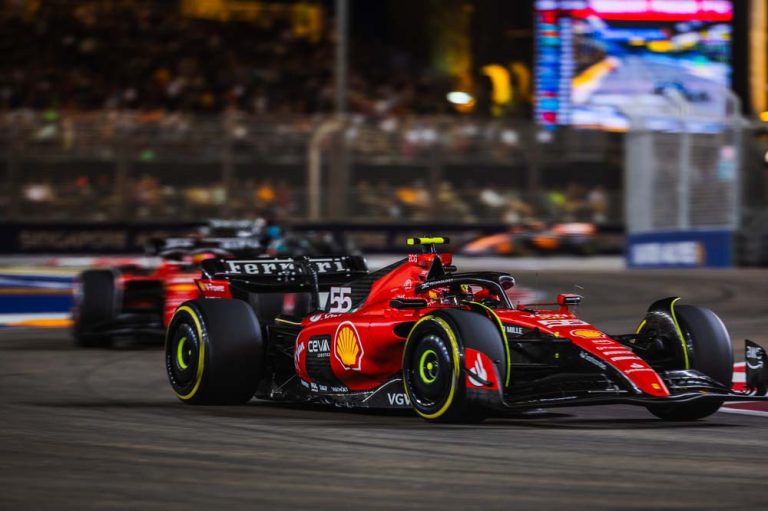
As the Singapore GP, for the first time in 2024, broke its history of safety car streaks, it was momentous considering how infamous the circuit was for its drama. The 2025 edition is the first-ever to be the FIA “heat hazard” race. With the extreme humidity leading to cockpit temperatures of 50 °C, extreme caution is necessary as drivers and teams prepare for this street sprint in late September. A stronger emphasis on data, strategy, and value is vital.
If you’ve seen reliable sports betting sites, you understand the edge often comes from insight rather than guesswork. More in the upcoming sections include: a detailed breakdown of key stats and what they imply, a comparative and contextual analysis, a tactical standpoint, and a forecasting perspective. Then, expert advice you can apply, and an FAQ on strategies, timing, and pitfalls in betting.
Performance Under Pressure
F1 considers Singapore as one of the most physically and technically challenging tracks. The Marina Bay Street Circuit is 4.927 km and requires 62 laps to complete. The circuit has tight corners that demand heavy braking and near constant throttle adjustments. This is the 18th of 24 races for the 2025 season.
Heat Hazard & Physical Toll
The unprecedented “heat hazard” declaration is historic. Drivers will experience temperatures in the cockpit near 50 °C, and many will sweat off several kilograms of body fluid. This is crucial as late race fatigue sets in and degrades the reaction time. A split-second mistake in Turn 14 or 21 will cost crucial positions or collisions. The complexity of the evolving cooling vest rule adds to the complexity. Some may wear cooling vests while others may accept extra ballast. The weight/balance tradeoff will shift.
Brake & Tire Stress
The circuits require harsh braking and de-escalation. brake manufacturer, extreme slow corner and heavy braking zones, heat and load warnings. Heavy braking zones will lead to extreme cooling pad and disc adjustments. In Singapore, tire degradation is unpredictable. This year, the track surface was changed, the pit lane speed increased (from 60 to 80 km/h), and the pit lane speed increased to change optimization for the stint.
The driver or team with better-paced consistency will find the conditions advantageous. Avoid the soft early throttle if it causes brake overheating or tire burning. In-race adaptation is a must for all teams. If conditions change, live betting tips on safety cars and late overtakes may provide an edge.
The expected implication is that endurance, error-minimizing, and strategy flexibility will have a greater performance impact than downforce or raw power. Someone who paces a “steady middle sector” well is likely to pass those who suffer a drop in pace during the 45–55 laps.
Comparing Past Trends & Current Form
You don’t just analyze a race in isolation — let’s stack this year’s strengths against historical patterns.
Historical Singapore Patterns
Between 2008 and 2023, there was at least one safety car deployed each year—until 2024, when that pattern was broken. The circuit used to have 23 corners, but revisions made 19, changing the rhythm and the potential for overtaking. Four DRS zones were introduced in 2024. These will help somewhat with overtaking, but the narrow lines will still prevent aggressive overtaking. From the pole, it is very common to win. Historically, 10 out of 14 winners started from the pole.
2025 Form Snapshot
McLaren dominates this season. Oscar Piastri leads the Drivers’ standings, with Lando Norris just behind; McLaren leads the Constructors by over 300 points. Piastri has seven wins, Norris five. Ferrari, in the meantime, is tempering expectations. Charles Leclerc states his team is unlikely to win this season, pointing to McLaren’s dominance during warm Singaporean conditions expected during the race. Max Verstappen has a psychological wrinkle; he has never won Singapore, making it a “bogey track” for him, yet he comes in with winning momentum from recent races.
For the betting odds, Piastri and Norris are joint favorites (+200 in the fastest lap qualifying markets; +210 to win). Verstappen is close behind at +225, while Leclerc, Russell, and Hamilton have longer odds.
Comparative Insight
Given the McLaren dominance in form and their car’s ability to manage heat (less degradation, consistent tire life), they are starting from a strong baseline. But there is Singapore’s history of surprises (safety cars, strategy gambles, and errors), so don’t get too comfortable. There are still value underdogs.
For consistency, you might back McLaren, but there are better options for potential volatility, like a safety car bet, a podium each-way, or even a longshot if odds stretch.
Strategy in Action: What You Can Use
Let’s make this practical: what can you do with the data above?
Qualifying Prioritization
In Singapore, it is even more important than on most other circuits due to its overtaking difficulties. If a driver is starting from a low grid position but shows solid long runs in FP3, that is a red flag in terms of efficiency on a long stint. In contrast, those who push in qualifying so much that it damages their tires will more likely regret that decision during the race.
Stint Planning
There will be the classic one stop vs two stop strategy debate. The time lost in the pit stop at the increased pit lane speed limit of 80 km/h suggests more stops could be taken since you lose less time in the pit. However, if track position is tight, it might be more advantageous to stay out longer to retain track position. Focus on the lap time delta vs the tire drop-off curve. If a driver is really struggling during laps 20 to 25, they likely overcooked that compound in the early stint.
In-Race Adjustments & Signals
Early brake and tire wear signals are indicators of potential problems. For example, teams are pitting earlier than expected, which could mean overheating issues, which opens the door to undercut gambles. Also, look for ‘cooling’ strategies where the drivers back off to reduce the overheating of the systems.
Betting Applications
Shift your strategies based on the in-race odds changes. Historically, there tends to be an early safety car, which causes mid-pack drivers’ odds to spike. This is where you see the potential payoff for a safety car prop. Mid to late in the race, odds could start to undervalue a driver that is managing their energy, which makes fractional bets on top-5 or top-3 odds a likely win.
To sum it up: your bets should follow the planned strategy with in-race changes. The best players will revise their bets during a round, so avoid locking in your bets too early.
What Comes Next: Projections & Scenarios
Let’s sketch probable outcomes, surprises, and key inflection points.
Likely Outcomes
- McLaren lock-in: Piastri or Norris takes pole; team earns at least one podium.
- Verstappen comeback try: He may settle for P3 or challenge in the last 15 laps if he manages tire life well.
- Safety car return: With tight walls, street conditions, and aggressive braking, a safety car is very likely. Only 2024 avoided it.
- Midfield surprise: A Ferrari, Mercedes, or even Williams driver might sneak a top 5 via strategy or attrition.
Key Variables & Wild Cards
- Mechanical failures from extreme heat (brakes, cooling)
- Pit stop errors (especially under pressure)
- Fatigue mistakes during laps 45–55
- Broken cooling vests or ballast misbalance
- Late safety car or red flag re-shuffle
Projection
Most bets will probably have Piastri and Norris as the top two in whichever order, and then put Verstappen in third. Still, McLaren should pay out less than the current odds, as there’s still a good chance the other two, Leclerc and Russell, will make the podium with a perfect race. If the safety car comes out near the end, there’s a good chance the top 5 will get close enough together to create some chaos.
With betting, you are more likely to find the best odds in the mid-tier props, like the number of pit stops and safety cars, and the fastest sectors, rather than the win bets, where the odds are really tight.
Expert Insights
Here are actionable tips based on the above:
Stay Flexible: You should never fixate on one driver winning; always cover your bets on podium and safety car opportunities.
Bet on Pit Strategies Early: Street circuits are unforgiving and costly on pit strategy errors — wagers on two stopped strategies or high pit counts during street circuits pay out.
Track Degradation Clues: Dropped lap times show decreased cardiovascular strength and are a sign to place bets on competitors who show decreased strength in their tires and brakes.
Safety Car Odds: There’s a reason safety car bets are called cover bets, and that’s due to Singapore’s history.
Pick Consistency Over Speed: There’s a reason ‘slow and steady wins the race’ is a common saying; the higher-paced racer is always the one to make big mistakes.
Adjust to Heat & Humidity: Bet shifts during the race will need to be made due to the heat and humidity that affect grip and performance.
Frequently Asked Questions
Q: What makes the Singapore GP so challenging compared to other races?
A: It’s a mix of night racing, high humidity, cramped street circuits, and no safe area for drivers to escape to. Overheating of the cars, worn-out tires, and tired drivers are just a few problems that happen late in the race.
Q: When is the best time to place a bet in Singapore GP?
A: Outright bets are reasonable before the qualifying, however, most value is seen in the middle of the race. For proposition bets like safety cars or the number of times a driver pits, those are best placed before the race starts. For position bets, those are best placed around the time of the race.
Q: How should I read odds in F1 compared to other sports?
A: F1 betting odds have higher variance, and higher odds reflect greater mechanical risks a race car faces. An underdog can finish 5th and still provide value even if they have low win odds. You should always compare implied odds and account for the risk of DNF, strategy missteps, and other mechanical failures that impact the race.
Q: How Do Parlays Work in Sports Betting?
A: A sports betting parlay combines two or more bets; all must hit to win. The payout is higher, but one failure kills the ticket. In F1, combining win + safety car + fastest lap is tempting — but high risk.
Q: Are safety car bets worthwhile in Singapore GP?
A: Yes, because historically, safety cars have appeared almost every year except for 2024. Those markets tend to have a positive risk-to-reward ratio if the odds reflect standard probabilities
Q: How much should I rely on qualifying results?
A: Very much — it’s hard to overtake. Just keep in mind odd qualifying results results like track gaps or sand traps. A driver can still derail a heavy dropping late in a race.
Q: Is there value in backing longshots or surprise picks?
A: Sure, betting on long, attritional races with variable conditions. A mid-grid driver who paces properly and doesn’t mess up can profit. Stick to small amounts on these bets.
Q: What’s the biggest risk to bettors in Singapore GP?
A: Overconfidence. You can bet confidently on a heavy favorite without considering race dynamics, crashes, or performance fade and that would be risky. Mechanical failures, cooling issues, or strategy misreads can flip outcomes.
Final Lap Focus
Let’s lock in the takeaways here — your actionable summary ahead of lights out:
Heat hazard rules for Singapore 2025 mean endurance and cooling strategy become as important as outright speed for Singapore 2025.
McLaren is the favorite, but safe momentum and good form aren’t going to be good enough to defend against surprise mid-tier bets, Verstappen, and Leclerc.
Considerable live-odds volatility due to the safety car and shifts in the pit strategy, tire degradation, and in the race prop bets. Always be willing to adjust.
Sportsbetting Trust prop bets, in-race hedges and a reserve for more volatile prop as you try to predict sportsbook bet orders.
Is it time to bet or is it sportsbook time? Check out BetNow at promo time sandbox and get first to bet and best odds and promos.

Hilbert Mayer
Sports Writer
Hilbert Mayer is a professional sports writer, betting analyst, and content strategist with over 15 years of experience in the sports industry. Before focusing on sports betting analysis and handicapping, Hilbert worked as a sports writer for various news outlets, covering everything from game recaps to in-depth matchup features. Today, he specializes in MLB, NFL, March Madness, and UFC betting, combining his journalistic background with deep statistical expertise and real-world betting insights. His proven track record, sharp reads, and ability to break down complex matchups make him a trusted voice among both casual bettors and seasoned sharps.
Published on: October 4, 2025
Last updated: October 4, 2025