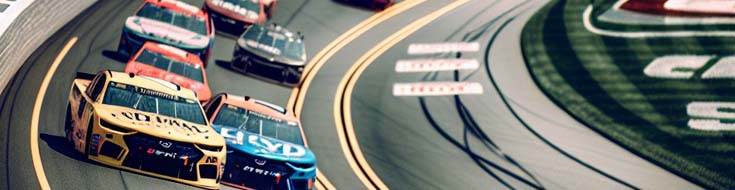
Denny Hamlin’s speed on a lap to get pole for the NASCAR Cup Playoffs Round of 16 at Gateway was recorded at 139.190 mph, if you are curious. For those interested in online sports betting, that might indicate that the race relies more on strategy than on the finesse of the steering wheel. Let’s Hamlin’s pole, Larson’s near miss—and everything it means for the race, the bets, and the standings.
You’ll learn:
- How that qualifying speed stacks up and what it yields on race day.
- What Kyle Larson’s challenge reveals about performance differences mid-pack.
- Smart, actionable angles to lean into with your sportsbook picks.
- What the run to Round of 12 might look like, based on this opener.
Let’s break down each piece cleanly and clearly—no fluff, just the facts, strategy beats, and what you need to know to act fast.
Breaking Down the Gateway Edge
Pole Speed and What It Means
Denny Hamlin’s pole-winning lap at 139.190 mph (32.330 s) is fast, but it is more than that: it is a track record and it is the first pole at Gateway for Toyota during the Cup Series playoffs. Hamlin’s 46th career pole is the 3rd of the season, and it ties him with a Hall of Famer.”
Practically, a high pole speed at a tight, flat 1.25-mile oval like Gateway gives a significant advantage entering turn one and during the first pit cycle. Poles don’t guarantee wins, and Hamlin has only 6 career wins from poles. The stat has importance, but it should be a guess rather than a conclusion.”
Gateway is one of the most difficult tracks to pass people on. With clean air from pole position, one has control of the pace. Add in the playoff nerves, and that helps even more. Cautions, late-race restarts, and tire fall-off still tighten the odds. That Dominance is at the very start of the race won him the bet, but it is also a lesson not to put all your eggs in one basket.”
Larson’s Challenge and Team Context
Kyle Larson came in 0.021 s behind Hamlin, recording a velocity of 139.099 mph. That was the second-closest margin of defeat during the qualifying session of a playoff opened in recent memory. Larson was also not a surprise. Having conducted a tire test at Gateway earlier in the year, he has been able to provide his team with setup information that other teams do not possess.
Chevy has been impressive this season, and Larson’s Hendrick group excels on short and flat ovals. Compared to other cars, Larson’s in particular had greater balance during turns 3 and 4, indicating he should have a more competitive long-run pace than Hamlin’s Toyota.
This is to the betting market, especially the “must-pick Hamlin” gap. Larson doesn’t have to take the lead to provide profit. Stage points are very valuable, top-5 bets do hit often, and head-to-head matchups against other playoff drivers are in his favor. The way the qualifying times are set suggests it is not a runaway but rather a two-horse shootout- a scenario underappreciated by the sportsbooks giving out outright win odds.
Implications for Betting and Race Strategy
Denny Hamlin’s ability to control airflow, plus the variances in lap splitting, becomes an undeniable wager separator. On the other hand, Larson’s closeness lends substance to your outlay. They both are skilled enough to be tracked over/under stage finishes or “top-5/10”.
With Briscoe in third, Chastain in fourth, and Ryan Blaney in fifth, it’s glaring how deep the field’s top tier is. The playoff drivers have managed to seize nine out of the top ten positions. This indicates that the race pace will be playoff-agnostic on the aggression front and practically suffocating.
This is where sportsbook betting strategies matter. Don’t just lean on outright winners. Look at props like “best finisher among teammates,” “manufacturer matchups,” or “most stage points.” Strategy bets based on pit cycles, fuel gambles, or restarts can pay more consistently than outrights in short-track playoff settings.
Who Advances, Who Fades?
Looking ahead, Hamlin sits second in playoff standings—43 points above the elimination line. He’s likely to advance without any stress, and a clean finish means he doesn’t have to worry. His margin is slimmer, and a top-5 at Gateway plus bonus points keeps him secure for the Round of 12.
Darlington won, Briscoe qualified him 3rd, which gives him momentum, so he’s safe, but Gateway gives him another shot to snag stage wins. 29th place stinker and opener puts him under pressure here, but top-10 qualifying means bounce back is realistic and worth betting on.
Tougher math is what mid-field playoff drivers like Logano (13th), Wallace (14th), and Bowman (25th) have to do. Once they figure out that passing is difficult, they will have to come up with bold strategy calls. 50 on those names gets some value in “top-10 finish” props.
Bell and Byron become intriguing value plays. Hamlin remains a safe stage-winner pick. Larson remains the most likely challenger.
Tips from the Garage
Pole isn’t a Guarantee – Hamlin was flying, but poles don’t normally equate to winning. Consider it a bonus, not a result.
Track Familiarity Counts – Larson gained an advantage from his practice sessions. At ovals where passing is difficult, previous data may be more valuable than pure speed in qualifying.
Watch Pit Strategy – Teams with quicker average stop times than pit road speed may also be betting favorites. Gateway’s pit road is short, so execution of a 4-tire stop in under a minute may net a team 3 spots instantly.
Points Cushion Strategy – Hamlin can make dumb moves because his points cushion is huge. This translates to valuable finishes for betting slips, especially on “top-3” bets.
Late Race Fuel Plays – Remember last year, Ryan Blaney ran out of gas on the last lap here. These types of bets can change everything right at the end.
Matchup Markets are Smart – You can bet on drivers with more consistent late race speed (Byron, Bell) to lose against more erratic drivers. These provide safer returns than long-shot bets.
Frequently Asked Questions
Q: What does winning the pole mean in Cup Playoffs?
A: “Winning the pole” means a driver gets “the clean air”. They are in control of the relaunch “Restart” and they also have the central guardians “Pit-stall” advantage. At Gateway, where passing cars is super hard, it can advance position in the Early stages.
Q: How significant was Hamlin’s lap speed on qualifying?
A: He set a track record at a speed of 139.190 mph, which is his 46th career pole. His consistent elite speed shows this was his 46th career pole and 3rd this season.
Q: Should I bet solely on pole sitters to win?
A: No, betting on pole sitters has proven to be an ineffective approach in the past. Less than 20% of the time, pole sitters go on to win the race. Problems such as caution flags, pit mistakes, and tire wear frequently cause a last-minute alteration of the leaders.
Q: What’s the advantage of “driver matchups” in betting?
A: Matchups allow for the selection of the driver who is perceived to finish ahead of the other. Unlike win bets, this cut bet reduces the risk and frequently takes advantage of minor speed gaps.
Q: How Do Sportsbooks Manage Risk for Popular Events?
A: Sportsbooks balance action by adjusting odds as money flows in. If too much cash piles on one driver, lines shift to attract bets on others. This way, sportsbooks limit exposure on sportsbook popular events while still keeping markets attractive for bettors.
Q: Does starting deeper in the field ruin chances?
A: Not necessarily. If the strategy is in Logano’s (13th) or Wallace (14th) favor, they can advance. They’re decent wagers for “top-10” finishes.
Q: How do elimination-line points affect betting?
A: With the increased risk the drivers take, they become value bets in group props because they can gain stage points.
Q: Is fuel strategy a common game-changer here?
A: Yes. Gateway’s green-flag runs forces teams to take the risk. Fuel strategy still remains a betting piece and has changed outcomes in the past.
Key Takeaways for Bettors
Hamlin’s record-setting pole at Gateway isn’t just a fast lap—it’s a statement. Larson’s razor-thin challenge means this opener won’t be a runaway. What’s important at this point is transforming qualifying excellence into playoff progression.
Takeaways:
- Pole speed at Gateway offers control but doesn’t lock a win.
- Larson’s pace and testing advantage make him a live challenger.
- Stage points, pit stops, and fuel calls will decide who cashes tickets.
Smart bettors look beyond outrights, leaning into matchups, top-10s, and props.
In the NASCAR Cup Playoffs Round of 16, Hamlin has a comfortable lead, Larson is trailing, and the cutline drivers are in a desperate position. This is where the value is found for the bettors. If you are looking for sportsbook betting online, this is the time for you. Visit BetNow and place your bets. It won’t be long before the green flag waves.

Hilbert Mayer
Sports Writer
Hilbert Mayer is a professional sports writer, betting analyst, and content strategist with over 15 years of experience in the sports industry. Before focusing on sports betting analysis and handicapping, Hilbert worked as a sports writer for various news outlets, covering everything from game recaps to in-depth matchup features. Today, he specializes in MLB, NFL, March Madness, and UFC betting, combining his journalistic background with deep statistical expertise and real-world betting insights. His proven track record, sharp reads, and ability to break down complex matchups make him a trusted voice among both casual bettors and seasoned sharps.
Published on: September 8, 2025
Last updated: September 8, 2025