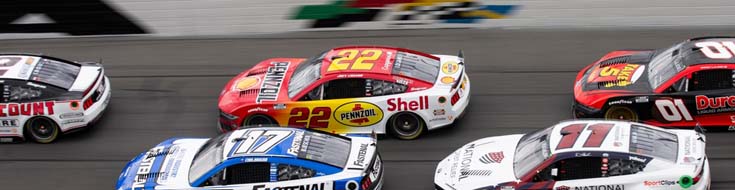
More than 85% winners of the Daytona 500 have never won from the pole position. This shows how unpredictable the 500 can be. This also shows how important the qualifying Duels are for the event. The Duels determine the starting lineup, create drafting alliances, show the weakest cars in the race, and show the teams that are ready for the chaos that comes with racing at superspeedways.
If you follow motorsports online betting, the Duels are one of the most overlooked data points of the entire NASCAR calendar. They’re short, aggressive, and strategic. Teams have to balance survival with performance. Drivers fight for track position while also protecting equipment for Sunday. And in that tension, real betting insight shows up.
The Duels determine starting positions, reward points to the top ten finishers, and show which teams are able to manipulate the draft. The events of the Duels are a good indicator of what the Daytona 500 will look like.
In this article, we explain what the numbers indicate, how the Duels impact the Daytona 500, and how bettors can reasonably use the results from the Duels.
What the Duel Races Really Reveal
Duel winners don’t guarantee Daytona success
Historically, pole positions have been starters for only 15% of Daytona 500 winners. This fact alone should temper the excitement surrounding qualifying success.
Narrowing it down to the Duels, fewer than ten drivers in modern NASCAR have achieved the feat of winning both their qualifying Duel and the Daytona 500. Surprising, considering the closeness of the races.
However, the biggest takeaway here is the fact that 45–50% of Duel winners end up in the top ten at the Daytona 500. This means that 50% of Duel winners do not end up in the top ten. Many end up in the middle of the pack, and some do not finish the race at all.
Duel winners show that at least some of the Duel is not just luck, but rather that the car is able to draft and manage the traffic. However, this does not mean that the car is capable of surviving 500 miles of racing.
For Duel winners, the takeaway is discipline. They deserve your attention, but not your blind confidence.
The lineup system creates chaos by design
Qualifying for the Daytona 500 is done using a unique system. For Daytona 500 qualifying, single-car qualifying only sets the front row. All other positions are determined by the Duels.
This makes pack racing drivers who set fast solo qualifying times. For open teams, the ones without guaranteed starting positions, they become aggressive and end up taking desperation moves that are unpredictable and become a variable.
In addition to the incentive structure. In a playoff system, every point matters, and that is where the Duels award regular-season points to the top ten finishers. Drivers are not simply placing themselves; they are competing.
The result is a strange mix of strategies:
- Contenders for the championship are being cautious about their cars
- Mid-level teams are fighting for positions on the track
- With the open entries, it’s like Sunday racing already
This mix affects the finishing positions. The finishing positions can be misleading, and therefore, understanding a driver’s finishing position can be more important than the position itself.
This is where mobile sports betting users tend to gain an edge. Public money often chases Duel winners without recognizing which teams were managing risk versus chasing points.
What smart bettors actually look for
The finishing order matters—but it’s not the headline.
Let’s begin with drafting behavior.
Having teammates who consistently position themselves and block lanes means they’ll be able to work with you aerodynamically, and at Daytona, that is priceless.
Next, we focus on recovery.
Drivers who drop to the back and then work their way up show trust in their vehicles, as well as the traffic, and that is a fantastic trait to have over a distance of 500 miles.
Then we look at the ability to avoid incidents.
Aggressive drivers will be brutal to Daytona. Many drivers who have strong starts and get aggressive don’t end up finishing the race. Drivers who avoid incidents in the duels will likely drive the same way on Sunday.
So instead of asking who won, ask:
- Who controlled the draft without forcing it?
- Who passed cars late, not early?
- Which teams worked together naturally?
Those are the indicators that carry forward.
What the Duels suggest going forward
Late-race chaos has defined the most recent Daytona 500s. Outcomes are decided by multi-car crashes more often than by speed. That won’t be changing anytime soon.
The current generation of cars drives closer together. Mistakes are amplified. The Duels demonstrate that. Even the most seasoned drivers have difficulty negotiating the gaps.
Looking ahead, expect these patterns to continue:
- Weighing the starting position, alliance drafting is the better option
- A strategic advantage will be held by multi-car teams
- Loose aggression at the start will enhance the level of risk
Duel winners will be competitive, but in the past, they have rarely been dominant. For Duel bettors, the best approach is to treat Duel outcomes as a context, not as a conclusion.
Expert Insights: Six Practical Betting Tips from the Duels
1) Don’t Value the Winners Too Highly
Winning a duel shows some degree of skill and control, but it doesn’t mean they have a chance at winning the Daytona 500. Look at duel winners as competitors, not front-runners.
2) Look Out For Manufacturer Partnerships
Superspeedway racing becomes all about the manufacturers. If some cars from the same company perform well as a group during the Duel, that same strategy will be used on race day.
3) Pay Attention to Last Minute Moves
Drivers that move ahead of the pack and take the lead in the final minutes have strong race-trim speed and good decision-making. They are the ones that are most likely to pay off when betting on the Daytona 500.
4) Don’t Forget About Open Team Aggression
Open teams run with a sense of urgency, as they are working to keep their position. This creates a lot of chaos, making them a better bet in value on place or match betting rather than winning outright.
5) Watch Out For Favorites Who Are Starting Deep
Even elite drivers from the mid pack at Daytona are stuck in a lot of traffic. They are more likely to be caught up in a wreck as well. Backing them in top-five or top-ten finishes is a better bet than expecting them to win.
6) Considering Interpersonal Relations Within the Team
When drafting cars, the partners chosen mean more than the individual cars. Teammates who draft well in the duels usually carry it over to the Daytona 500. Wagering on entire team units can be more dependable than pinpointing one individual driver.
Frequently Asked Questions
Q: What are the Daytona 500 qualifying Duels?
A: These are two split races that take place before the Daytona 500 to finalize the grid, except the front row, which is determined by individual time trials.
Q: Do Duel winners normally win the Daytona 500?
A: Duel winners do not perform well in the 500. Very few drivers are able to do this double. A duel win is more of a participation trophy.
Q: Are points awarded in the Duels?
A: Yes. Points are awarded to the top 10 finishers of each Duel for the regular season, which incentivizes the races more.
Q: Should bettors place more value on the Duels than qualifying?
A: Yes. The Duels are a more accurate representation of what race conditions will be like than single-car qualifying.
Q: What is the most significant betting mistake after the Duels?
A: It is overreacting and not considering the context. Some drivers race conservatively, and some will go all out.
Q: How to Stop Chasing Losses When Using Sports Betting Platforms?
A: To stop chasing losses at the sports betting platforms, always set a fixed bankroll and define unit sizes before race week. Never increase bet size after losses. Stick to a long-term plan and avoid emotional decisions.
Q: Do starting positions matter at Daytona?
A: Less than at other tracks. Many winners start mid-pack due to drafting and late-race chaos.
Q: When is the best time to bet on the Daytona 500?
A: After the Duels, once drafting behavior and lineup structure are clear.
Why the Real Edge Shows Up Early
The Daytona 500 rewards patience, discipline, and survival. Speed helps—but it’s rarely enough on its own. The qualifying Duels quietly expose which teams understand that balance.
Three points stand out:
- Pole speed doesn’t equal race control
- Duel winners are signals, not guarantees
- Drafting chemistry matters more than position
For anyone serious about motorsports online betting, the Duels are required viewing. They reveal intent, teamwork, and restraint—traits that win Daytona.
If you’re ready to apply those insights, explore the latest Daytona 500 markets at BetNow and act while the value is still there.

Hilbert Mayer
Sports Writer
Hilbert Mayer is a professional sports writer, betting analyst, and content strategist with over 15 years of experience in the sports industry. Before focusing on sports betting analysis and handicapping, Hilbert worked as a sports writer for various news outlets, covering everything from game recaps to in-depth matchup features. Today, he specializes in MLB, NFL, March Madness, and UFC betting, combining his journalistic background with deep statistical expertise and real-world betting insights. His proven track record, sharp reads, and ability to break down complex matchups make him a trusted voice among both casual bettors and seasoned sharps.
Published on: February 12, 2026
Last updated: February 13, 2026